
Meta VR Glasses Launch: A Vision Pro Alternative?
Meta has unveiled its new $1,299 VR glasses and AI-powered pendant, positioning them as a potential competitor to Apple's Vision Pro. The devices emphasize a "hands-first" approach to interaction.

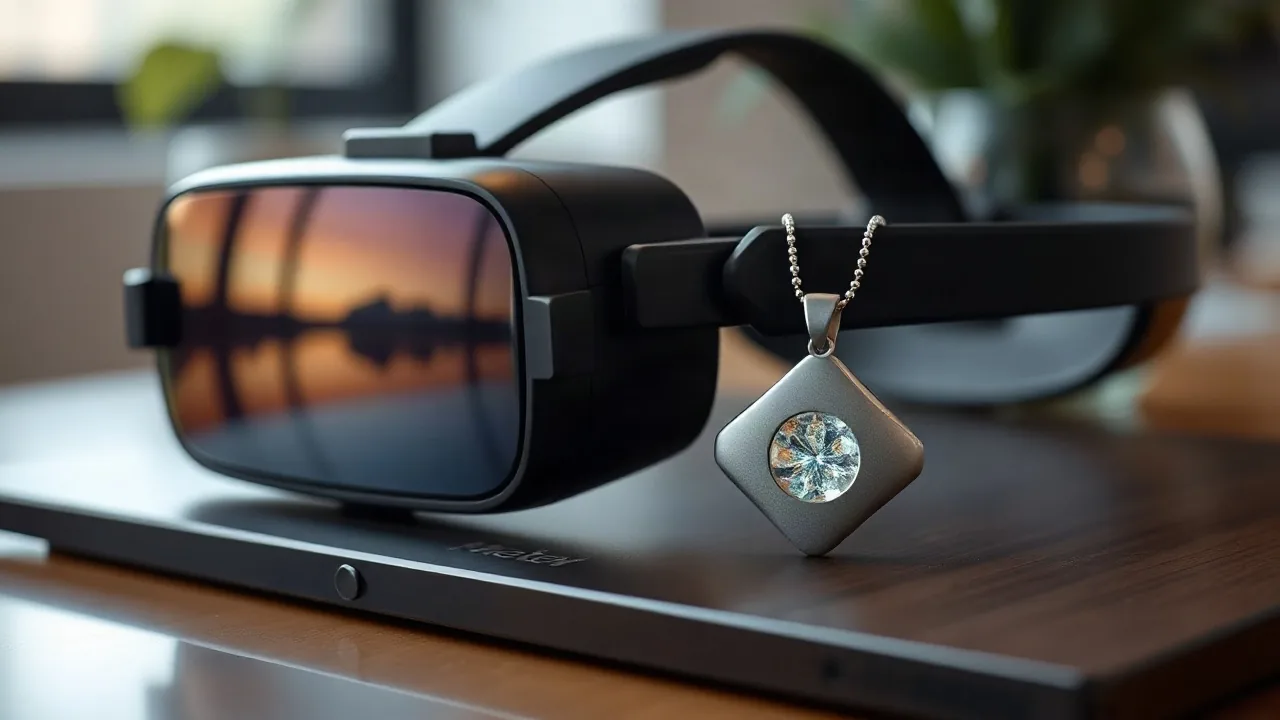
Meta Platforms CEO Mark Zuckerberg introduced the company's latest virtual reality hardware and AI initiatives on September 27, 2026, launching a new pair of VR glasses priced at $1,299 and the Muse Charm pendant, a device designed to integrate with AI agents. The announcement, detailed across various Meta and tech news outlets, signals a significant push by the social media giant into the next generation of spatial computing and artificial intelligence integration.
The new Meta VR glasses aim to offer a compelling alternative in a market increasingly defined by high-end immersive devices. While the exact specifications and full capabilities are still being detailed, the emphasis on a $1,299 price point suggests Meta is targeting a broader consumer base than some of its more premium-priced competitors. This pricing strategy could make advanced VR technology more accessible, potentially accelerating adoption rates for virtual and augmented reality experiences.
'Hands-First' Interaction and AI Integration
A key differentiator highlighted by Meta is the focus on "hands-first" application development and interaction. This approach suggests a move away from reliance on complex controllers, favoring more intuitive, gesture-based controls that leverage the natural capabilities of the human hand. This philosophy is expected to be a cornerstone of the user experience on the new VR hardware, potentially making VR more approachable for newcomers to the technology.
The introduction of the Muse Charm pendant further underscores Meta's commitment to AI. This wearable device is envisioned as a hub for interacting with AI agents, allowing users to access information, manage tasks, and engage with digital services through natural language. This integration of AI directly into personal hardware signals a growing trend toward ambient computing, where AI assistance is seamlessly woven into daily life.
Meta has also launched a $1 million competition aimed at fostering the development of "hands-first" applications. This initiative aims to stimulate innovation within the developer community, encouraging the creation of software and experiences that fully utilize the new hardware's interaction paradigms. By incentivizing developers, Meta hopes to build a robust ecosystem of applications that showcase the potential of its VR glasses and AI-powered wearables.
The move comes as the VR and AR markets continue to evolve, with major players like Apple having already made significant investments. Apple's Vision Pro, released earlier in 2026, set a high benchmark for mixed-reality headsets. Meta's new offering, with its distinct price point and interaction philosophy, appears to be a direct response, aiming to capture a different segment of the market or offer a more streamlined alternative for specific use cases. The competition between these tech giants is expected to drive further advancements in immersive technologies.