
Motorola Razr Ultra 2026: A Pricey Flip Phone with Upgrades
The 2026 Motorola Razr Ultra offers an upgraded main camera and cover screen, but a $200 price hike makes its value proposition questionable. Despite excellent battery life and a sleek design, competitors offer more compelling options for the money.

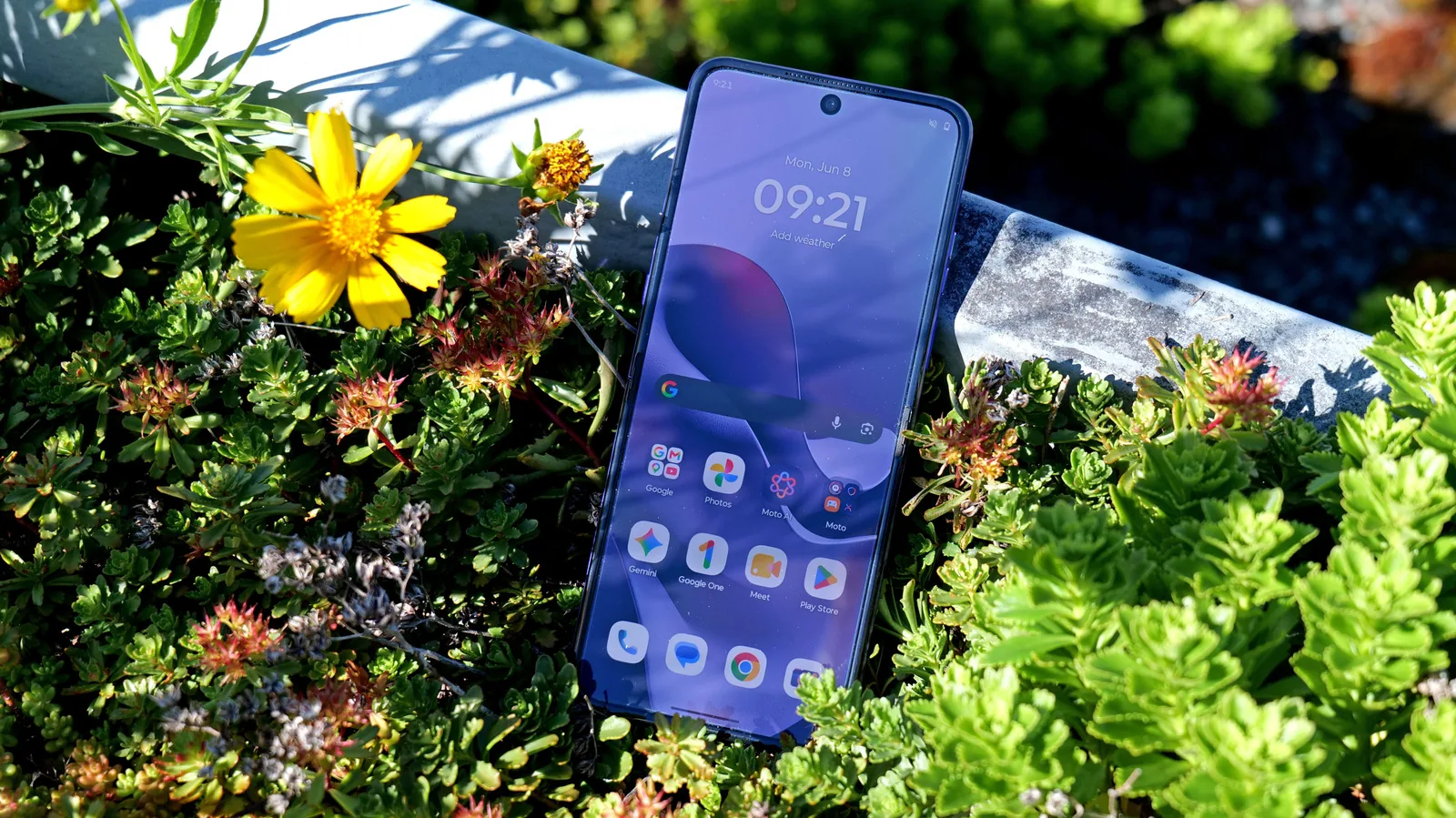
The 2026 Motorola Razr Ultra arrives with a significant $200 price increase over its predecessor, positioning it at a steep $1,500. While the foldable device boasts a new 50MP main camera sensor and improvements to its external display, the substantial price jump casts a shadow over its overall appeal. This iteration retains the same chassis as the previous model, featuring a 4-inch cover screen and a 7-inch folding main display. Both screens offer impressive brightness, with the exterior panel reaching up to 3,000 nits and the interior display peaking at an even higher 5,000 nits, ensuring vibrant visuals and excellent contrast. However, the characteristic crease at the hinge remains visible.
New color options, including an Orient Blue model with a fuzzy Alcantara back and paint-matched buttons, add a touch of sophistication. The Razr Ultra's compact form factor when closed is a notable advantage, measuring 3.4 x 2.9 inches and 15.7mm thick, making it comfortable to hold. The device also features an IP48 rating for dust and water resistance, offering peace of mind against moisture.
Performance and Cover Screen Enhancements
Under the hood, the Razr Ultra is powered by a Snapdragon 8 Elite processor paired with 16GB of RAM and up to 512GB of storage. While this configuration is similar to the previous generation, performance remains robust, handling a wide array of applications and games with ease. The cover screen has received several functional upgrades. Users can now utilize Live Updates for easier tracking of events like food deliveries, and the Quick Settings menu offers resizable tiles and support for video wallpapers. A key feature of the Razr line is the ability to run almost any application on the external display, providing quick access to information without unfolding the phone.
The primary camera system sees an upgrade with a new 50-megapixel LOFIC sensor for the main camera, designed to capture images with higher dynamic range and reduced noise. This results in photos with enhanced contrast and detail. In testing, images exhibited bright colors and crisp elements. However, a closer inspection revealed minor issues such as light halos around certain objects, particularly in bright conditions, and some noise in textures when zoomed in. Low-light performance, while improved, still lags behind competitors like Google's Pixel 10 Pro. Foldable phones historically present a compromise in camera quality compared to traditional smartphones, and the Razr Ultra is no exception.
Battery life is a standout feature, with Motorola equipping the Razr Ultra with a slightly larger 5,000mAh cell (up from 4,700mAh). In a local video rundown test, the phone lasted an impressive 31 hours, surpassing many contemporary devices, including the Pixel 10a and Samsung Galaxy S26 Ultra. Charging capabilities are also strong, with 68-watt wired charging and 30-watt wireless charging. However, achieving peak wired speeds requires Motorola's proprietary TurboPower protocol, and the absence of a power adapter in the box necessitates a separate purchase for full charging potential.
Ultimately, the 2026 Motorola Razr Ultra finds itself in a challenging market position. It is a capable and attractive flip phone, excelling in design, performance, and battery endurance. Nevertheless, last year's model is available at a significantly lower price point, around $800, while the new release retails for $1,500. Competitors like Samsung's Galaxy Z Flip 7, priced starting at approximately $1,100, offer a more competitive value. The $200 premium for the minor upgrades to the camera sensor and battery may not justify the cost for many consumers, especially with new foldable releases anticipated from other manufacturers before the end of summer 2026.