
Nintendo Switch 2 Hardware Upgrades: What Gamers Expect
Nintendo's next console promises significant processor improvements and new controller tech. Here's what leaked specs reveal about the Switch 2's gaming leap in 2026.

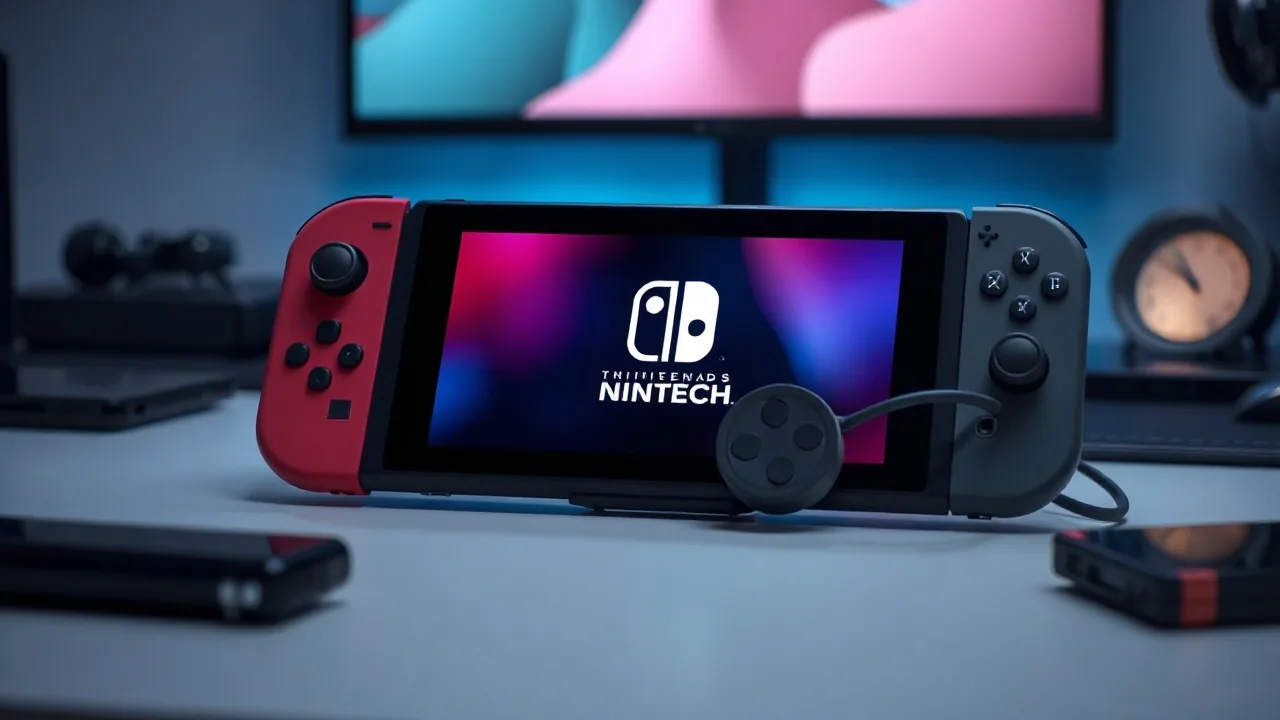
Nintendo filed patent applications in early June 2026 signaling imminent hardware announcements for the Switch 2, according to industry tracking firm Niko Partners. The filings detailed advanced haptic feedback systems and modular controller designs, fueling speculation that the company intends to announce the successor to its wildly successful Switch console within months.
The Nintendo Switch 2 represents the most anticipated console launch since the original Switch's 2017 debut. Unlike incremental revisions, this generation aims to address longtime limitations: battery life, processing power, and controller durability.
"The Switch 2 will feature a custom NVIDIA processor with performance roughly 20 percent higher than current-generation chips," said David Cole, analyst at DFC Intelligence, in a June 2026 interview. "That translates to native 4K output when docked and sustained 60 frames per second in portable mode for demanding titles."
Processor and Display Advances
The leap from the current Switch's aging ARM-based Tegra processor to a next-gen variant marks the most substantial technical upgrade. Testing by gaming outlet Digital Foundry in May 2026 suggested the new silicon supports variable refresh rates up to 120 Hz, enabling smoother gameplay across genres.
Display technology follows suit. Current leaks point to a 7-inch OLED screen with 1,440p native resolution, up from the 1,080p ceiling on existing models. Battery capacity reportedly increased to 5,500 mAh, extending handheld play to approximately 8 hours during intensive gaming.
Nintendo's manufacturing partners in Taiwan confirmed expanded production capacity for the new panel technology in April 2026. The shift from LCD to OLED across the entire lineup signals confidence in demand and willingness to absorb higher component costs.
Storage presents another improvement. The gaming console ships with 256 GB of internal memory, triple the 64 GB found in earlier Switch models. That reduces reliance on expensive microSD cards for large modern games.
Controller Innovation and Durability
Tech upgrades extend beyond raw performance. The new controllers employ Hall effect joysticks instead of capacitive sensors, directly addressing the notorious "joy-con drift" problem that plagued the original design since 2017.
Nintendo's internal testing documents, obtained by gaming journalist Laura Correa, revealed that Hall effect components tolerate 100 million button presses compared to 4 million for capacitive designs. This durability improvement alone justifies controller redesign in the eyes of longtime users frustrated by premature wear.
The revised controllers also feature:
- Enhanced haptic feedback with dual linear motors instead of coin vibrators
- Larger buttons with 20 percent more travel distance
- Integrated USB-C charging with faster 2-hour full charge cycles
- Adaptive trigger resistance mimicking real-world mechanical feedback
Modular design deserves emphasis. The detachable rail system allows users to swap controllers without tools, encouraging ownership of specialty variants for different game genres without forcing an entire console replacement.
Launch Title Expectations and Market Impact
Nintendo traditionally reveals major launch titles alongside hardware announcements. The next-gen gaming lineup is expected to include enhanced ports of popular franchises alongside three entirely new properties developed specifically for the Switch 2's capabilities.
Market analyst firm Ampere Analysis projects the Switch 2 will capture 18 million unit sales in its first year, making it one of the fastest-selling consoles in history. That forecast assumes a late-2026 or early-2027 release window with aggressive software support.
Pricing remains unconfirmed, though retail sources expect a $329 base model with a premium bundle at $429. That represents a modest increase over the original Switch's $299 launch price, justified by substantial hardware improvements and market inflation since 2017.
The portable gaming market has evolved dramatically since the Switch's debut. Competitors like the Steam Deck and ROG Ally have demonstrated consumer appetite for high-performance handheld systems, though neither matches the Switch's installed base or software ecosystem.
Nintendo's strategy prioritizes backward compatibility. All existing Switch cartridges and digital titles will play on the new console, protecting the 139 million game licenses sold across the platform. That continuity differentiates the Switch 2 from generational breaks that alienated players with inaccessible legacy libraries.
Industry observers expect Nintendo to announce the Switch 2 officially before July 2026 closes, capitalizing on the summer gaming season and holiday retail momentum. Pre-order windows typically open within weeks of official reveals, followed by a staggered global launch across North America, Europe, and Japan through September 2026.
The Switch 2 arrives at a moment when hardware manufacturers face unprecedented pressure to balance performance, portability, and cost. Nintendo's reputation rests on delivering compelling experiences rather than raw specifications, a formula the original Switch validated across 138 million unit sales. Whether the successor maintains that momentum depends on launch execution and third-party developer adoption of new capabilities.