
Samsung Z Fold 8 Redefines Foldable Phones with Wider, Shorter Design
Samsung's new Galaxy Z Fold 8 adopts a wider, shorter form factor, aiming to make foldables the new standard. The design enhances usability for reading and media consumption.

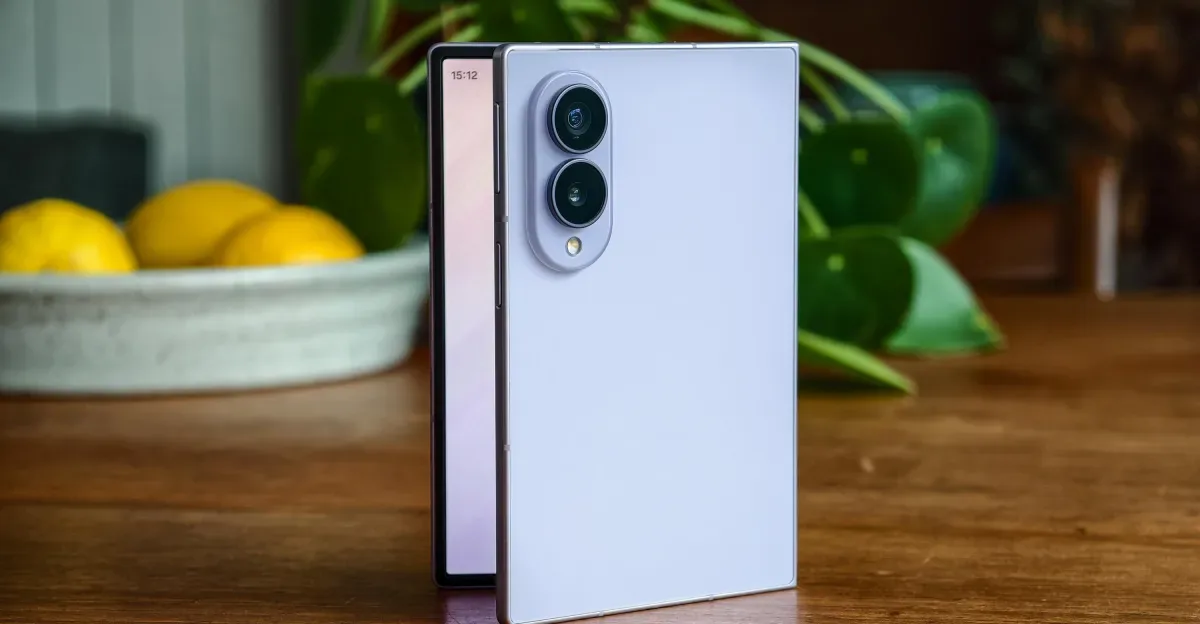
Samsung's latest foldable, the Galaxy Z Fold 8, is positioned not as a niche device but as the future standard for folding smartphones. The company has embraced a wider, shorter aspect ratio, a move that industry insiders suggest even Apple may be adopting for its anticipated first foldable iPhone. After extensive testing, the Z Fold 8 proves surprisingly comfortable and natural to use in its folded state, challenging previous notions of what a foldable phone should look like.
The device features a 5.5-inch outer display with dimensions resembling a passport, boasting a 10:16 aspect ratio. When unfolded, it reveals a 7.6-inch inner screen with a 4:3 aspect ratio, mirroring that of many tablets. This configuration has led the reviewer to use the foldable more extensively than previous models, finding it ideal for watching videos and reading. The wider screen offers a more immersive experience for media without significant letterboxing, and in portrait mode, it closely approximates the dimensions of a physical book.
A New Design for Everyday Use
While the closed-phone dimensions might initially seem unconventional, the Z Fold 8 quickly adapts to daily use. Minor software adjustments are sometimes needed for apps not optimized for these specific dimensions, leading to occasional display quirks like white bars or compacted content. However, the overall user experience on the shorter, wider screen has proven advantageous. Two-handed typing feels more natural, and the reduced height makes accessing the top of the screen easier, a welcome change for those who miss the era of smaller phones.
The phone’s compact design is complemented by its reduced weight, making the Z Fold 8 Samsung’s lightest foldable to date at 201g. With a thickness of 9.7mm when closed, it remains slim, comparable to many standard smartphones. Despite its slender profile, the device incorporates a substantial 4,800mAh battery, a feat made possible by Samsung's adoption of silicon-carbon battery technology. This advancement, common among many Chinese manufacturers, offers greater energy density. Samsung reports that it has successfully mitigated the faster degradation typically associated with these batteries, promising longevity. Initial testing indicates impressive battery life, with the phone frequently lasting through the day with considerable charge remaining.
Charging speeds are adequate but not class-leading, with 45W wired and 20W wireless options. Notably, the Z Fold 8 does not support Qi2 wireless charging directly, though it is compatible with Qi2 cases. This design choice likely contributes to the phone's slimness and lightness. The device’s aesthetic is sleek, fitting seamlessly into Samsung’s established design language. The lavender model is particularly appealing, with an online-exclusive “pistachio” color also available.
Durability is a key consideration, though the Z Fold 8 lacks an official IP68 rating, offering IP48 protection against water. This makes it more susceptible to dust and sand compared to some rivals. Samsung has reinforced the display with new titanium-infused layers, which also subtly reduce the visibility of the inner screen's crease. While not entirely eliminated, the crease is now far less noticeable than on previous models and some competing devices.
A significant point of discussion for the Z Fold 8 is its camera system. Samsung has reduced the rear camera setup to two lenses: a main camera and an ultrawide. The omission of a telephoto lens is a notable drawback for a device priced at $1,899. While the new 50-megapixel ultrawide camera represents an improvement, the main camera uses a smaller sensor and lower resolution compared to the previous generation. Photos are generally pleasing, with vivid colors and decent low-light performance for stationary subjects, comparable to the base Galaxy S26. However, capturing fast-moving subjects like pets can result in blurry images. The improved ultrawide lens compensates somewhat by offering similar quality, reducing the need to zoom extensively. Nevertheless, at this price point, the absence of a telephoto lens is keenly felt.
Software updates have been managed conservatively for the Z Fold 8, though it does include features like Google’s Gemini Intelligence Task Automation. The device’s user interface aims to leverage the unique form factor, enhancing productivity and multimedia consumption. The overall impact of the Z Fold 8's refined design and feature set will become clearer as more users adopt this wider foldable format, and as competitors like Apple eventually enter the market.