
Samsung Galaxy Z Fold 8 Video Viewing: Marketing vs. Reality
Samsung promotes the Galaxy Z Fold 8's new design for 'full-screen' video, but a closer look reveals significant letterboxing with most content. The foldable's 4:3 aspect ratio doesn't fully align with standard video formats.

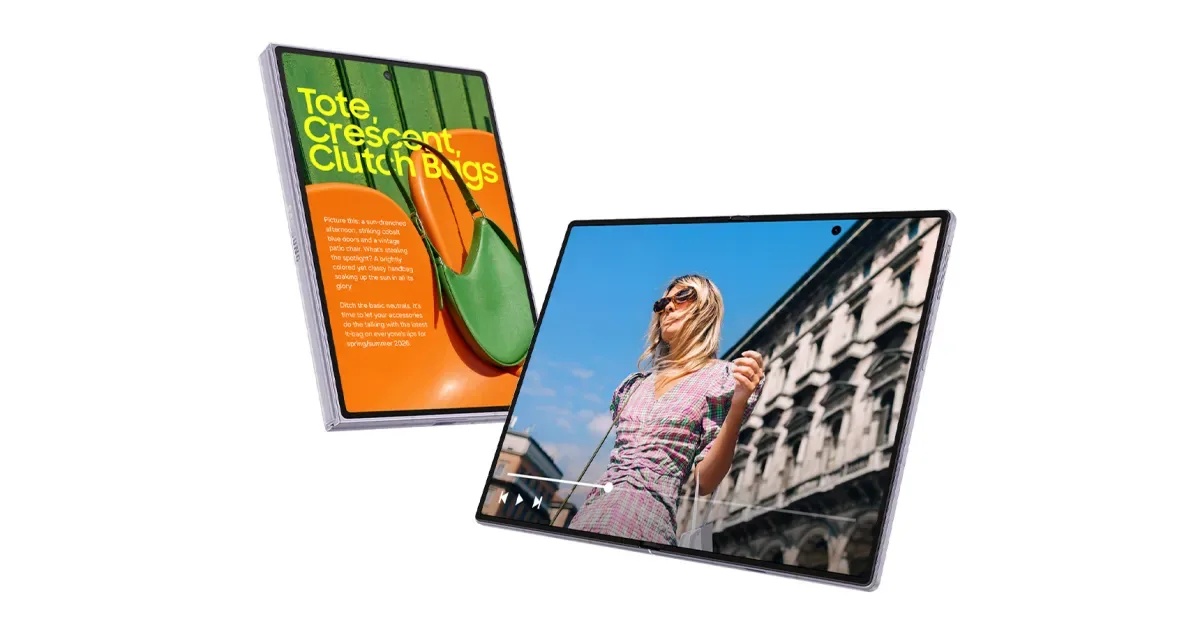
Samsung is touting the new form factor of its latest Galaxy Z Fold 8 as an ideal platform for watching videos, but the company's marketing claims of a 'full-screen' experience appear to be stretching the truth. Despite the wider display, most video content on the device still encounters letterboxing due to its internal screen's 4:3 aspect ratio.
In recent communications, including posts on its newsroom and extensive marketing over the past two weeks, Samsung has positioned the Galaxy Z Fold 8's new wider display as a superior content consumption device. The company specifically calls it the "perfect device for your favorite content." This aligns with expectations that the Fold 8's new shape would better suit media viewing compared to the more square displays of previous foldables.
While the Fold 8's display is technically more compact and offers less wasted space than its predecessors like the Fold 7 and Fold 8 Ultra, the assertion of a 'full-screen' experience is misleading. Samsung's promotional materials often depict videos filling the entire display from edge to edge.
Samsung stated, "Galaxy Z Fold8’s display is designed to optimize the content you consume, shifting and expanding with your curiosity. The 10:16 cover screen is the ideal shape for messaging, browsing and short-form video to fill the screen, and the immersive 4:3 main screen is great for unfolding to enjoy full-screen movies and e-books." However, this description does not reflect the reality for most users.
Content Aspect Ratio Mismatches
The primary issue lies with the internal display's 4:3 aspect ratio. This traditional aspect ratio is not compatible with the vast majority of modern video content, including movies and YouTube videos, which typically use wider formats. Consequently, viewers often experience significant black bars on the top and bottom of the screen, a phenomenon known as letterboxing.
This situation is reminiscent of a reverse 'Odyssey' debacle, where a device's aspect ratio is not well-supported by available content. While 4:3 content does exist, it represents a small fraction of what users consume today. The cover screen, with its 10:16 aspect ratio, fares slightly better for short-form vertical videos but still results in letterboxing on the sides for some content.
Adding to the confusion, one of Samsung's own posts incorrectly described the internal display as 16:10 and the outer display as 4:3. The company emphasizes that display ratios are crucial for efficient screen utilization and that the Fold 8's ratios were chosen to match contemporary content consumption habits. "The main screen features a 10:16 ratio — ideal for horizontal videos — while the cover screen features a 4:3 ratio — designed for vertical viewing," one marketing piece claimed, contradicting earlier statements and the visual evidence.
Even accounting for potential errors in Samsung's own marketing, the overarching narrative of a 'full-screen' viewing experience remains an exaggeration. While the Galaxy Z Fold 8 represents an improvement over previous generations in terms of media consumption, particularly with its larger inner display, the marketing overstates the 'full-screen' capabilities. Furthermore, the claim that the outer display is "designed for vertical viewing" is questionable, as many users have found it to be a less optimal experience for that purpose.
Despite these criticisms, the Galaxy Z Fold 8 is still a capable device for media. The improvements over past foldable generations are undeniable, but consumers should temper their expectations regarding the 'full-screen' video playback as heavily advertised by Samsung.