
Amazon Simplifies Order Emails Amid AI Shopping Competition
Amazon is now sending vague order confirmation emails, directing users to its app or website for details. This shift aims to enhance customer privacy and counter the rise of AI shopping agents.

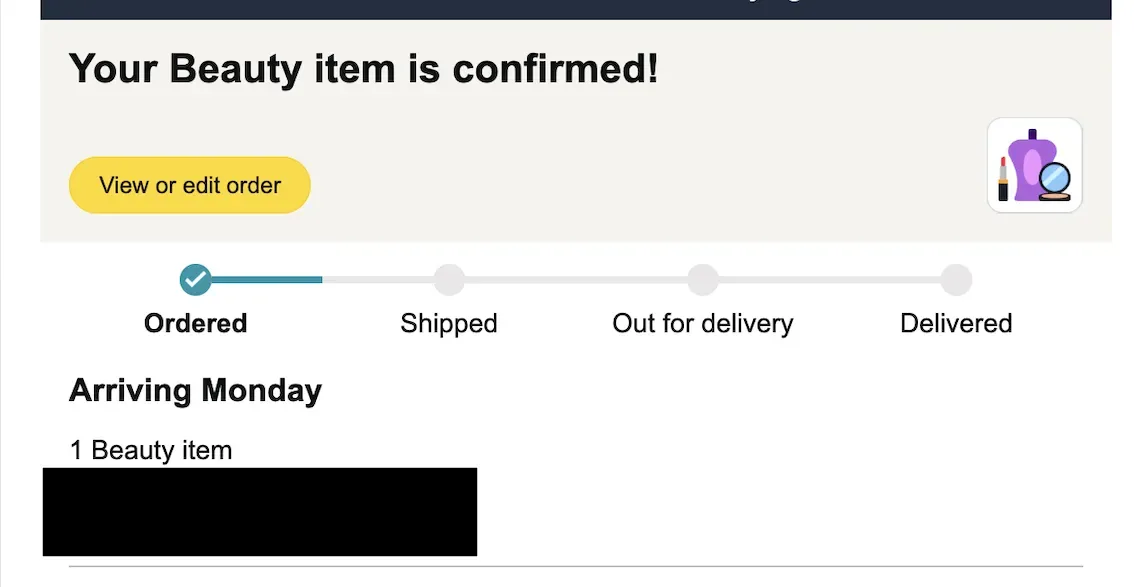
Amazon has begun sending significantly simplified order confirmation emails to its customers, a move that has sparked confusion and frustration among shoppers. Instead of item-specific details, these emails now offer generic subject lines and clip-art style illustrations of product categories, such as "Your Beauty item is confirmed!" or "1 Nutrition & Wellness, 1 Wireless Accessories." To ascertain the actual contents of their orders, customers are now required to navigate away from their inbox and visit the Amazon website or app.
Complaints about these vague notifications started surfacing in July 2026. Prior to this change, order emails typically included thumbnails and the precise names of purchased items, a practice that had been standard for years. Some consumers have voiced concerns to Amazon, stating that the lack of detail makes tracking purchases more difficult and, in some cases, makes the emails resemble spam or phishing attempts.
This alteration in email format occurs against the backdrop of a rapidly evolving e-commerce landscape, heavily influenced by artificial intelligence. Tech companies are increasingly envisioning AI "agents" that can manage personal shopping tasks, from browsing to purchasing. Google, with its vast product catalog and integration capabilities, is a prominent player in this arena. Features like Gemini Spark can already parse user emails to assist with tasks like building travel itineraries by pulling data from confirmations and personal information.
Google has also been developing cross-merchant shopping carts, intended for integration within Gmail. This would allow shoppers to add items to their cart directly from their inbox or while consuming content on platforms like YouTube. The efficacy of such AI agents, however, hinges on the amount of personal data users are willing to share.
The 'DoorDash Problem' and Retailer Strategies
A significant challenge for AI-powered shopping is what The Verge has termed "the DoorDash problem." If AI agents become truly efficient, customers might have less incentive to visit retailer websites directly, as the agent can handle all necessary interactions. This presents a dilemma for retailers who rely on direct customer traffic and engagement.
Despite this, many major retailers, including Walmart, Target, and Wayfair, have partnered with Google's AI initiatives, hoping to capture sales through chatbot interactions. Amazon, however, has notably abstained from these particular partnerships, signaling a preference for maintaining direct control over its customer relationships. The company has a history of protecting this relationship, including a lawsuit against Perplexity for facilitating shopping on Amazon via its AI tool, a case Amazon ultimately lost in early August 2026.
Amazon has been actively developing its own AI shopping features, such as price tracking and automated purchasing through its Alexa for Shopping service. These tools aim to keep customers within the Amazon ecosystem, allowing them to research and compare products without leaving the platform.
When questioned about the new email format, Amazon spokesperson Maxine Tagay explained the rationale. "As customers shop with us more frequently, including on their phones, and use the ‘Your Orders’ page in the Amazon app to get real-time, consolidated order details and delivery status, we’ve simplified several order-related emails to direct customers to our app and website for the latest information on their orders," Tagay stated via email. "This also reduces customer information shared outside the Amazon app and website to further improve customer privacy."
Essentially, Amazon appears to be using the simplified emails as a strategy to combat the "DoorDash problem" by encouraging users to engage with its own app and website. By withholding detailed purchase information from emails, the company aims to safeguard customer data from third-party AI tools and ensure that customers continue to interact directly with Amazon's platform, thereby reinforcing its proprietary relationship with shoppers.