
DuckDuckGo Sees Surge in Installs Amid Google's AI Search Shift
Privacy-focused search engine DuckDuckGo reports a significant spike in U.S. app installations following Google's integration of AI-generated answers into its search results.

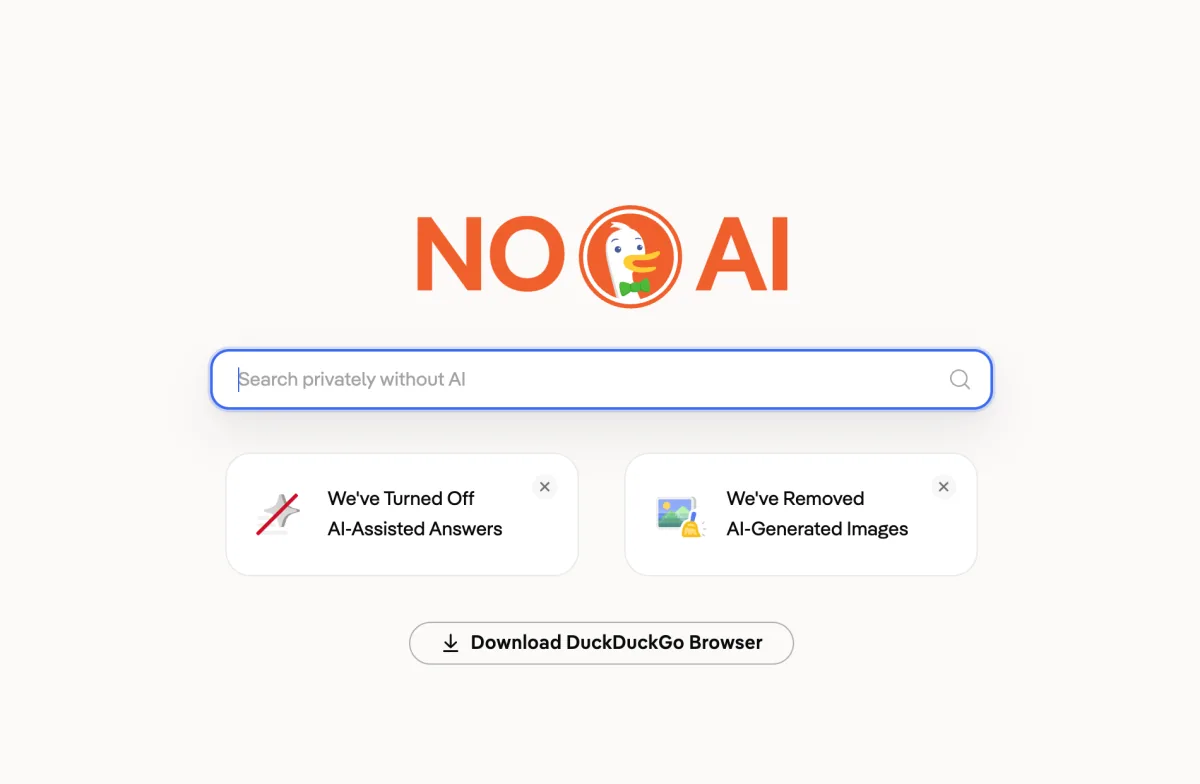
Privacy-focused search engine DuckDuckGo has experienced a substantial increase in U.S. app installations, with a reported week-over-week growth of up to 30.5% in late May 2026. This surge coincides with widespread user concerns and backlash over Google's recent decision to heavily integrate AI-powered overviews and agents into its primary search experience, a move many users feel removes choice and potentially compromises privacy.
The trend began to accelerate following Google's I/O developer conference, where the company unveiled its revamped search engine, moving away from a traditional list of blue links towards AI-driven responses and task execution. This departure from the familiar search interface has prompted a vocal response from users and industry observers alike. Critics argue that Google's embrace of AI search could fundamentally alter the open web, introduce inaccuracies through AI overviews, and reduce user agency by "force-feeding" AI without clear opt-out options.
DuckDuckGo CEO Gabriel Weinberg has been vocal about these changes, stating in a May 2026 release that Google's new approach is degrading search quality. “Google is force-feeding AI with no way to opt out,” Weinberg said. “As a result, their results are getting worse, not better. We want to be the place that puts users in charge and allows them to decide how much or how little AI they want.” This sentiment appears to resonate with a segment of internet users actively seeking alternatives that prioritize user control and privacy.
User Choice Drives Search Engine Defections
The impact on DuckDuckGo's user base is measurable. The company reported that U.S. app installs saw an average weekly increase of 18.1% between May 20 and May 25, a growth rate that was sustained for six consecutive days. On iOS devices, the week-over-week install growth was even more pronounced, averaging 33% and peaking at an impressive 69.9% on May 25. This heightened adoption rate comes at a time when DuckDuckGo typically observes a decrease in traffic during the U.S. Memorial Day weekend.
Beyond general app installs, DuckDuckGo's dedicated AI-free search page, noai.duckduckgo.com, also saw a significant uptick in usage. Visits to this page, which disables features like AI-assisted answers and AI-generated images by default, experienced an average WoW growth of 22.7%, reaching a peak of 27.7% on May 24. This indicates a segment of users are not only seeking alternatives but are actively opting for an experience completely devoid of AI integration.
Contextually, this shift is occurring within a broader debate about the role of artificial intelligence in everyday online interactions. For years, search engines have been the primary gateway to the internet for most users. Google's dominance has long been a subject of antitrust scrutiny, with concerns that its exclusive default search deals on major browsers and devices limited competition. DuckDuckGo, which holds about 2% of the U.S. search market, has consistently positioned itself as a privacy-first alternative. The current user aversion to Google's AI-centric approach presents a potential, albeit likely modest, opportunity for competitors like DuckDuckGo to gain traction.
Despite the user demand for AI-free experiences, DuckDuckGo itself offers AI-powered tools. These include a free AI product, Duck.ai, which provides access to advanced language models such as Anthropic’s Claude 4.5 Haiku and Meta’s Llama 4 Scout, without requiring user accounts. The company emphasizes that all interactions on Duck.ai are private, with IP addresses being stripped, conversations deleted within 30 days, and no data used for training AI models. Additionally, features like Search Assist and an AI Image Filter cater to users who may want AI capabilities but with enhanced privacy controls or the ability to filter out AI-generated content.
“Not only do we respect user choice, but also user privacy,” Weinberg reiterated. “Everything you do in DuckDuckGo is private; we don’t collect search histories or chats and nothing is used for AI training.” Kamyl Bazbaz, DuckDuckGo’s chief communications and policy officer, noted the popularity of their AI features, adding, “People just want a choice.” This demand for options, whether for AI-enhanced or completely AI-free searches, appears to be a defining characteristic of the current online landscape.