
DuckDuckGo Sees Surge in 'No AI' Search as Google Embraces AI
DuckDuckGo reports a significant increase in users opting for its "No AI" search following Google's recent AI-focused overhaul. The privacy-centric search engine highlights the growing user demand for traditional search experiences.

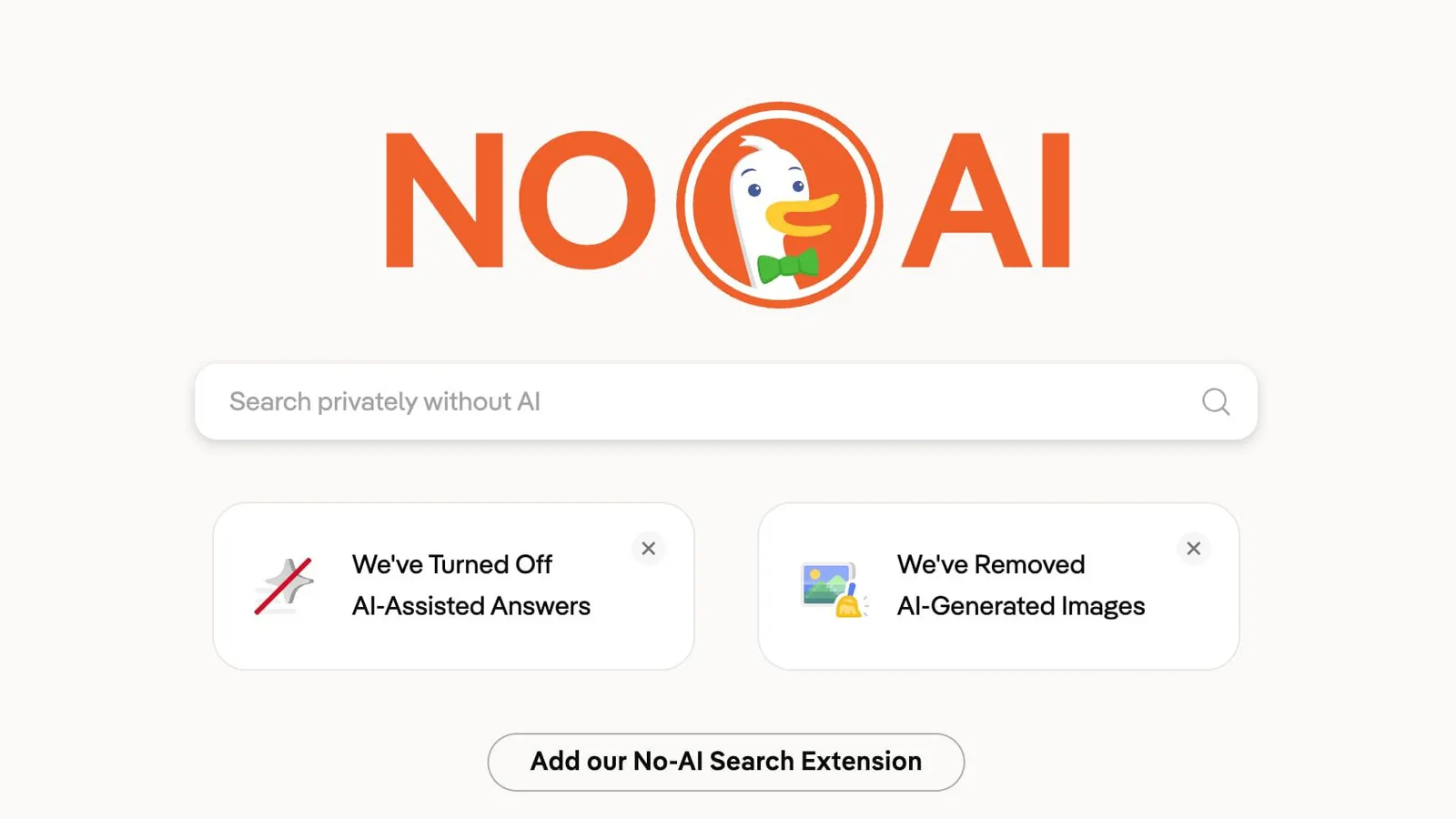
Privacy-focused search engine DuckDuckGo has experienced a substantial rise in users selecting its "No AI" search option. This surge follows Google's recent announcements on May 19th, where the tech giant unveiled a significant integration of artificial intelligence into its core search product. The "intelligent" search box, a key feature of Google's AI overhaul, offers AI-generated suggestions, supports conversational follow-up questions, and integrates expanded personal intelligence features by connecting user data from services like Gmail and Google Photos. Additionally, it introduces Search agents designed to assist users. In response to this shift, DuckDuckGo reported to MacRumors that traffic to its dedicated "No AI" search page more than tripled in the immediate aftermath of Google's announcement. The company observed that traffic levels hit a threefold increase on May 28th and have continued on an upward trend. Since May 19th, visits to the "No AI" page have consistently averaged around 84 percent above the typical baseline, indicating a clear user preference for a search experience less influenced by AI.
DuckDuckGo is actively leaning into this demand for AI-free search results. The company is promoting new browser extensions for Chrome and Firefox that allow users to set its "No AI" search as the default. This specific search experience deliberately avoids AI-assisted answers, refrains from using a chat interface, and displays fewer AI-generated images. While DuckDuckGo does possess its own AI tools, these are intentionally deactivated for users who opt for the "No AI" configuration, ensuring a cleaner, more traditional search output. The company also plans to integrate these "No AI" search settings into its existing extensions for Chrome, Firefox, Edge, and Opera in the coming months.
User Demand for Traditional Search Grows
The shift in user preference highlights a growing segment of internet users who are wary of the increasing integration of artificial intelligence into search engines. Concerns about privacy, accuracy, and the potential for AI to alter the nature of information discovery are driving some users to seek alternatives. Google's aggressive move towards AI in search, while aiming to enhance user experience with advanced capabilities, may be alienating users who value straightforward, unadulterated search results. This trend provides an opening for privacy-centric search engines like DuckDuckGo to attract and retain users seeking an alternative.
Beyond DuckDuckGo, other privacy-focused search engines are also catering to users who wish to minimize AI in their search results. Kagi, a paid search engine, offers a similar experience, presenting AI information only when explicitly requested by the user. Kagi operates on a subscription model, with plans costing $5 per month for a limited number of searches and $10 per month for unlimited searches. As a paid service, Kagi avoids advertisements and does not collect or sell user data, aligning with the principles of privacy-conscious searching. The rise of these alternative search methods suggests a significant market exists for search engines that prioritize user privacy and offer an experience free from pervasive AI-driven features.