
Firefox Unveils Project Nova: Rounded Redesign, AI Controls Emerge
Firefox is undergoing a significant visual transformation with "Project Nova," featuring rounded design elements and simplified controls for privacy and AI features. The update aims for a more intuitive user experience.

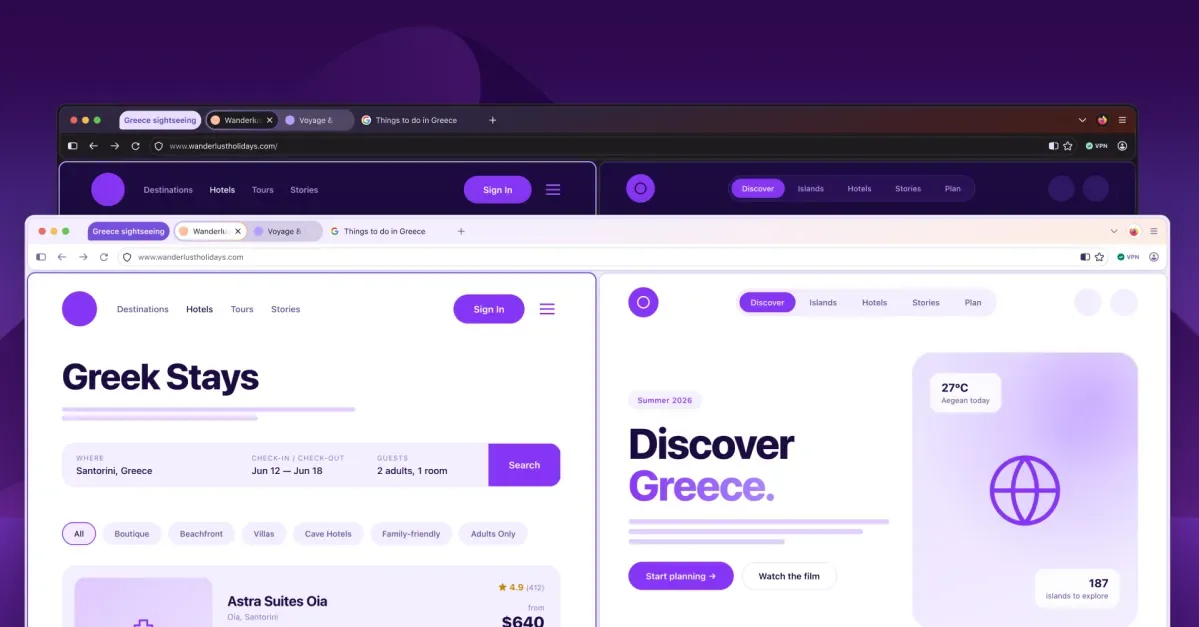
Mozilla is gearing up to roll out a substantial visual overhaul for its Firefox web browser, codenamed "Project Nova." Set to begin arriving later in 2026, the redesign introduces a host of aesthetic and functional changes, with a particular emphasis on making privacy settings and artificial intelligence controls more accessible to users. The new interface will feature rounded UI elements, including bubble-like tabs, and a refreshed color palette inspired by Firefox's iconic fire emblem.
The company announced that icons are also being updated to ensure greater visual consistency across both light and dark modes. This move aims to streamline the user experience and reduce cognitive load, allowing users to focus more on their browsing. While Firefox's AI features are designed not to be downloaded to a user's computer unless explicitly chosen, the redesign will make it simpler than ever to manage any AI models that are present. This offers a clear advantage over competitors like Google Chrome, which has faced scrutiny over significant AI-related downloads.
Enhanced Privacy and AI Management
One of the key objectives of "Project Nova" is to empower users with greater control over their online privacy and the integration of AI technologies. The redesigned settings section will prominently feature options for managing AI functionalities, including a straightforward toggle to disable all current and future AI features within the browser. This transparency is crucial as AI capabilities become increasingly embedded in web applications. Users will be able to easily see which AI features are active and understand their resource footprint. This contrasts with the more opaque management of AI components in some other browsers.
Beyond AI, the overhaul is set to bring back highly requested features and improve existing ones. Firefox's compact mode, which minimizes the space taken up by browser controls such as the back and forward buttons, will be reintroduced. This caters to users who prefer a more streamlined view and maximum screen real estate for web content. Furthermore, the redesign will enhance access to tab management tools, including tab groups, split view, and vertical tabs, facilitating more organized and efficient multitasking. The company is also exploring further customization options, including dynamic tab shapes and other UI element adjustments, allowing users to tailor the browser's appearance to their personal preferences.
In addition to the forthcoming "Project Nova" changes, Mozilla also recently introduced support for the Web Serial API in Firefox 151. This new API enables websites to interact with serial devices directly through the browser, eliminating the need for separate native applications or installers for certain hardware integrations. "For example, websites can control devices or deliver firmware without requiring native applications or installers," Mozilla explained. The release of Firefox 151, which became available this week, also includes an updated design for the Firefox Home page, new thematic wallpapers, and an improved PDF viewer that allows users to merge multiple documents.
The company's commitment to user-centric design and control is evident in "Project Nova." By simplifying complex settings and enhancing customization, Mozilla aims to reaffirm Firefox's position as a browser that prioritizes user experience, privacy, and flexibility. The gradual rollout of these features throughout 2026 is expected to bring a fresh, modern feel to one of the internet's longest-standing browsers, making it more intuitive and powerful for its global user base.