
iOS 27 Beta Adds More Siri Voice Customization for All
The latest iOS 27 beta expands Siri voice customization, allowing users to adjust pace and expressivity across all American and British accent voices. New features require recent Apple hardware.

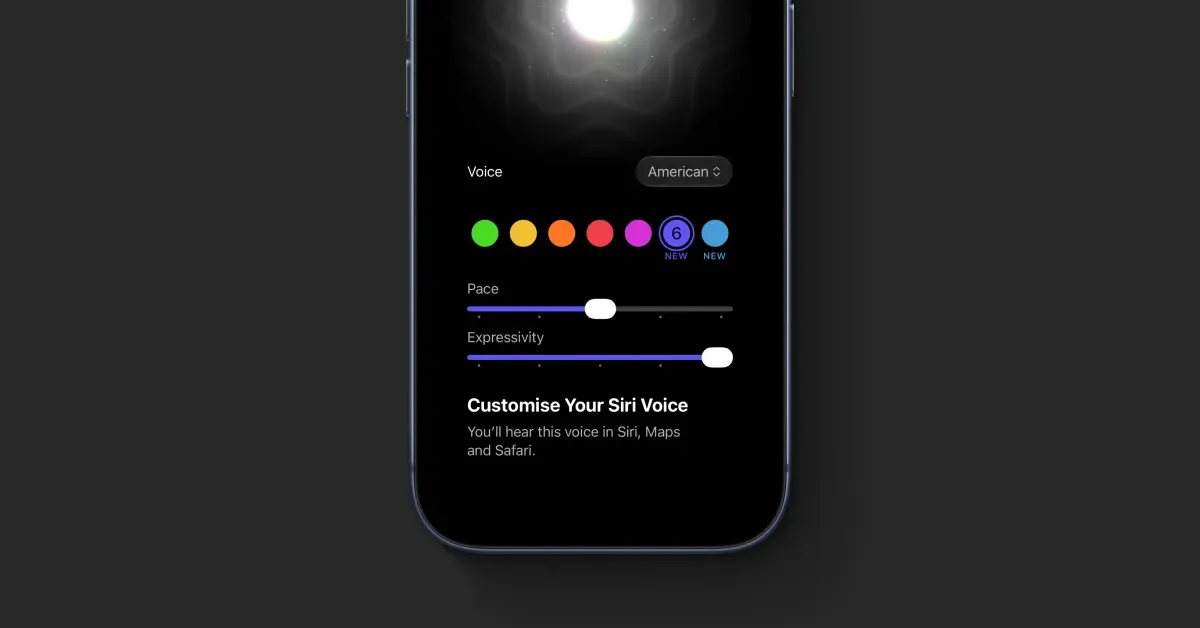
Apple's upcoming iOS 27 operating system is rolling out further enhancements to its virtual assistant, Siri, with the fifth beta version introducing expanded voice customization options. Previously limited to newer Siri voices with American accents, the ability to adjust the pace and expressivity of Siri's speech is now available for all American and existing British accent voices.
This update means that users can now personalize the speech patterns of eleven different Siri voices. The customization involves adjusting two key parameters: 'Pace,' which controls the speed of Siri's talking, and 'Expressivity,' which governs the amount of emotion and emphasis in its delivery. Users can access these settings via Settings > Siri > Voice, where sliders allow for fine-tuning. There are five distinct levels available for both pace and expressivity, offering a nuanced range of vocal options. Consequently, on compatible hardware, users have access to eight distinct American voice options and four British voices that support these new adjustments.
Siri's Enhanced Capabilities and Hardware Requirements
The advancements in Siri's voice capabilities are powered by a new, robust on-device artificial intelligence model. However, these sophisticated features come with specific hardware prerequisites. To fully utilize the advanced Siri AI and its enhanced voice synthesis, users will need devices such as the iPhone 17 Pro, iPhone 17 Air, iPad Pro with an M4 chip or newer, and Macs equipped with an M3 chip or higher and at least 12 GB of RAM. The core Siri AI functionality itself is slated for a beta launch later this year and requires an iPhone 15 Pro or newer. Devices with older hardware will continue to use the previous voice synthesis technology.
This move by Apple signifies a significant step towards more personalized user experiences within its ecosystem. By allowing greater control over Siri's vocal characteristics, the company aims to make interactions with its virtual assistant feel more natural and tailored to individual preferences. The expanded availability across different accents and voices ensures a broader user base can benefit from these improvements. The development also highlights Apple's ongoing investment in on-device processing, which enhances privacy and responsiveness by keeping data local to the user's device whenever possible.
The introduction of advanced voice customization in iOS 27 is part of a larger trend in the tech industry towards more human-like AI interactions. As virtual assistants become more integrated into daily life, the demand for personalization and natural communication continues to grow. Apple's strategy with these updates appears to be fostering a deeper connection between users and their devices, making technology feel less like a tool and more like a collaborative partner. The beta testing phase for iOS 27 will likely see further refinements based on user feedback, with a full public release expected in the fall.