
Laos Stone Jars Reveal Ancient Burial Rituals of Lost Civilization
Thousands of ancient stone jars in Laos, long a mystery, are now understood to be multigenerational burial sites. New evidence from Jar 1 on the Xieng Khouang Plateau confirms interment practices of a lost people.

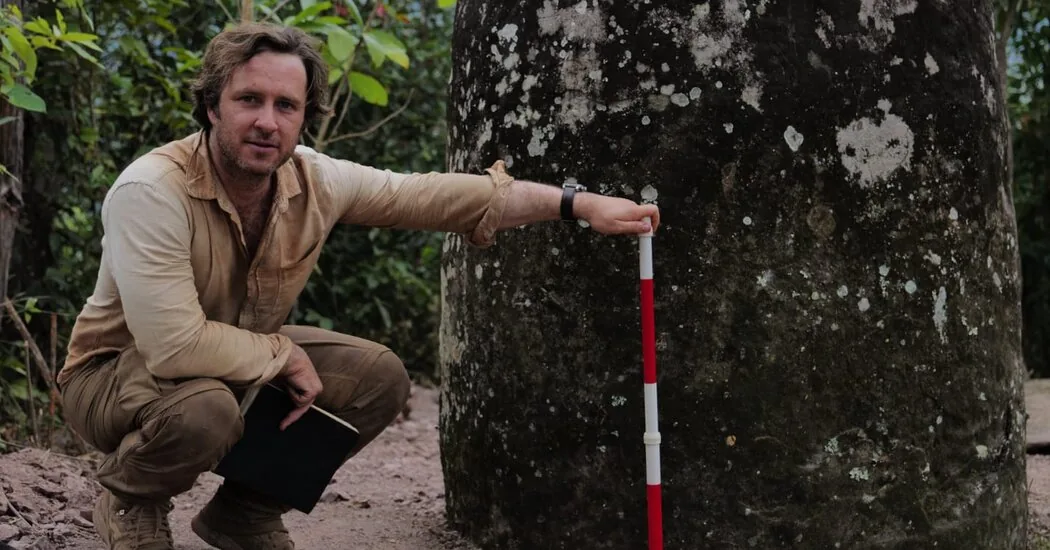
Thousands of massive stone jars dotting the landscape of north-central Laos, an archaeological puzzle for nearly a century, are now believed to have served as elaborate burial sites for a lost civilization. While local legends spoke of giants brewing rice wine, a recent study published in the journal Antiquity provides compelling evidence supporting a more solemn purpose: the interment of the dead. In the winter of 2026, researchers working on the Xieng Khouang Plateau, an area famously known as the Plain of Jars, investigated a large, squat stone vessel they had previously overlooked.
Nicholas Skopal, an archaeologist at James Cook University in Australia and the lead author of the new study, described the structure as resembling "a giant stone cauldron that had collapsed in on itself." Upon excavating the sediment accumulated within the jar, now designated Jar 1, Skopal and his team unearthed a find that fundamentally altered the prevailing understanding of early Southeast Asian history. Instead of remnants of a feasting culture, the vessel contained the disarticulated skeletal remains of at least 37 individuals, suggesting a multigenerational burial practice.
Unearthing Ancient Funeral Practices
The discovery within Jar 1 directly challenges the long-held folklore that attributed the creation of these enigmatic megaliths to ancient giants using them for brewing ceremonial rice wine. For decades, archaeologists have speculated that the primary function of the stone jars was funerary, but concrete proof remained elusive. This latest excavation provides that definitive link, revealing a complex and potentially communal approach to death and remembrance among the people who created these artifacts. The Xieng Khouang Plateau, where the majority of the estimated 3,000 stone jars are found, is now understood as a significant mortuary landscape.
The exact age of the jars remains a subject of ongoing research, with estimates placing their creation between 500 BCE and 500 CE. The people responsible for their construction and use are often referred to as the "Jar People." Their culture, language, and societal structure are largely unknown, making artifacts like these jars crucial windows into their lives and customs. The study by Skopal and his colleagues utilized advanced dating techniques on associated human remains and artifacts found at the site to refine the timeline of their use.
Further analysis of the human remains within Jar 1 revealed details about the skeletal structure and potential cause of death for some individuals. The jumbled nature of the bones suggests that bodies may have been interred and then re-entered over time as new family members or community members were added to the collective burial. This practice, known as secondary burial, is common in many ancient cultures and indicates a long-term reverence for ancestors and a sophisticated understanding of decomposition and preservation.
The implications of this finding extend beyond understanding ancient burial rites. It offers critical insights into the social organization and population dynamics of prehistoric Southeast Asia. The effort required to quarry, transport, and place these enormous stone vessels, some weighing several tons, suggests a well-organized society with a strong belief system surrounding death and the afterlife. The study aims to prompt further archaeological investigations across the Plain of Jars to uncover more sites and potentially identify variations in burial practices across different regions or time periods.
Skopal stated, "This discovery is a significant step forward in understanding the funerary practices of the mysterious Laos jar creators. It moves us closer to piecing together the narrative of this ancient culture." The research team plans to continue their work, employing non-invasive techniques to survey other jar fields and analyze existing collections of human remains to build a more comprehensive picture of the people who left behind these silent, monumental testaments to their existence.