
Space Detects First Sugar Molecule: Glycolaldehyde Found in Nebula
Astronomers have detected glycolaldehyde, a simple sugar, in a distant star-forming nebula for the first time. This discovery offers insights into the early building blocks of life in the cosmos.

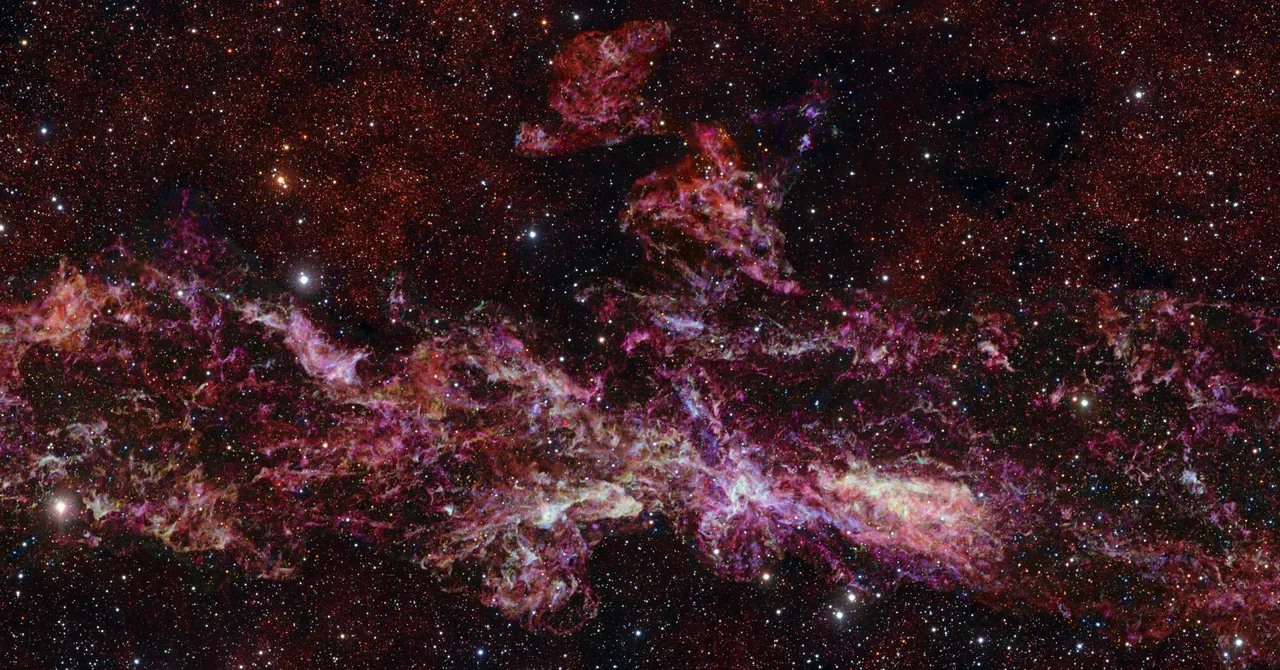
Astronomers have identified a simple sugar molecule, glycolaldehyde, in a distant star-forming nebula for the first time, marking a significant milestone in the search for life's precursors beyond Earth. The molecule was detected in the Sagittarius B2 (Sgr B2) star-forming region, located near the center of our Milky Way galaxy, approximately 26,000 light-years away. This finding, published in the journal Astronomy & Astrophysics, provides crucial evidence that the fundamental organic compounds necessary for life can form in the harsh environment of interstellar space.
The detection was made using the Atacama Large Millimeter/submillimeter Array (ALMA) in Chile, a powerful telescope capable of observing the faint radio waves emitted by molecules in space. Glycolaldehyde (CH2OHCHO) is a simple sugar that plays a role in the formation of RNA, a molecule essential for all known forms of life. Its presence in Sgr B2 suggests that the chemical pathways leading to life's building blocks may be common throughout the universe, potentially seeding nascent planetary systems with the ingredients for biology.
Chemical Origins of Life
The discovery of glycolaldehyde in Sgr B2 is particularly exciting because this region is known to be a nursery for stars and planets. Similar to how complex organic molecules found in meteorites point to chemical processes occurring in the early solar system, detecting these molecules in star-forming regions offers a glimpse into the conditions present when planets like Earth are born. Researchers believe that sugars and other complex organic molecules form on the surfaces of dust grains in cold interstellar clouds before being incorporated into new stars and planets.
Previous observations had hinted at the presence of simple sugars in space, but this is the first definitive identification of glycolaldehyde in such a location. The team was able to pinpoint the molecule by analyzing the specific radio frequencies absorbed and emitted by its chemical structure. "This detection demonstrates that relatively complex organic molecules can be synthesized in the interstellar medium," said Dr. Marie-Aline Martin-Drumel, a researcher at the University of Paris-Saclay and lead author of the study. "These molecules are the precursors to life, and finding them in a star-forming region tells us that the basic ingredients for life might be present when planets first form."
The implications of this finding extend to the broader question of whether life exists elsewhere in the universe. If the chemical components necessary for life can form spontaneously in interstellar clouds, then the potential for life to arise on planets orbiting other stars is significantly increased. This discovery reinforces the idea that the universe is rich with organic chemistry and that the emergence of life may not be a unique event confined to Earth. Future research will focus on searching for other prebiotic molecules, such as amino acids and nucleobases, in similar cosmic environments.
The presence of Sagittarius B2, a vast cloud of gas and dust, provides a rich chemical laboratory for studying the formation of molecules in space. Its proximity to the galactic center, while making it a target of interest, also presents observational challenges due to interference from other celestial objects. However, the advanced capabilities of ALMA have allowed astronomers to overcome these hurdles and make unprecedented discoveries about the chemical makeup of the cosmos. This finding is a crucial step in understanding the cosmic origins of life and the potential for its existence beyond our solar system.