
New 2-in-1 Thruster System Gets In-Space Test for Satellites
A novel propulsion system that uses a single propellant for both chemical and electrical thrusters is set for its first in-space demonstration. This innovation aims to expand the capabilities of small satellites.

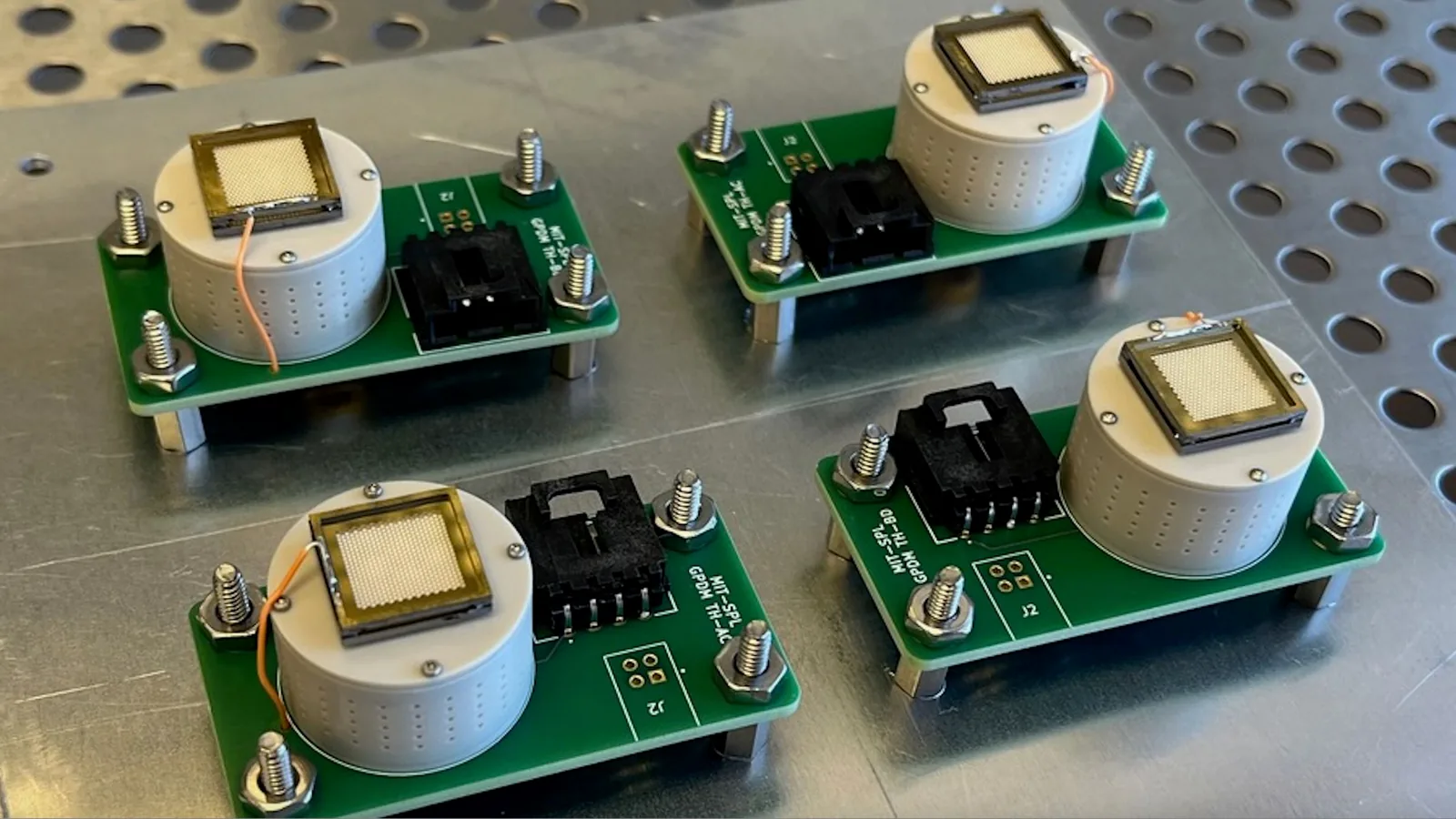
A groundbreaking propulsion system designed to power both chemical and electrical thrusters using a single propellant is slated for an upcoming in-space test. Developed by researchers at the Massachusetts Institute of Technology (MIT), this innovative approach aims to overcome fuel limitations in small satellites, potentially enabling them to undertake more complex scientific and observational missions.
The system's potential was highlighted by Amelia Bruno, a former postdoctoral student at MIT and lead author of the study. "If you can have chemical and electrical propulsion in one small package, it's the best of both worlds," Bruno stated in a university release on June 1. "This opens the door for small satellites to do even more science, more observations, and more interesting missions, all on a smaller and cheaper platform." The research draws upon fuel advancements from the U.S. Air Force and received partial funding from NASA.
The NASA Green Propulsion Dual Mode cubesat spacecraft, featuring this propulsion system and a tested monopropellant, is scheduled to launch to low Earth orbit no earlier than November 2026. This mission will serve as a crucial demonstration of the technology's viability in the space environment, following successful ground tests. The agency anticipates the technology could significantly benefit future deep-space missions, including those targeting Mars, aligning with NASA's long-term objectives for expanding human presence beyond Earth.
Advancing Green Propellant Technology
NASA officials emphasized the agency's commitment to developing advanced propulsion systems to support its deep-space exploration goals. The upcoming cubesat mission, initially expected to launch in October 2025, aims to validate capabilities crucial for future exploration endeavors. The green monopropellant used in the system, detailed in a new study published in the Journal of Propulsion and Power, builds upon prior U.S. Air Force research. This propellant is known as ASCENT, or Advanced Spacecraft Energetic Non-Toxic Propellant.
ASCENT is presented as a more environmentally friendly and less toxic alternative to hydrazine, a commonly used but hazardous high-efficiency propellant essential for large orbital maneuvers. While hydrazine is effective for major adjustments, its toxicity poses significant handling risks. ASCENT has seen prior space testing, notably during NASA's Green Propellant Infusion Mission in the 2019-2020 timeframe. At that time, the fuel was identified as AF-M315E before being renamed by the Air Force Research Laboratory, which originally developed it.
A key aspect of the new MIT study is its exploration of ASCENT's suitability for electrospray thrusters. These thrusters are designed for precise, long-term adjustments to a spacecraft's trajectory, unlike chemical thrusters primarily used for large, rapid maneuvers like orbital insertions. Electrospray thrusters operate by using an electric field to accelerate tiny droplets of liquid propellant, creating a fine spray that generates thrust. The ground-based experiments simulated the microgravity conditions of space by magnetically suspending a device within a vacuum chamber, allowing engineers to evaluate the thrusters' performance with ASCENT across various voltage levels.
"Compared to our normal electrospray propellants, ASCENT can provide similar performance in terms of thrust," Bruno confirmed. "Now that we know our thrusters work with ASCENT, we can start thinking of all the ways we can make them even better." The successful integration of ASCENT with electrospray technology signifies a significant step towards realizing a versatile, single-fuel propulsion solution for a wide range of spacecraft needs.
Beyond deep-space exploration, the adaptability of ASCENT could also benefit missions closer to Earth. Small satellites used for Earth observation, particularly those tasked with monitoring rapidly changing events like weather phenomena, could leverage this propellant. Paulo Lozano, director of MIT's space propulsion laboratory and a co-author of the study, explained the advantage: "Say there's a storm coming, and you'd want to deploy your constellation of small satellites to observe over one location. You could choose to send them quickly, or slowly, depending on the nature of the observation. And the only way to do that is if you have two propulsion systems, which is now possible." This dual capability, previously requiring separate fuel systems, is now achievable with a single, greener propellant, promising greater flexibility and efficiency for future satellite missions.