
Earth's Past: Could Advanced Civilizations Have Existed Before Humans?
Scientists explore the 'Silurian hypothesis,' questioning if evidence remains of advanced civilizations predating humans. The idea probes humanity's own future amid climate change.

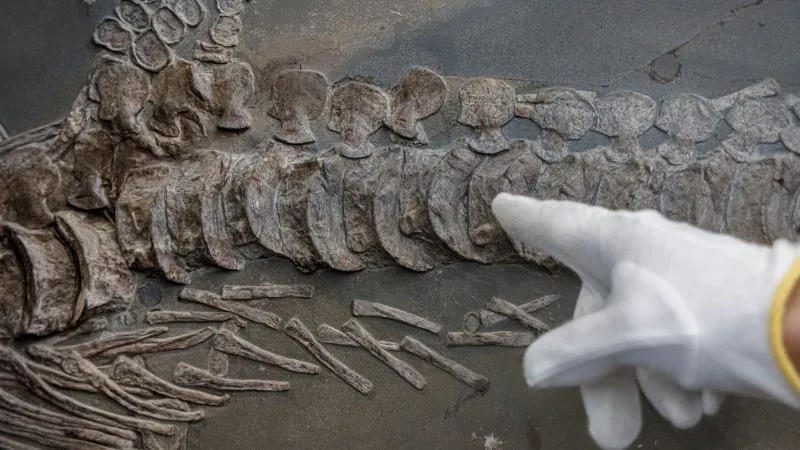
An intriguing question posed by astrobiologist Adam Frank to NASA scientist Gavin Schmidt has sparked a thought experiment: could advanced civilizations have existed on Earth long before humans, and would we even know if they did? The inquiry, dubbed the "Silurian hypothesis," investigates the potential geological and chemical traces left behind by a technologically advanced society that powered itself with energy and potentially faced its own demise.
Frank, a professor at the University of Rochester, initially approached Schmidt in 2017 with a query about whether alien civilizations experience climate change. Schmidt's unexpected counterquestion, "How do you know that there have been no other civilizations on Earth?" launched the pair into exploring the possibility. Their findings, published in 2018, consider whether remnants of such a civilization could be preserved in Earth's geological record, drawing parallels to humanity's current impact on the planet's climate.
"It is a thought experiment, but one that exposes our potential vulnerability globally," said Katharine Hayhoe, an atmospheric scientist at Texas Tech University, who was not involved in the research. "These questions are all relevant to exactly the moment that we’re in. We are pushing the planet into a new climate regime … we know this is true, right? And yet we’re not doing anything about it."
The hypothesis gained traction partly due to geological events in Earth's deep past that bear resemblance to current climate trends. One such event is the Paleocene-Eocene Thermal Maximum (PETM), approximately 55 million years ago, when global temperatures surged by up to 15 degrees Fahrenheit and ecosystems suffered severe disruption. This period, characterized by a massive injection of carbon into the atmosphere, may have been triggered by factors like intense volcanic activity or a sudden methane release, though its exact cause remains a mystery. Schmidt found the similarities between the PETM and today's human-driven climate change compelling.
Searching for Anomalies in Earth's History
The scientists delved into the chain of evidence that might indicate a prior advanced civilization. They noted that current human urbanization covers only about 1% of the Earth's surface, and much of what we build would be erased over geological timescales. The further back in time a hypothetical civilization existed, the more difficult it would be to find direct evidence. Over millions of years, geological processes such as tectonic plate movement, volcanic eruptions, and erosion continually reshape the planet's surface. Even Earth's oldest landmasses, like the Negev Desert at approximately 1.8 million years old, offer limited insights into deep prehistory.
Considering the fossil record, the researchers acknowledged its limitations. Only a tiny fraction of species become fossilized, and even fewer are discovered. Dinosaurs, for instance, lived for about 180 million years, yet only a few thousand near-complete fossils have been found. A civilization existing for a mere 100,000 years, a short period in the 400-million-year history of complex life, could easily be missed.
Frank and Schmidt turned their attention to chemical signatures. "Every one of those strata is ground up rock that keeps a memory of what the chemistry of the Earth was like then," Frank explained, using the Grand Canyon as an example of geological strata preserving ancient environmental data. If a past civilization altered the planet's chemistry—similar to how humans have released vast amounts of carbon pollution—a detectable record might exist in these rock layers.
The study also considered other potential human legacies, such as the pervasive use of plastics, artificial agricultural hormones, and persistent chemicals that resist environmental breakdown. These substances, along with heavy metals used in electronics, could be preserved in future sediments, offering clues millions of years from now. The objective of the paper, Frank emphasized, was not to prove the Silurian hypothesis but to outline the specific types of evidence needed for a high-resolution investigation into Earth's past.
While Frank and Schmidt acknowledge they do not personally believe in a past civilization, they maintain that it cannot be definitively ruled out. Geologist Jan Zalasiewicz of the University of Leicester, who co-authored the book "Discarded: How Technofossils Will be Our Ultimate Legacy," called the Silurian hypothesis "a wonderful and deeply thought-provoking idea." However, he suggested that Frank and Schmidt might underestimate the transformative impact of modern humans and the effectiveness of the fossilization process in preserving geological records. Zalasiewicz expressed confidence in ruling out the existence of civilizations similar to ours today—ones that are "energy-guzzling, manipulative, constructional, and producing waste in colossal quantities." The very act of producing such waste, he argued, would leave an undeniable footprint.
The enduring value of the hypothesis, according to Frank, lies in the profound questions it raises about the sustainability and longevity of advanced technological civilizations like our own. "Are we an experiment that the planet has run, which is going to fail?" he mused, highlighting the critical challenge humanity faces in managing the consequences of its technological advancements and their impact on the global climate regime.