
Orionid Meteor Shower 2026: Peak Viewing Tips for Early Birds
The Orionid meteor shower, produced by Halley's Comet debris, is set to peak on October 23, 2026. Early morning hours offer the best visibility for this celestial event.

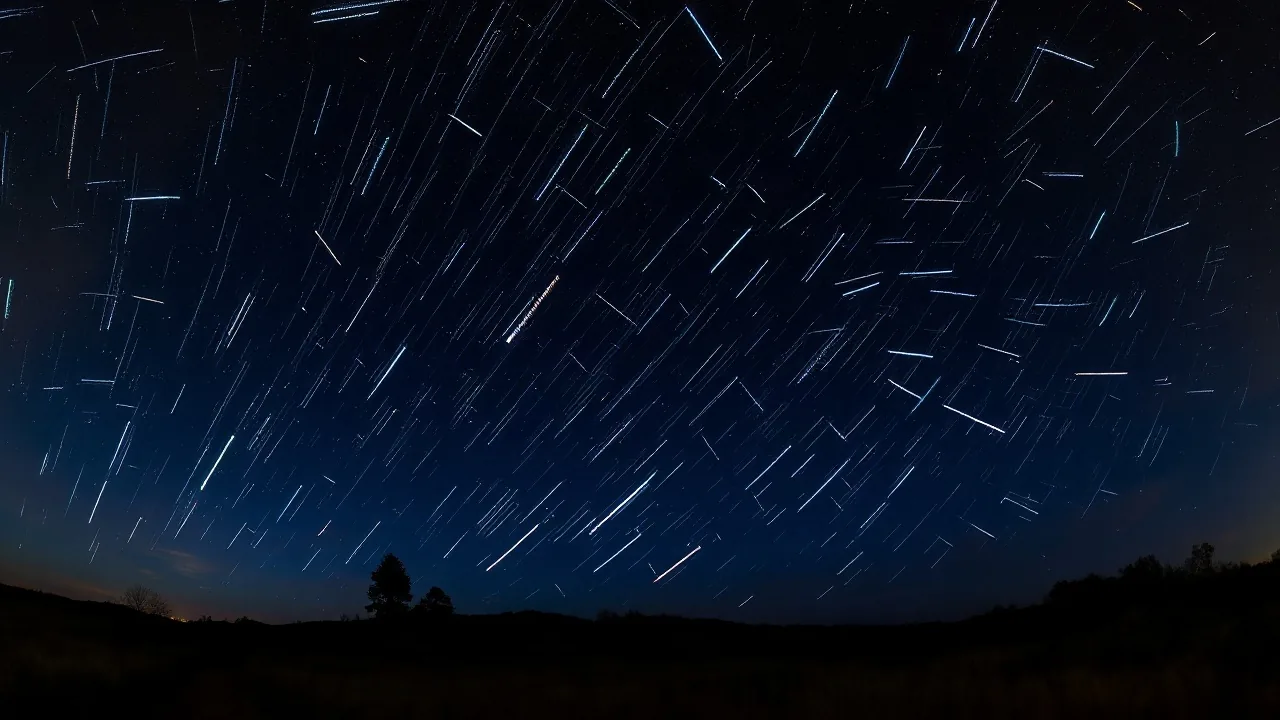
Stargazers across North America will have their best chance to witness the annual Orionid meteor shower this year, with the celestial display expected to reach its peak on the morning of Friday, October 23, 2026. The meteors, often called "shooting stars," are actually tiny fragments of dust and ice shed by the famous Halley's Comet as it journeys through space. These particles burn up upon entering Earth's atmosphere, creating streaks of light visible from the ground.
For optimal viewing, experts recommend heading outdoors in the pre-dawn hours, ideally between 2:00 AM and sunrise. This is when the radiant point of the shower, the constellation Orion, will be high in the sky. While the Orionids can be seen for several weeks, the peak night promises the highest rate of meteors per hour. Last year, conditions were hampered by a bright moon, but this year, moonless skies are expected to provide a darker canvas, enhancing the visibility of fainter meteors.
Viewing Tips for a Stellar Experience
To make the most of the Orionid meteor shower, patience and preparation are key. Find a location far from city lights to minimize light pollution, which can obscure the fainter streaks. Allow your eyes at least 20 to 30 minutes to adjust to the darkness; a red-light flashlight can help you navigate without ruining your night vision. Lie back on a blanket or chair and look up at the entire sky, rather than focusing on a single spot. While the Orionids are known for producing bright fireballs, the average rate during the peak can be around 20 to 30 meteors per hour under ideal conditions.
The Orionids are unique because they are associated with two different comet passages – the last time Halley's Comet passed through the inner solar system was in 1986. The debris trail it leaves behind is vast and has been accumulating for centuries. Earth passes through this stream of cosmic dust twice a year, producing the Orionids in October and the Eta Aquariids in May. The Earth's trajectory through this stream means that the dust particles hit our atmosphere at a very high speed, creating particularly bright and fast meteors.
Astronomer Dr. Evelyn Reed, from the Lowell Observatory, noted the importance of this year's viewing conditions. "With the moon out of the picture, this is shaping up to be an exceptional year for the Orionids," Dr. Reed stated. "We're anticipating a truly spectacular show for anyone willing to wake up early." She also advised checking local weather forecasts, as clouds can easily ruin the experience. The Halley's Comet, a periodic comet visible from Earth every 75 to 76 years, last made its appearance in 1986, and its next visit is not expected until 2061.
This year's Orionid display also coincides with the annual Perseid meteor shower, which typically occurs in August, although the Orionids are generally considered more spectacular due to their speed and brightness. Observers are encouraged to document their sightings and share them online, contributing to citizen science projects that track meteor activity. The meteor shower offers a free and accessible astronomical event for people of all ages, connecting us to the vastness of the cosmos and the enduring legacy of Halley's Comet.