
2026 Solar Eclipse: Best Viewing Spots in Spain, Iceland
The highly anticipated 2026 solar eclipse on August 12 offers prime viewing in Iceland and Spain. While North America sees only a partial event, enthusiasts can travel for a total experience.

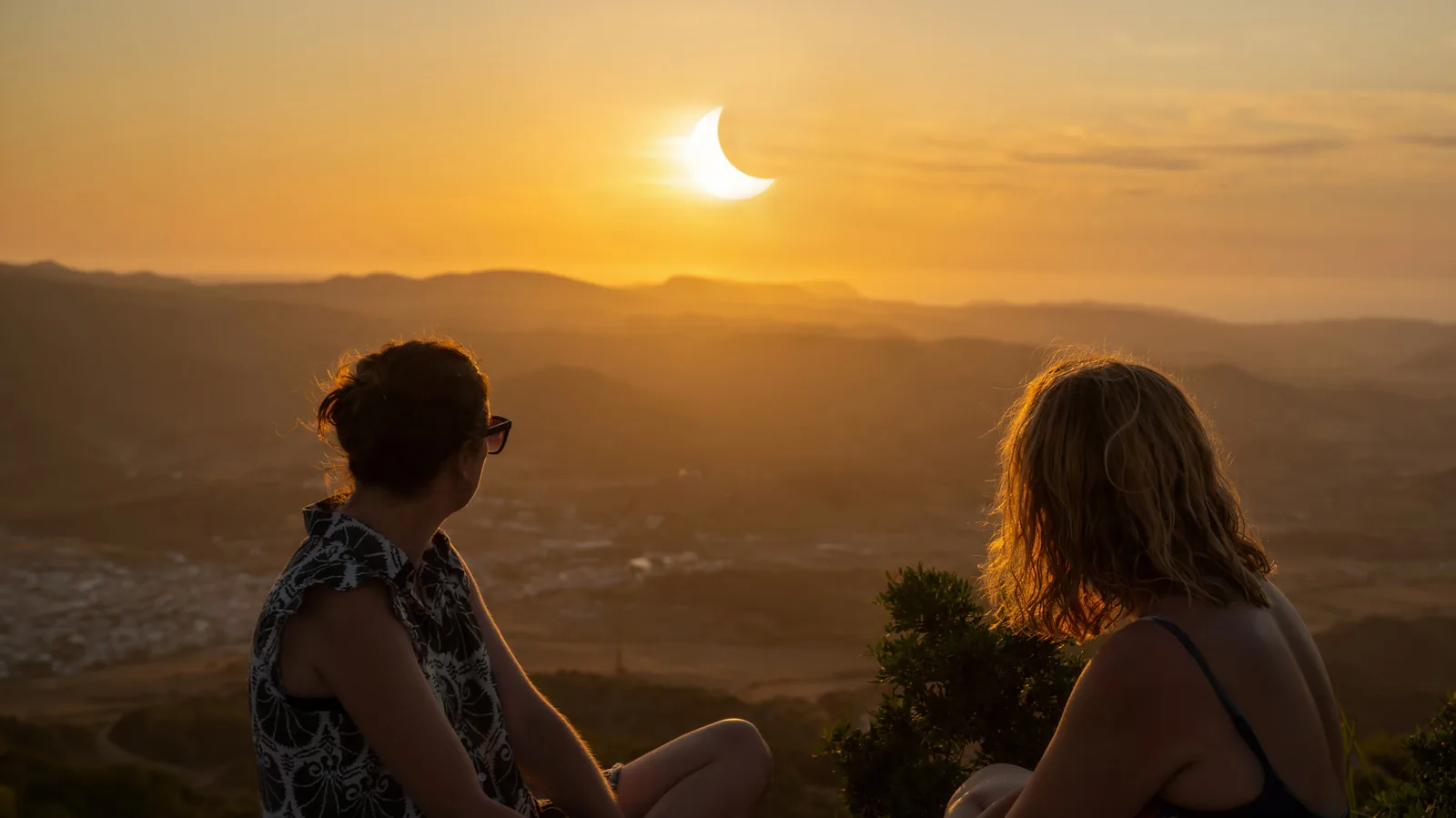
The upcoming 2026 solar eclipse on August 12 promises a celestial spectacle for skygazers, marking the first total solar eclipse since 2024. This rare event uniquely aligns with the annual Perseid meteor shower, adding to its astronomical significance. The eclipse is also notable for its extended duration, a phenomenon attributed to its timing with lunar perigee, when the Moon appears larger as it reaches its closest orbital point to Earth. While full totality will not be visible globally, many regions will witness at least a partial obscuration of the sun.
Unlike the 2024 eclipse, which captivated North America, the prime viewing locations for the 2026 event are situated in Spain and Iceland. However, populations in certain parts of Canada and the United States, as well as other areas of Europe, can still anticipate a glimpse of the eclipse, though they will not be within the path of totality. This path is defined as the precise area where the Moon completely obscures the Sun.
Optimal Viewing Destinations
The most sought-after vantage points for the 2026 total solar eclipse are western Iceland and northern Spain. In Iceland, Látrabjarg will experience the longest duration of the full eclipse, with viewing also possible from Reykjavík and Ísafjörður along the west coast. Spain, however, is considered by many to be the superior location for eclipse observation. The eclipse's trajectory crosses more of Spain's landmass, increasing the probability of finding an ideal viewing spot. Furthermore, Spain's climate in August typically offers more favorable weather conditions, with temperatures 20 to 30 degrees Fahrenheit warmer than Iceland.
Key Spanish cities offering a front-row seat to the total eclipse include Bilbao, Burgos, Palma, Santander, Valencia, Valladolid, and Zaragoza. A small northeastern segment of Portugal, specifically Montesinho Natural Park in Bragança, will also lie within the path of totality. Although remote locations in Russia and Greenland are also set to experience the total eclipse, they are considerably more difficult to access without specialized expeditions.
For residents of North America, the event will manifest as a partial eclipse, predominantly visible in the northern United States and eastern Canada. The extent of solar coverage will vary significantly by location. For instance, New York City is projected to see only about 9% coverage, while St. John's, Newfoundland, can expect approximately 53% coverage. Detailed viewing times and coverage percentages for numerous locations are available through specialized astronomical resources, such as Time and Date.
Witnessing a solar eclipse safely is paramount. It is only safe to look directly at the Sun during the brief moment of totality. At any other time, direct viewing can lead to severe and permanent eye damage. Given that no part of the continental United States will experience totality in 2026, all viewers within the country must use eye protection throughout the entire event. Standard sunglasses, binoculars, or camera lenses are insufficient for safe viewing; specialized solar eclipse glasses or viewers are essential. Protecting camera lenses with specialized filters is also necessary for photography. The American Astronomical Society provides a list of approved safety products, ensuring adequate eye protection.
Alternatively, indirect viewing methods offer a safe way to observe the eclipse without specialized equipment. The pinhole projector is a popular and simple device, with instructions readily available on the NASA website. Other household items with small apertures, like a colander, or even the arrangement of one's hands can be used to create an indirect view. By positioning oneself with their back to the sun and allowing light to pass through small holes onto a surface, observers can project an outline of the eclipse, offering a safe and accessible viewing experience.