
NASA Telescope Faces Earth Re-entry After Rescue Mission Fails
A NASA telescope is on a trajectory to re-enter Earth's atmosphere due to a failed rescue mission. The spacecraft, launched in 2003, is now uncontrolled.

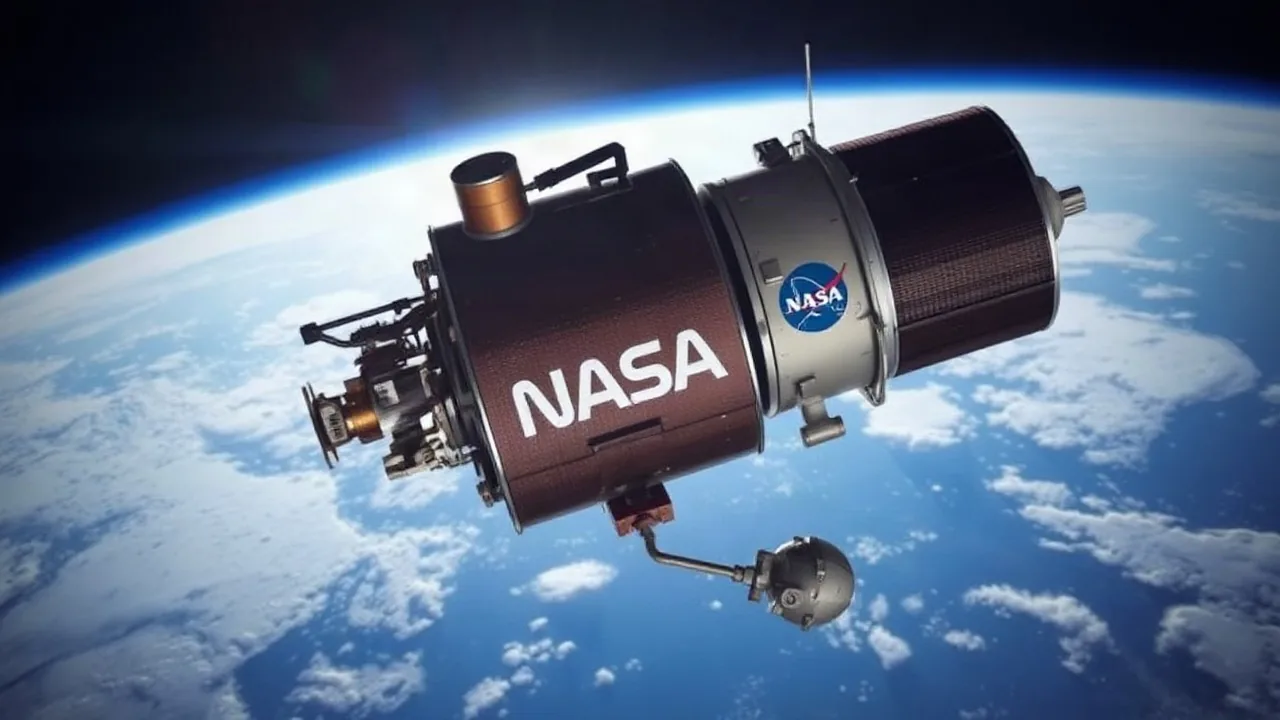
A NASA telescope, launched over two decades ago, is now on an uncontrolled trajectory toward Earth's atmosphere following the unsuccessful completion of a rescue mission. The telescope, named the Spitzer Space Telescope, was decommissioned in 2020, but efforts to potentially salvage its orbit or bring it down safely have concluded, leaving its re-entry path uncertain.
The Spitzer Space Telescope, a marvel of infrared astronomy, was deployed in August 2003. Its primary mission was to observe the universe in infrared light, allowing scientists to peer through cosmic dust and gas to study the formation of stars and galaxies, exoplanets, and the early universe. Over its extensive operational life, Spitzer delivered groundbreaking data and iconic images, contributing significantly to our understanding of the cosmos.
End of an Era for Spitzer
Following its decommissioning in January 2020, NASA had been evaluating options for the telescope's final disposition. Unlike some satellites that can be safely guided to burn up in the atmosphere or directed to a remote ocean location, the complex orbital mechanics and the telescope's current state have rendered such controlled maneuvers unfeasible. The failed rescue mission specifically refers to attempts to boost its orbit or perform other interventions that would have extended its operational life or allowed for a more predictable end-of-life scenario.
The re-entry is not expected to pose a significant risk to the public. NASA engineers have indicated that most of the telescope is designed to burn up upon atmospheric entry. However, there remains a small possibility that some components could survive re-entry and reach the Earth's surface. NASA typically tracks such objects and provides information if there is any credible risk, though for most decommissioned satellites, the risk is considered negligible.
The Spitzer Space Telescope's scientific legacy is immense. It played a crucial role in discoveries such as the detection of the smallest and coldest known brown dwarfs, the imaging of a protoplanetary disk around a young star, and providing crucial data for understanding dark energy. Its contributions continue to inform astrophysics and space exploration efforts. This uncontrolled re-entry marks the final chapter for a mission that provided invaluable insights into the universe.