
Fruiteater 'Hell Chicken' Dinosaur Discovery Rewrites Prehistoric Diets
Paleontologists have identified Infernogallus jamesi, a turkey-sized dinosaur from the Cretaceous period, as the first known species specialized in eating fruit. Its unique jaw structure and chewing muscles indicate a departure from typical dinosaur diets.

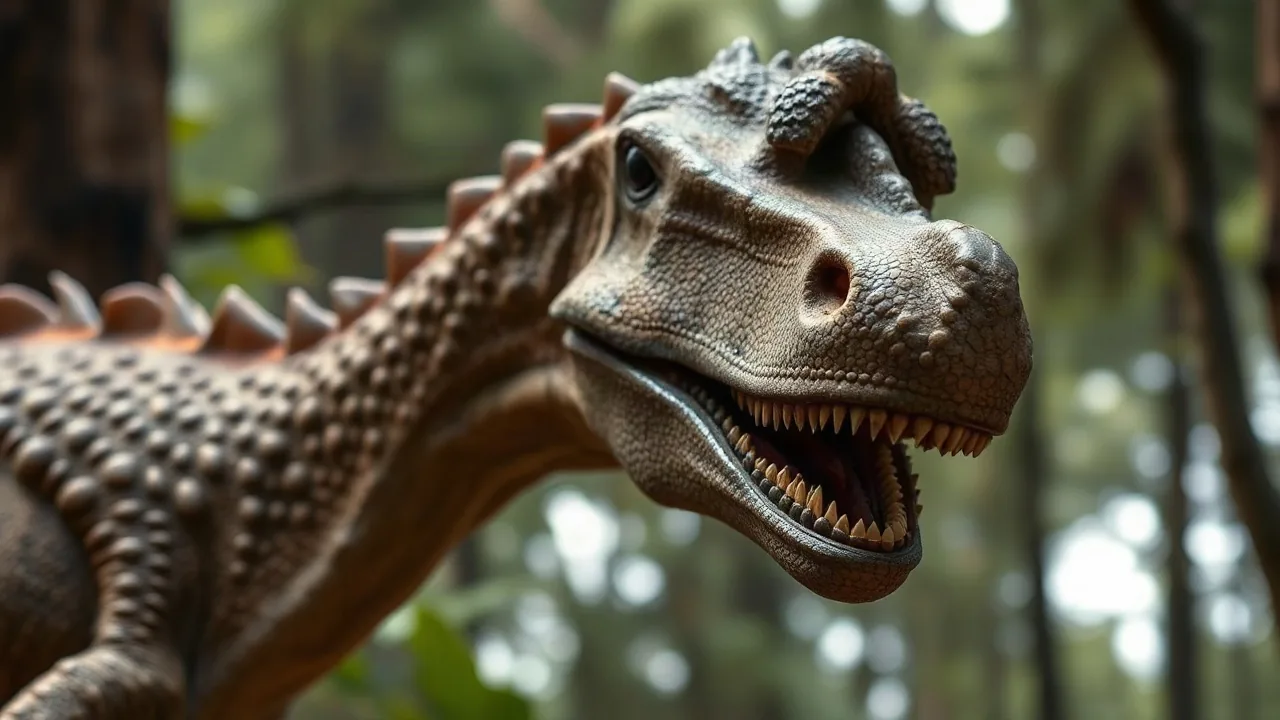
Paleontologists have identified a newly discovered dinosaur species, Infernogallus jamesi, from the Cretaceous period, marking the first known dinosaur to specialize in eating fruit. The turkey-sized creature, nicknamed the 'hell chicken,' possessed unique jaw muscles and a beak-like structure adapted for mashing, suggesting a diet distinct from the meat and foliage commonly associated with dinosaurs. The findings were published in the journal Nature Ecology & Evolution.
The research team, including Dr. Emily Carter, a paleontologist at Stony Brook University, analyzed fossils unearthed in the United States. By studying the musculature of the dinosaur's jaw, they were able to reconstruct its feeding habits. "The powerful chewing muscles and the structure of its jaw are unlike anything we've seen in other carnivorous or herbivorous dinosaurs of its size," Dr. Carter stated. "This adaptation points strongly towards a diet focused on soft fruits rather than tough plants or prey." The scientific name, Infernogallus jamesi, alludes to its fiery-colored plumage, inferred from fossilized melanosomes, and its gallus-like appearance.
A Shift in Understanding Dinosaur Diets
This discovery challenges the long-held understanding of dinosaur diets, which have traditionally been categorized as primarily carnivorous, herbivorous, or omnivorous. The specialization of Infernogallus jamesi in frugivory suggests a more complex and diverse ecological landscape during the late Cretaceous period than previously understood. Many dinosaur species are known to have consumed a wide range of foods, but evidence for a diet centered specifically on fruit has been scarce until now. This new data indicates that niche specialization may have been more common among smaller dinosaurs.
The environment in which Infernogallus jamesi lived was rich with flowering plants, which would have provided an abundant source of fruits. The dinosaur's likely arboreal or semi-arboreal lifestyle would have allowed it to access these food sources. Researchers believe its relatively small size and agile build, combined with its specialized beak, made it adept at foraging in prehistoric forests.
The implications of this finding extend beyond just one species. It prompts a re-evaluation of fossil evidence from other small, bird-like dinosaurs. Scientists will now look for similar adaptations in other specimens to determine if fruit-eating was more widespread. The potential existence of other fruit-specialized dinosaurs could significantly alter models of prehistoric food webs and ecosystem dynamics. This exciting find underscores how much we still have to learn about the ancient world and the diverse ways life evolved.