
Antarctica Dinosaur Fossil Identified as Titanosaur
A fossil vertebra discovered on Antarctica in 1985 has been re-identified as belonging to a titanosaur, the largest land animals ever to have existed. This marks the first dinosaur fossil confirmation on the continent.

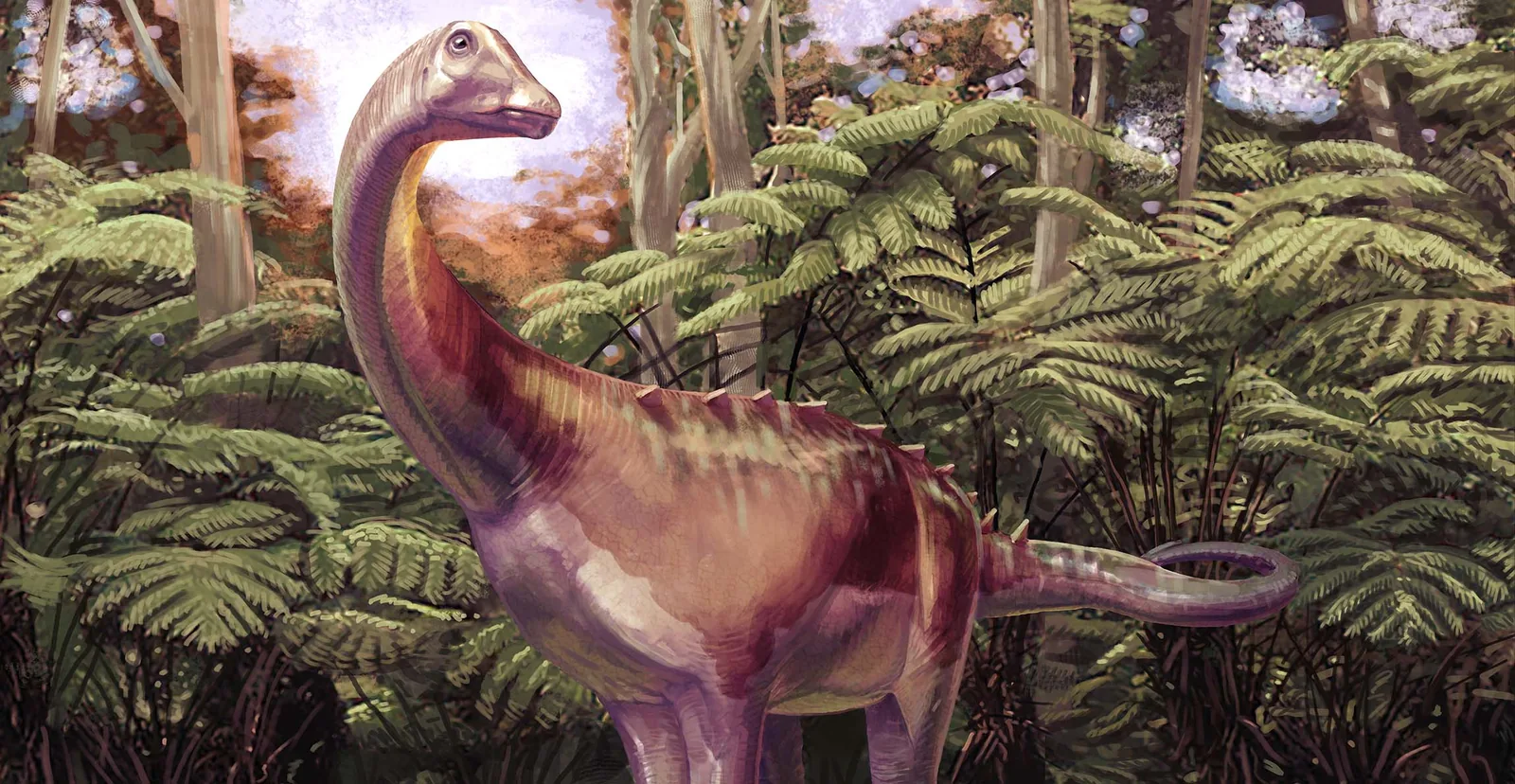
A fragmentary fossil vertebra unearthed in Antarctica in 1985 has been definitively identified as belonging to a titanosaur, a group of immense, long-necked sauropod dinosaurs that include the largest land animals ever to have walked the Earth. This groundbreaking discovery, detailed in the journal Acta Palaeontologica Polonica, represents the very first dinosaur fossil ever confirmed on the Antarctic continent. The vertebra was found on James Ross Island, part of the Antarctic Peninsula, during a British Antarctic Survey expedition. Initially mistaken for a marine reptile fossil, new analysis has revealed its true nature, confirming that titanosaurs roamed the continent millions of years ago.
Professor Paul Barrett, a sauropod expert at the Natural History Museum and a lead researcher on the study, expressed his surprise at the find's significance. "Believe it or not, this is the first bit of dinosaur ever discovered on Antarctica," Barrett stated. "It was overlooked because I think it was misidentified while under harsh field conditions, but it is a sauropod and it’s only the second sauropod bone from the entire continent." The fossil's incompleteness prevents precise species identification, but its size and shape suggest it belonged to a titanosaur that measured approximately six to seven meters (20-23 feet) in length. It remains unclear whether this represented an adult size or a juvenile specimen.
Antarctica's Lush Past Contrasts With Present Ice
During the Late Cretaceous period, approximately 70 million years ago, Antarctica was a vastly different environment than the frozen desert it is today. The continent was connected to the southern tip of South America and supported a thriving, temperate forest ecosystem rich with ferns, palms, and conifers. This ancient landscape, perhaps comparable to modern-day Tasmania, would have presented unique challenges, including extreme seasonal variations in daylight. Despite these conditions, life flourished, including a variety of dinosaur species. While only about half a dozen dinosaur species have been formally described from Antarctica to date, including herbivores like Morrosaurus, armored ankylosaurs such as Antarctopelta, and bipedal predators like Imperobator, scientists believe many more existed.
The discovery adds a crucial piece to the puzzle of prehistoric life on the southernmost continent. The vertebra was found in rocks dated to the Campanian stage of the Late Cretaceous, precisely identified through associated marine fossils like ammonites. "It’s very precisely from a bit of the Late Cretaceous called the Campanian and it’s from the lowermost part of the Campanian," explained Professor Barrett. "It’s quite precisely dated because it’s from marine rocks." The context of its discovery alongside marine fossils suggests the titanosaur may have died at sea or been washed out to sea after its death.
This identification also offers potential insights into dinosaur migration routes. Titanosaurs are known from South America and have been found in Australia, but until now, no confirmed titanosaur fossils had been found in nearby New Zealand, although other sauropods have been discovered there. Professor Barrett theorizes that the Antarctic Peninsula, which was geographically closer to southern South America and the ancient continent of Zealandia during that era, may have served as a vital land bridge. "At the time, New Zealand was, weirdly, quite a long way away from Australia," Barrett noted. "It was closer to southern South America and the Antarctic Peninsula than it was to Australia, just because of the way the continents have moved around." This continental configuration suggests that titanosaurs could have journeyed from South America to New Zealand by traversing Antarctica, bypassing Australia entirely. Further fossil discoveries will be necessary to fully confirm this hypothesis and paint a more complete picture of the prehistoric world.