
Bright Asteroid Fireball Lights Up Pacific Northwest Sky
A brilliant fireball, identified as a piece of asteroid, streaked across the sky over the Pacific Northwest on August 9th, 2026, far brighter than the Perseids meteor shower peak.

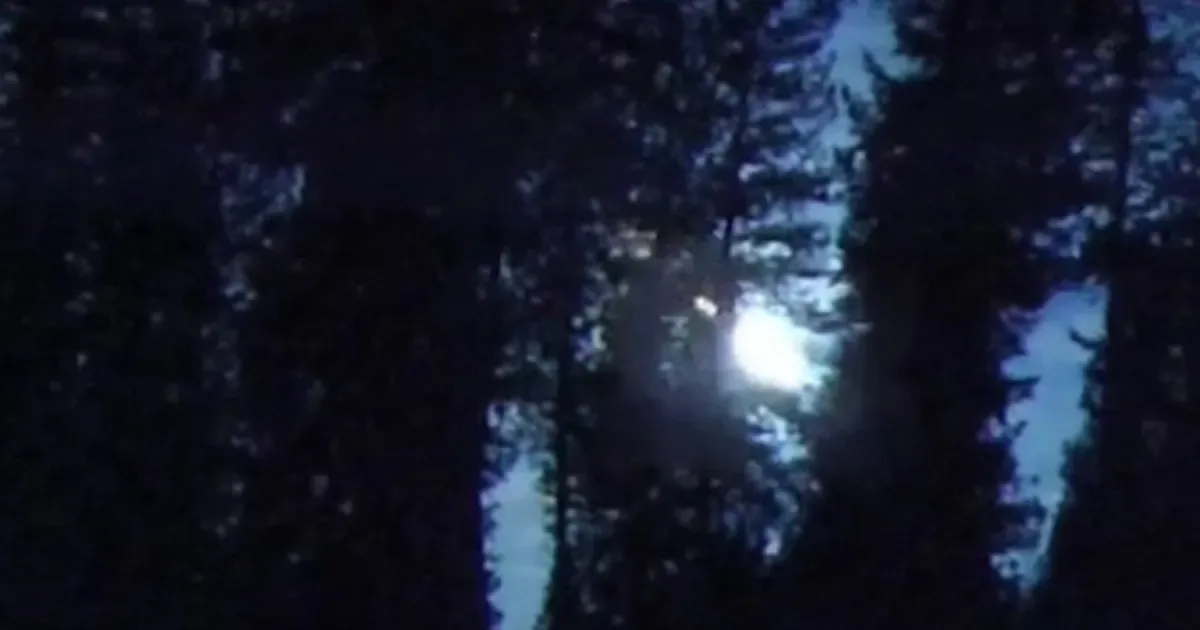
A spectacular fireball blazed across the night sky over the Pacific Northwest early Friday morning, August 9th, 2026, captivating observers from northern Oregon to British Columbia. While the event coincided with the final night of the peak Perseids meteor shower, NASA confirmed the dazzling display was not from the comet 109P/Swift-Tuttle but rather a fragment of an asteroid.
Karina Marquardt, a resident of northern Spokane County, Washington, was watching television when the intense celestial phenomenon occurred around 12:48 a.m. Pacific Time. Initially concerned about lightning due to recent wildfire activity, Marquardt quickly realized the sky was clear. Her security camera footage later revealed a brilliant flash, described as yellow and white initially, followed by blue and green hues.
The object, estimated to be about 16 inches in diameter and weighing approximately 170 pounds, traversed the upper atmosphere at a remarkable speed of roughly 33,000 miles per hour. According to NASA, the asteroid fragment broke apart during its descent, releasing energy equivalent to 10 tons of TNT. This powerful fragmentation generated a shock wave, causing audible booms reported by several startled witnesses.
Bolide Confirmed by Scientific Agencies
The U.S. Geological Survey classified the event as a bolide, a term for a particularly large and bright meteor, and detected the atmospheric shockwave using infrared sensors positioned at several volcanic sites. The American Meteor Society received over 250 reports from individuals who witnessed the fiery streak across the heavens. Despite challenges such as wildfire haze, light pollution in populated areas, and clouds obscuring parts of the Perseids meteor shower, many in the Puget Sound region and beyond managed to observe the dramatic light show.
The Perseids meteor shower, an annual event occurring from late July to late August, typically produces numerous shooting stars originating from dust particles left behind by the Swift-Tuttle comet. However, this particular asteroid fragment offered a distinct and unusually bright spectacle. The exact trajectory and origin point of the asteroid fragment are still under analysis by astronomical organizations.
Space debris, including asteroid fragments and comet dust, constantly enters Earth's atmosphere. Most burn up harmlessly due to friction, creating the familiar streaks of light we call meteors. Larger objects, like the one observed on August 9th, can survive longer and produce more dramatic effects, including sonic booms and ground-level fragments, though such events are rare. Understanding these celestial visitors helps scientists learn more about the composition of our solar system and potential future asteroid impact risks.