
Blue Origin Adds New Launch Pad for Larger New Glenn Rocket at Cape Canaveral
Blue Origin is expanding its Cape Canaveral launch site with a second pad, LC-36B, designed for a more powerful version of its New Glenn rocket. The expansion aims to support future launches after damage to the original pad.

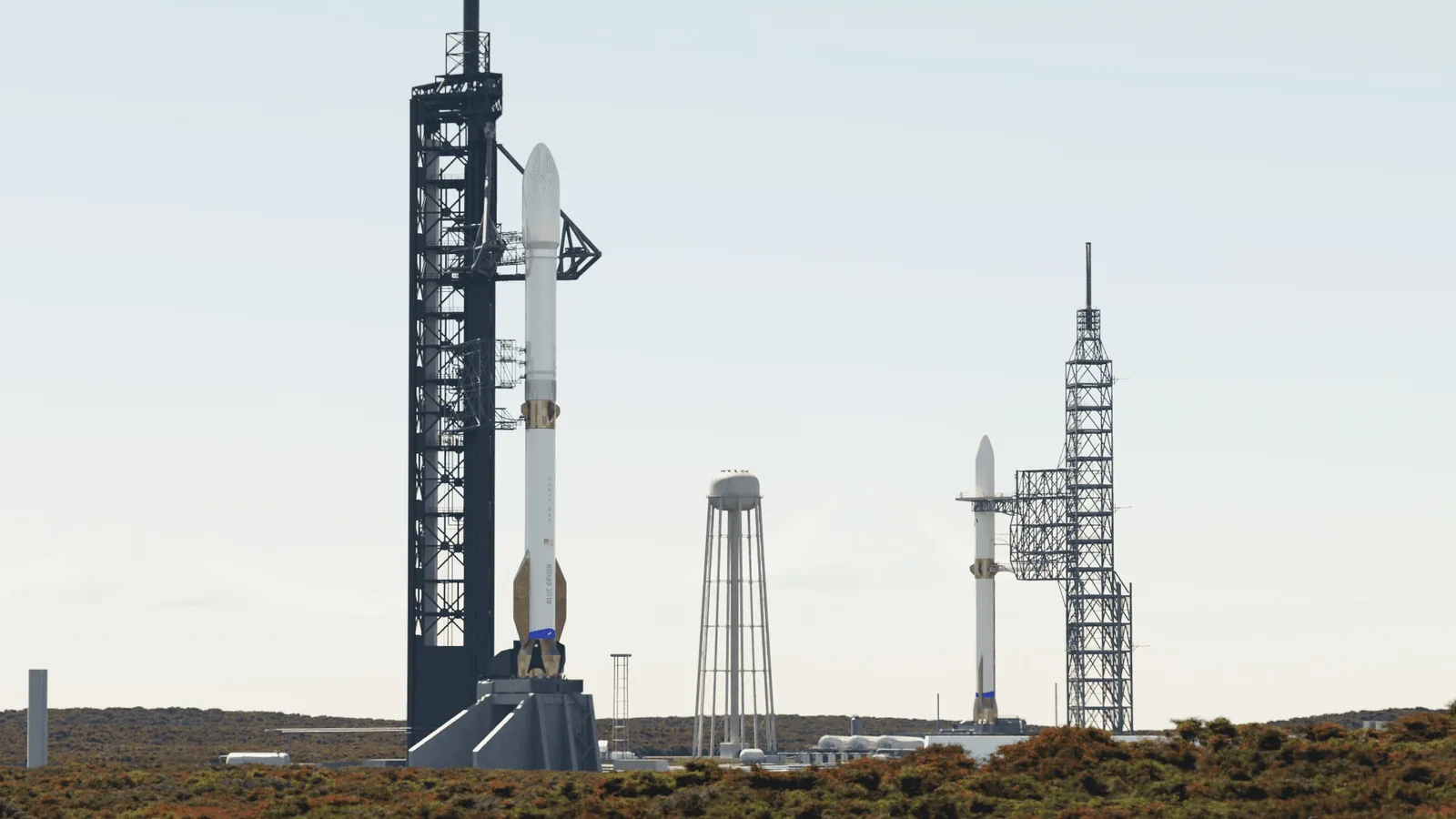
Blue Origin revealed new details on August 12 regarding its ambitious expansion of its Florida launch facilities, confirming plans to construct a second launch pad at Cape Canaveral Space Force Station. This new pad, designated LC-36B, is specifically engineered to accommodate the "New Glenn 9x4," a significantly upgraded variant of the company's heavy-lift orbital rocket. The announcement did not specify a timeline for the construction of the new pad, which will also include a vertical integration facility for rocket assembly and a dedicated payload processing facility. Earlier, in October 2025, the U.S. Space Force had awarded Blue Origin a $78.2 million contract to develop the payload processing facility.
The decision to build a second pad was underway prior to a critical incident on May 28, when an explosion damaged the existing launch pad during a static-fire test of the New Glenn rocket. The company is currently undertaking the rebuilding of that original pad, now referred to as LC-36A. This rebuilt pad will be utilized for the current iteration of the New Glenn rocket, the "New Glenn 7x2," which features seven BE-4 engines in its first stage and two BE-3U engines in its upper stage. The enhanced New Glenn 9x4 will boast an increased configuration with nine BE-4 engines in its first stage and four BE-3U engines in its upper stage. Blue Origin initially announced the development of the New Glenn 9x4 in November 2025, though an expected debut flight date remained undisclosed.
Operational Shifts and Testing Underway
In a social media update on August 12, Dave Limp, chief executive of Blue Origin, stated, "Rebuilding LC-36A and flying again this year remains our priority." This rebuilding effort necessitates a significant operational adjustment, moving towards what Limp has previously described as a "horizontal/vertical hybrid CONOPS" (concept of operations) for launch pad activities. Under this new approach, only the first stage of the rocket will be transported horizontally to the pad before being erected vertically. The upper stage and payload will be transported separately to the pad in a vertical orientation, where they will be attached to the booster using a crane.
Limp further elaborated on August 13 that the company has been actively testing these new procedures at another Cape Canaveral facility, Launch Complex 11. These tests involve using cranes to position a New Glenn upper stage simulator and payload fairing onto a forward dome that represents the top of the first stage. He confirmed that "the team conducted vertical stacking lifts and matings, gathered wind-damping data and effects, and tested new mechanisms that guide and slot these structures into place." These advancements are crucial for ensuring the successful integration of the larger New Glenn variant and for resuming launch operations efficiently.
The development of Blue Origin's launch capabilities at Cape Canaveral is a key component of its long-term strategy to compete in the burgeoning commercial space launch market. The company's ability to rapidly adapt and test new operational concepts, as demonstrated by the recent work at LC-11, is vital for meeting its ambitious flight schedules. The expansion, including the addition of LC-36B, signifies a substantial investment in infrastructure aimed at supporting larger, more powerful rockets like the New Glenn 9x4, which is designed for heavier payloads and more complex missions in Earth orbit and beyond.
The ongoing efforts to rebuild and enhance the launch infrastructure underscore the competitive landscape in the space launch sector. Companies like Blue Origin, SpaceX, and United Launch Alliance are all vying for lucrative government and commercial contracts. The successful deployment of the New Glenn rocket, particularly its advanced 9x4 configuration, could position Blue Origin as a major player in this market, offering solutions for satellite deployment, deep space exploration, and potentially human spaceflight missions in the future. The modifications to the launch pad operations are not just about rebuilding but about innovating for future launch needs, demonstrating a commitment to pushing the boundaries of rocket assembly and launch.
"The ingenuity it took to stand up this test quickly is exactly what gets us to flight soonest," Limp added, highlighting the team's swift response and innovative approach to overcoming challenges. This agility in development and testing is critical for Blue Origin as it aims to establish a reliable and robust launch cadence for both the current and future versions of its New Glenn rocket, ultimately supporting its broader goals in space exploration and commercial ventures.