
Blue Origin expands space tourism fleet in 2026
Blue Origin is accelerating its commercial spaceflight operations with new vehicles and partnerships as private aerospace competition intensifies in 2026.

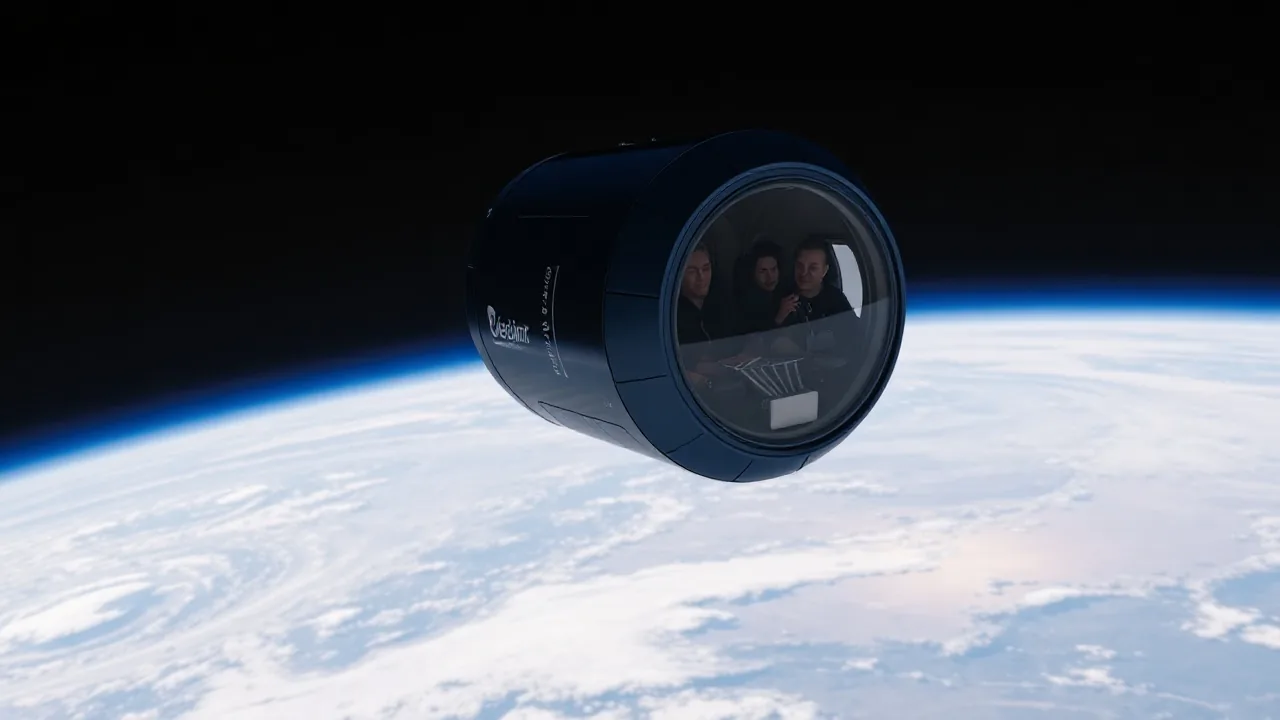
Blue Origin conducted its seventh crewed spaceflight on June 3, 2026, carrying six passengers to the edge of space aboard New Shepard, underscoring the company's momentum in the rapidly expanding space tourism market. The flight marked the first commercial mission after a three-month operational pause and demonstrated that Blue Origin remains committed to weekly launch cadences as demand for suborbital experiences continues to grow.
The company's reusable booster and capsule system reached this milestone despite supply chain disruptions and regulatory reviews that affected the broader commercial spaceflight industry. Each New Shepard mission carries passengers to 66 miles above the Earth's surface, providing approximately three minutes of weightlessness and views of the planet's curvature.
New Fleet Expansion and Infrastructure
Blue Origin announced plans in early 2026 to build a second New Shepard launch site in West Texas, complementing its existing facility near Van Horn. The expansion reflects confidence in sustained demand for suborbital flight experiences, which now command ticket prices between $280,000 and $350,000 per seat depending on seat location and mission date.
The company also accelerated development timelines for New Glenn, its heavy-lift orbital rocket designed to compete with SpaceX's Falcon 9 and compete for national security launches. According to Blue Origin's June 2026 investor update, New Glenn's first orbital test flight is targeted for late 2026, pending FAA licensing approval.
Manufacturing capacity at Blue Origin's facilities in West Texas, Florida, and Alabama increased by 40 percent year-over-year, with headcount reaching 12,000 employees across all divisions. The private aerospace manufacturer is also constructing a new rocket engine production facility in Huntsville, Alabama, set to open in Q1 2027.
Competition and Market Dynamics
The commercial space tourism sector attracted significant institutional investment in the first half of 2026. Virgin Galactic resumed spaceplane flights in March 2026 after an 18-month hiatus, while newer entrants like Space Perspective began offering high-altitude balloon rides at lower price points. These competitors are fragmenting the market but also expanding public interest in commercial spaceflight experiences.
"The growth trajectory we are seeing in space tourism validates our original thesis that there is genuine demand for human spaceflight beyond government astronauts," said Blue Origin's Chief Commercial Officer Erika Wagner in a June 2026 earnings call. "We are not competing on price alone. We are competing on safety, reliability, and the quality of the experience."
Blue Origin's advantage rests partly on operational tempo and vehicle maturity. New Shepard has completed more crewed flights than any other commercial spacecraft, with a perfect safety record across 33 total missions. The company's investment in redundancy and autonomous systems positions it favorably against newer competitors still proving their designs.
Jeff Bezos' Role and Strategic Direction
Founder Jeff Bezos, who flew on New Shepard's first crewed mission in July 2021, stepped back from day-to-day operations in 2024 but remains active on strategic matters. In May 2026, Bezos visited the West Texas launch facility to tour the New Glenn production line, signaling continued personal commitment to the company's orbital ambitions despite divesting Amazon stock to fund Blue Origin's expansion.
Blue Origin's stated mission encompasses three core divisions: New Shepard for tourism, New Glenn for national security and commercial orbital missions, and Blue Moon for lunar logistics supporting NASA's Artemis program. This diversified portfolio reduces dependence on tourism revenue alone and positions the company for long-term government contracts.
The company secured a $3.4 billion contract in September 2025 to develop the Blue Moon lander, cementing its role in NASA's lunar exploration strategy. When combined with its commercial launch ambitions, Blue Origin's addressable market spans leisure travelers, satellite operators, and government agencies.
Future of Space
Industry analysts project that the global space tourism market will generate $1.2 billion in annual revenue by 2030, with future of space commerce extending far beyond orbital tourism. Hypersonic point-to-point travel, orbital hotels, and resource utilization in cislunar space represent longer-term opportunities that private aerospace companies are beginning to evaluate.
Blue Origin's infrastructure investments suggest confidence that space commerce is transitioning from novelty to routine. Weekly launch operations, cargo capacity expansion, and investment in space-based manufacturing capabilities indicate that the company is positioning itself not merely as a tourism operator but as a foundational utility for humanity's expanding presence beyond Earth.
Regulatory clarity remains a critical variable. The FAA is expected to complete its updated commercial spaceflight licensing framework by August 2026, which could accelerate or constrain launch rates across the industry. Blue Origin's established track record and facilities in multiple states provide some insulation from regional regulatory delays.