
Blue Origin Accelerates Space Tourism and Orbital Ambitions in 2026
Blue Origin is ramping up New Shepard flights and preparing New Glenn for orbital missions this year. The company targets expanded space tourism and commercial payload launches.

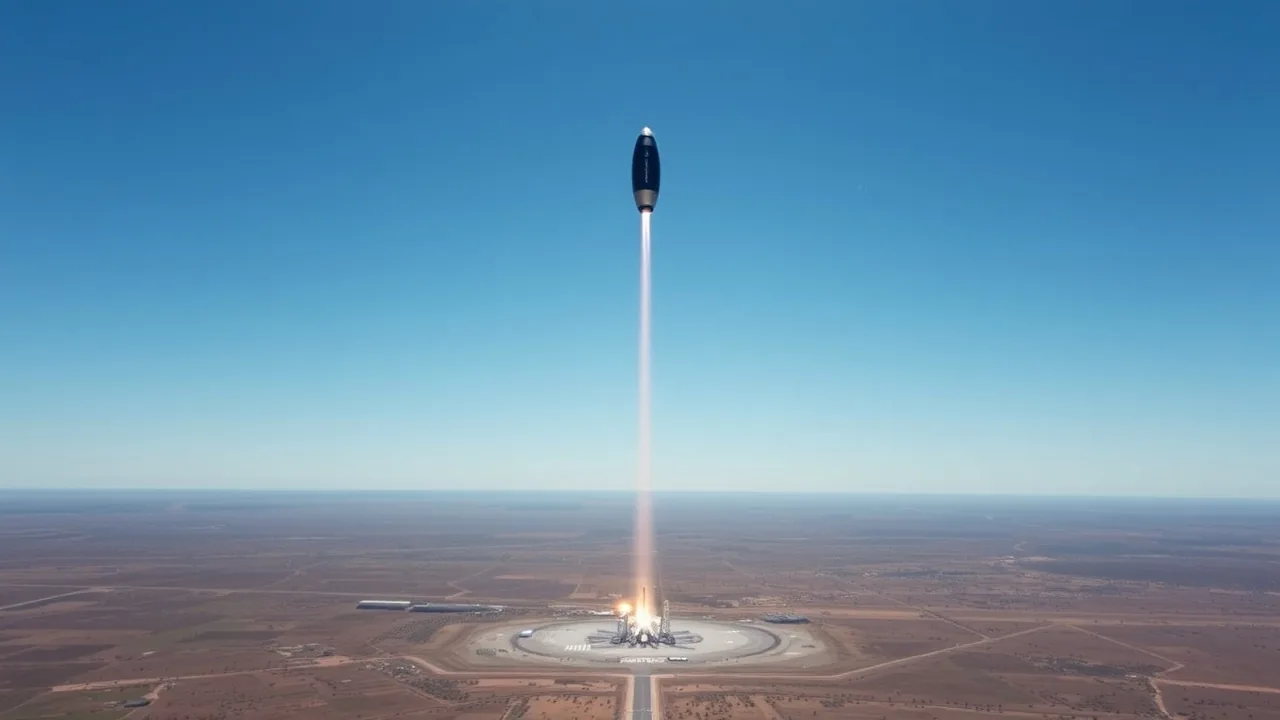
Blue Origin conducted its eighth crewed New Shepard flight in early June 2026, carrying six passengers to the edge of space and back in a suborbital arc lasting eleven minutes. The Texas-based company, founded by Jeff Bezos in 2000, continues to operate the fully automated vehicle from its West Texas Launch Site near Van Horn.
The consistent cadence of New Shepard missions underscores Blue Origin's pivot toward routine space tourism operations. Each flight reaches the Kármán line at 100 kilometers altitude, granting passengers a few minutes of weightlessness and a view of Earth's curvature before returning under parachute descent.
"We are seeing strong demand from our customer manifest, and we're confident in our vehicle's reliability," said a Blue Origin spokesperson in a June 2026 statement to industry media. "The New Shepard program has matured into a proven platform for suborbital spaceflight."
New Glenn and the Shift to Orbital Capacity
While New Shepard remains the flagship tourism product, Blue Origin is preparing its heavy-lift rocket, New Glenn, for its maiden flight in late 2026 or early 2027. The 98-meter-tall vehicle is designed to carry payloads of up to 45 metric tons to geostationary orbit and compete directly with SpaceX's Falcon Heavy.
New Glenn will unlock private spaceflight opportunities beyond suborbital tourism. Blue Origin has announced plans to develop a crewed capsule variant for orbital missions, extending flight duration from minutes to days and reaching altitudes of 500 kilometers or higher.
The company has secured contracts with commercial satellite operators and government agencies to launch payloads on New Glenn. These missions represent a major revenue stream that complements the tourism sector.
- Heavy-lift capability for national security payloads
- Commercial satellite deployment contracts
- Future crewed orbital spaceflight operations
- Cislunar logistics and deep-space missions
Market Position and Competition
Blue Origin faces intensifying competition from SpaceX, Axiom Space, and emerging providers like Virgin Galactic. However, New Shepard remains the only U.S. vehicle routinely flying paying passengers to the boundary of space, having completed over 35 crewed flights since 2015.
Ticket prices for New Shepard flights have stabilized around $450,000 per seat in 2026, down from initial offerings above $600,000. This accessibility has expanded the addressable market to wealthy professionals and entrepreneurs seeking the spaceflight experience.
The broader aerospace innovations sector is watching Blue Origin's orbital transition closely. A successful New Glenn debut would validate the company's engineering roadmap and position it as a credible challenger to SpaceX's launch dominance.
Industry analyst firm Bryce Technology and Space Consulting released a report in May 2026 noting that Blue Origin's dual approach—maintaining suborbital tourism while developing orbital lift capacity—offers a balanced path to profitability in the competitive commercial spaceflight market.
Infrastructure and Employment Impact
Blue Origin operates two primary launch facilities: the New Shepard Launch Site near Van Horn, Texas, and the New Glenn Launch Complex at Cape Canaveral Space Force Station in Florida. Both locations have seen infrastructure expansions and hiring increases through 2026.
The company announced plans in April 2026 to open a third manufacturing and assembly facility in Exploration Park, Alabama, dedicated to New Glenn engine production and integration. This expansion is projected to create over 500 direct jobs by 2028.
Space exploration initiatives at Blue Origin extend beyond tourism and commercial launches. The company is developing infrastructure for lunar cargo delivery through its Blue Moon program, competing for contracts under NASA's Commercial Lunar Payload Services initiative.
These investments reflect Blue Origin's long-term commitment to building an industrial base for sustained spaceflight operations. The company's five-year roadmap envisions regular crewed tourism, commercial satellite launches, and government payload deployment as core revenue drivers.
By mid-2026, Blue Origin had already demonstrated the operational maturity required for routine space tourism while simultaneously advancing the engineering and manufacturing capabilities needed for orbital-class vehicles. The convergence of these two business lines positions the company as a significant player in the emerging commercial spaceflight economy.