
Boeing Starliner Faces Decade Delay for ISS Missions, NASA Audit Reveals
A NASA inspector general's audit indicates Boeing's Starliner capsule may not be ready for operational International Space Station flights until 2027, a decade behind its initial target, and potentially just three years before the ISS is set to retire.

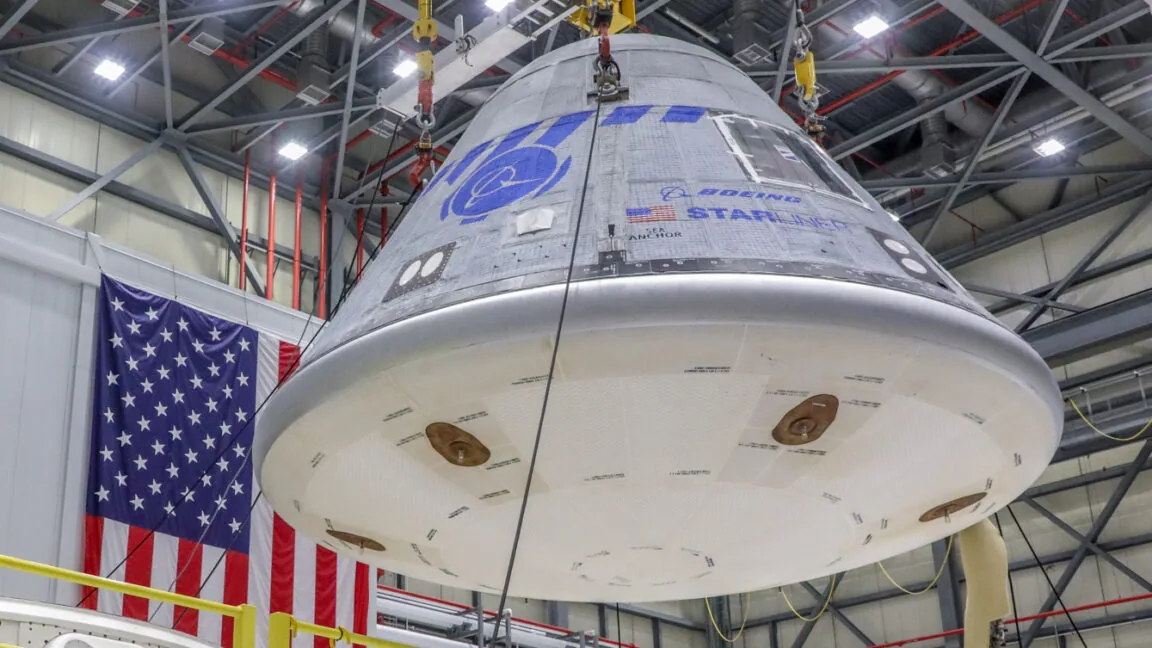
An audit released Tuesday by NASA's inspector general suggests that Boeing's Starliner crew capsule is facing significant delays, with operational flights to the International Space Station (ISS) now unlikely to be certified until 2027. This timeline places the capsule a full decade behind its original 2017 target. The report also highlights concerns regarding the ISS's operational lifespan, as NASA's official retirement date is set for 2030, though legislative efforts are underway to extend its service until 2032. Six recommendations were issued by the inspector general, all of which NASA officials have agreed to implement. These include the development and regular updating of a schedule for upcoming Starliner missions and future crewed flights, ensuring ample time is allocated to address and document issues identified during Starliner's 2024 crewed test flight.
NASA officials anticipate completing the necessary scheduling tasks by December 31, 2026. However, the launch date for the next Starliner mission, designated Starliner-1 and planned as a cargo flight, remains unstated and is "under review" on NASA's official schedule. Given the projected timeline for resolving technical issues, the likelihood of Starliner-1 launching before 2027 appears to be diminishing. The 2024 Crew Flight Test (CFT) encountered approximately 100 in-flight anomalies and "observations," according to Boeing managers. During this mission, NASA astronauts Butch Wilmore and Suni Williams were transported to the ISS but were forced to extend their stay by nine months due to concerns over the capsule's reliability for their return journey. They ultimately returned to Earth aboard a SpaceX Crew Dragon spacecraft.
Technical Hurdles Persist
While most anomalies from the CFT have been investigated and closed, significant issues such as Starliner’s persistent helium leaks and overheating control thrusters are still under active review, according to Kent Rominger, a former Space Shuttle commander and a member of NASA’s independent safety panel. "Parachute anomalies remain a risk that requires continued monitoring," the inspector general's report stated. The audit attributes these persistent technical challenges to "NASA’s and Boeing’s overconfidence in Boeing’s use of heritage systems, an unachievable schedule, and limited flight simulation data."
NASA awarded contracts to both Boeing and SpaceX in 2014 to develop crewed spacecraft, aiming to end the agency's reliance on Russian Soyuz vehicles for transporting astronauts to the ISS following the Space Shuttle program's retirement in 2011. The original expectation was for both Boeing's Starliner and SpaceX's Crew Dragon to begin regular six-month crew rotations by 2017. SpaceX's Crew Dragon achieved certification for regular missions in 2020 after some delays, while Starliner faced repeated setbacks. An uncrewed test flight in December 2019 failed to reach its destination, and a subsequent test flight in May 2022 met its primary objectives, paving the way for the 2024 CFT. However, that mission itself was delayed by an additional year to allow Boeing to address parachute system redesigns and an internal flammability issue.
The persistent delays after the CFT led NASA to reassign two of Boeing's six contracted crew rotation missions, reducing the contract's value by approximately $500 million. One of these reallocated missions is now designated for cargo only. To maintain staffing levels on the ISS, NASA has purchased additional missions from SpaceX. The inspector general noted that NASA will likely need to procure more SpaceX flights to cover crew transportation needs through the ISS's planned operational life ending in 2030. NASA Administrator Jared Isaacman formally classified the 2024 Starliner crewed flight as a "Type A" mishap in February, acknowledging its significant failure. This classification ambiguity and delays in its appropriate handling reportedly hindered the resolution of CFT issues, according to the inspector general's report. Flying Starliner-1 as a cargo-only mission, while agreed upon by NASA, does not fulfill all human-rating certification milestones, necessitating NASA to purchase an additional crewed mission at an estimated cost of $300 million. This increases overall costs for maintaining the ISS, compounds Starliner's certification delays, and reduces the number of contracted crew flights under the Commercial Crew program. The inspector general also raised questions about nearly $128 million in payments made to Boeing since 2019 for the Starliner-3 crew rotation flight, a mission that remains highly uncertain.
Before Starliner can return to crewed flight, Boeing must secure a launch slot on a United Launch Alliance Atlas V rocket and integrate the mission into the ISS's busy schedule of arrivals and departures. "Furthermore, Boeing is facing additional scheduling constraints, including launch availability, docking port access on the ISS and crew training timelines," the inspector general wrote. "As a result, the human-rating certification may be delayed to 2027, leaving a limited window of only being able to provide crewed flights to 2030, the planned end of the ISS’s operational life."