
SpaceX Falcon 9 to Launch Secret Space Force Mission from California Saturday
SpaceX is scheduled to launch a classified U.S. Space Force mission, USSF-366, from Vandenberg Space Force Base on Saturday, August 17, 2026. Residents may hear sonic booms.

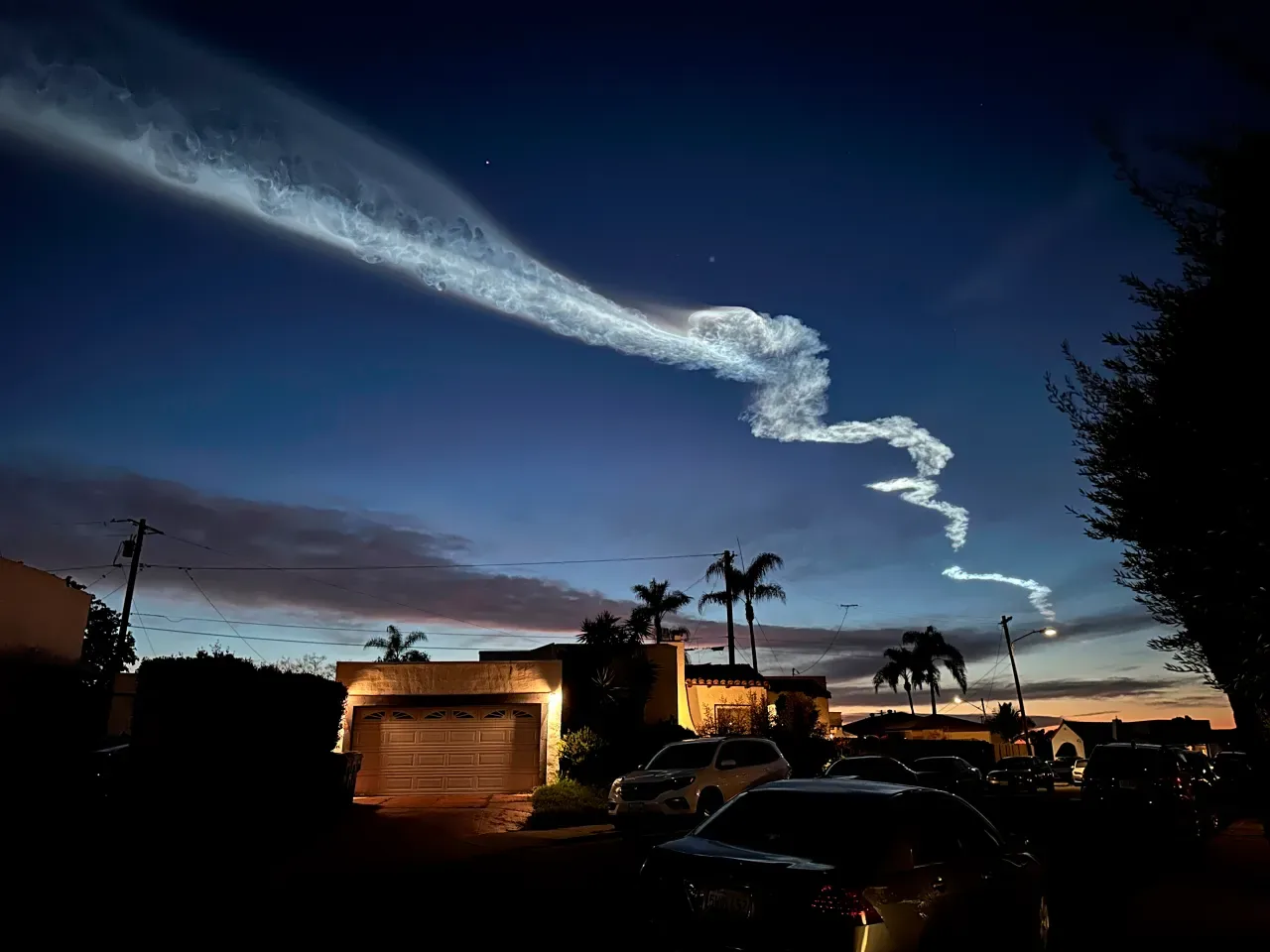
SpaceX is set to launch a top-secret U.S. Space Force mission from California on Saturday afternoon, with residents near Vandenberg Space Force Base in Santa Barbara County potentially experiencing sonic booms. The launch of the Falcon 9 rocket, designated USSF-366, is targeted for 4:47 p.m. Pacific Time on August 17, 2026, with a backup opportunity for Sunday, August 18, at 2:38 p.m. Few details have been publicly disclosed about the specific objectives or payload of the classified mission.
While official information remains scarce, spaceflight publications suggest the mission could involve deploying several military satellites into low-Earth orbit. SpaceX confirmed this week it would serve as the launch provider for the U.S. Space Force. Despite the veil of secrecy, the company plans to offer a livestream of the launch, commencing approximately 10 minutes before liftoff.
Sonic Booms Expected
The launch’s impact may extend beyond the immediate vicinity of the Central Coast launch site. SpaceX has alerted residents in Santa Barbara, San Luis Obispo, and Ventura counties that they could hear one or more sonic booms as the Falcon 9's first-stage booster returns to Earth. The intensity and audibility of these booms will depend on atmospheric conditions and other factors. These sonic booms occur when the booster travels through the atmosphere at speeds exceeding Mach 1, generating shock waves audible on the ground.
This particular Falcon 9 first-stage booster has a notable flight history, having supported 17 previous missions. Its prior flights include the NROL-126, Transporter-12, SPHEREx, and NROL-57 missions, in addition to 13 Starlink satellite deployments. Following its role in the USSF-366 mission, the booster is expected to detach from the second stage and execute a return-to-Earth maneuver. It is scheduled to land autonomously on SpaceX’s droneship named “Of Course I Still Love You,” positioned in the Pacific Ocean.
The visibility of the SpaceX Falcon 9 ascent into the sky may extend to areas far beyond the immediate launch zone, potentially offering a spectacle for skygazers across a wider region of California. The U.S. Space Force relies on private companies like SpaceX for critical launch capabilities, especially for missions requiring rapid deployment and specialized orbital insertion. The increasing complexity and secrecy surrounding such military space operations highlight the growing importance of space as a strategic domain for national security.
The launch underscores the evolving landscape of space exploration and utilization, where commercial entities play an increasingly vital role in supporting governmental and military objectives. As technology advances, the capabilities for deploying sophisticated satellite networks and conducting classified operations in orbit continue to expand, necessitating secure and reliable launch partners.