
Boeing Starliner Set for Crucial Test Flight Amid NASA Program Uncertainty
Boeing's Starliner spacecraft is preparing for a critical unpiloted test flight as NASA seeks to finalize its astronaut transportation capabilities. The mission is crucial following previous delays and challenges.

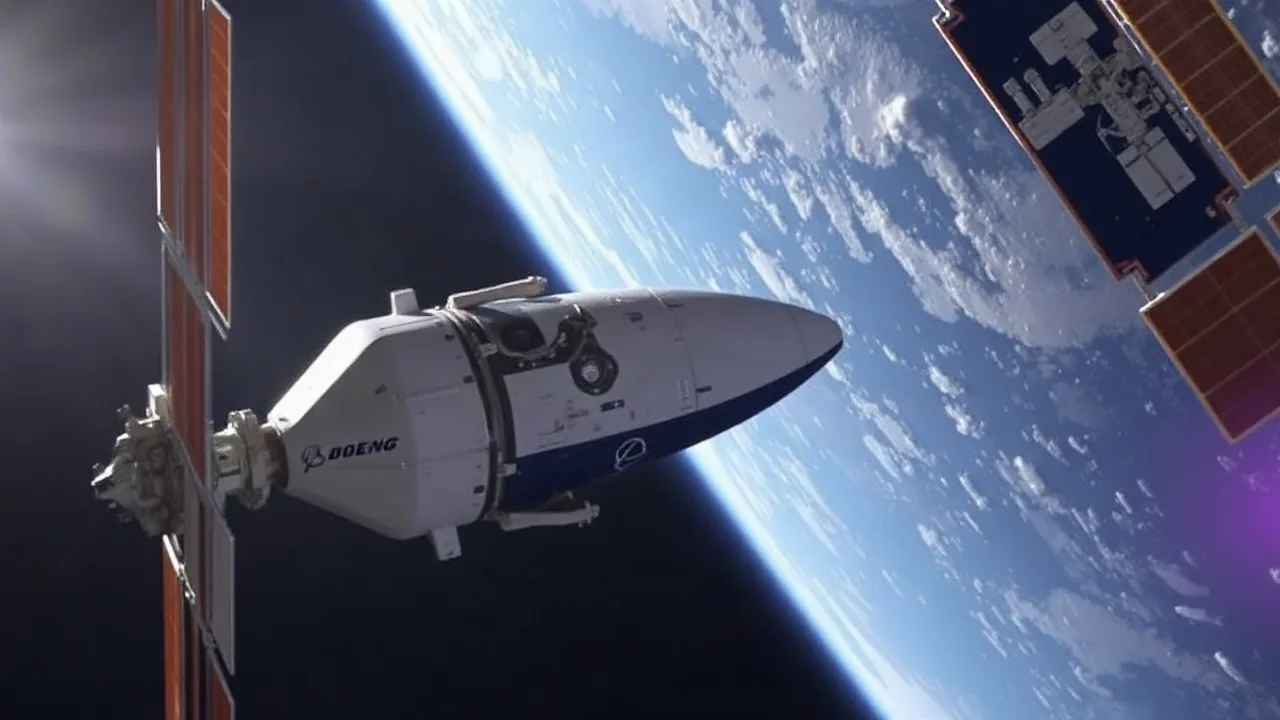
Boeing's Starliner capsule is on the cusp of a pivotal unpiloted test flight, a crucial step for NASA's Commercial Crew Program as the agency navigates a landscape with limited astronaut transportation options. The mission, slated for an unspecified date in 2026, aims to recertify the spacecraft for regular crewed flights to the International Space Station (ISS) after a series of setbacks and delays that have plagued its development. This test flight is particularly significant as it represents a near-final chance for Boeing to demonstrate Starliner's readiness and reliability.
The previous crewed flight, designated CFT (Crew Flight Test), experienced numerous technical issues that extended the stay of astronauts Butch Wilmore and Suni Williams aboard the ISS for over a month longer than initially planned. These issues included helium leaks in the service module and problems with the spacecraft's reaction control system thrusters. Despite these challenges, NASA ultimately deemed the mission a success, bringing Wilmore and Williams back to Earth safely on June 22, 2024. However, the extended duration and the nature of the anomalies highlighted persistent concerns about Starliner's performance.
Starliner's Path to Certification
NASA officials have stated that the data gathered from the CFT mission is essential for certifying Starliner for operational flights. The agency is still evaluating the full scope of necessary modifications and analyses before clearing Boeing's capsule for routine crew rotations. This unpiloted flight will serve as a final validation of the fixes implemented and a comprehensive assessment of the spacecraft's systems under mission conditions. It is designed to prove that Starliner can safely carry astronauts to and from the space station without any passengers aboard, a critical precursor to regular operational missions.
The stakes are high for both Boeing and NASA. Boeing has invested billions of dollars in the Starliner program, and its success is vital for the company's human spaceflight ambitions. For NASA, Starliner is intended to be a second U.S. crew transportation system, providing redundancy and increasing resilience to its human spaceflight capabilities. The agency currently relies almost exclusively on SpaceX's Crew Dragon for transporting astronauts to the ISS, a dependence that underscores the importance of certifying Starliner.
With the ongoing development and rigorous testing, the goal is to ensure that Boeing Starliner can provide a reliable and safe alternative to SpaceX's Crew Dragon. This latest test flight is more than just a technical demonstration; it's a testament to the perseverance of the teams involved and a critical juncture in the evolution of commercial human spaceflight. The success of this mission will pave the way for more consistent and robust access to low Earth orbit for astronauts, a cornerstone of NASA's long-term exploration objectives. The uncrewed flight is anticipated to cover all critical mission phases, from launch and orbital operations to docking with the ISS and the eventual return to Earth, providing an exhaustive dataset for final certification.