
China's Chang'e-7 Mission Targets Lunar South Pole for Water Ice Discovery
China is launching its Chang'e-7 mission to the moon's south pole, aiming to explore permanently shadowed craters for water ice. The ambitious robotic mission includes an orbiter, lander, rover, and a unique hopper.

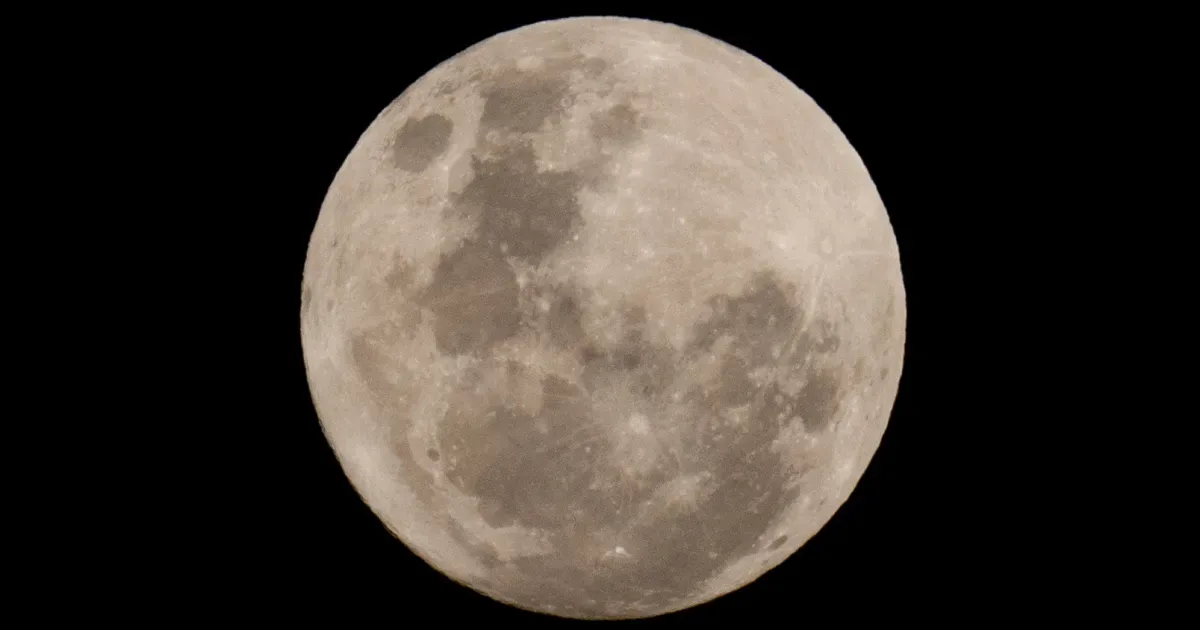
China is preparing to launch its sophisticated Chang'e-7 unmanned robotic mission, with a window opening as early as Monday, August 24, 2026, to investigate the potential presence of water ice within the permanently shadowed craters at the moon’s south pole. This endeavor represents China's seventh and most complex lunar expedition to date, aiming to gather critical data on the moon's resources.
The Chang'e-7 mission comprises a multi-component system: an orbiter, a lander, a rover, and a specialized hopper. The orbiter will maintain a position in lunar orbit, continuously mapping the surface and capturing imagery while relaying communications between the surface components and Earth. The lander is tasked with a soft touchdown near the edge of Shackleton Crater, a significant pit approximately 21 kilometers wide, situated close to the lunar south pole. This proximity to the pole is a first for recent lunar missions. The rover, a small robotic vehicle, will traverse the landing site, equipped to analyze local geological conditions, including rocks and soil. A unique addition, the hopper, is a solar-powered robotic craft designed to make short flights, or "hops," from the lunar surface to explore the depths of Shackleton Crater.
The existence of water on the moon has been confirmed by numerous space missions over the past two decades. While initial lunar samples returned by Apollo crews in the late 1960s and early 1970s suggested a dry environment, scientific speculation persisted. A pivotal moment arrived in 2009 when NASA intentionally impacted a rocket segment and probe into a shadowed lunar crater. The analysis of the resulting dust plume provided strong evidence of significant water ice. Further bolstering these findings, NASA scientists announced in October 2020 that water molecules are more widespread than previously thought, found encapsulated within mineral grains on the lunar surface. They also posited that more water lies hidden in ice patches within areas of permanent shadow—regions that have not seen sunlight for billions of years due to the moon's topography.
Exploring the Moon's Polar Regions
The significance of understanding lunar water extends beyond simple detection. Ancient polar ice could preserve invaluable records of lunar volcanic activity and the history of water delivery to the Earth-moon system via comets and asteroids, potentially offering insights into the origins of Earth's own oceans. Furthermore, accessible water reserves on the moon could be instrumental for future crewed lunar missions, providing drinking water and aiding in equipment cooling. The potential extraction of hydrogen from lunar water could fuel spacecraft for onward journeys, such as missions to Mars, while oxygen could be harvested for life support, thereby enabling long-term lunar habitation and potential resource extraction operations.
International space law, specifically the 1967 United Nations Outer Space Treaty, prohibits any nation from claiming territorial sovereignty over the moon. While the treaty does not explicitly ban commercial activities, it mandates that all private space endeavors must be authorized and supervised by a state, leaving key questions regarding resource ownership and utilization open to interpretation.
Recent lunar missions have also focused on the search for frozen water. Russia’s Luna-25 spacecraft, launched in 2023 with a similar objective, unfortunately crashed, preventing any scientific data collection. India’s Chandrayaan-3 mission, which successfully landed in August 2023, provided critical new evidence of surface water near the moon’s south pole through its soil temperature readings, underscoring the global interest in lunar hydration.
Exploring the moon’s south pole presents unique challenges. The terrain is notoriously difficult, characterized by deep craters and rugged topography, which has led to past landing failures. This region is also geographically distant from the equatorial areas favored by earlier missions, including the historic Apollo landings. The Chang'e-7 mission's design, particularly its innovative six-legged hopper, is intended to overcome these obstacles. This unique craft is engineered to navigate into and out of the deep, permanently shadowed craters that are inaccessible to conventional rovers. By directly exploring these dark recesses, Chang'e-7 aims to precisely map the location, depth, and form of water ice, assessing its accessibility and potential for future exploitation, a capability no previous mission has possessed.