
China's Water-Hunting Moon Mission Launch Delayed
China's Chang'e-7 moon mission, aiming to find water ice at the lunar south pole, has been postponed. The delay raises questions about the ongoing space race for lunar resources between the US and China.

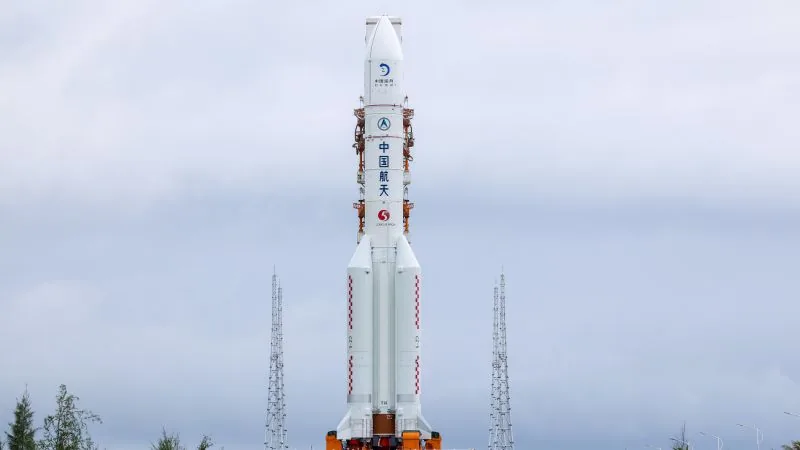
The highly anticipated launch of China's Chang'e-7 mission, which aims to prospect for water ice at the moon's south pole, has been indefinitely postponed. The China Manned Space Engineering Office announced that the mission, originally slated for launch in the coming days, "cannot take place during the planned window this year." The precise cause for the delay remains undisclosed, with state media only stating that the "lunar probe does not meet launch conditions." This postponement comes at a critical juncture as both the United States and China vie for dominance in lunar exploration, particularly in regions believed to harbor substantial water ice reserves.
The Chang'e-7 mission represents a significant step for China's lunar program, marking a shift from pure exploration to resource utilization. The south pole of the Moon is a focal point for international space agencies and private companies due to the potential abundance of water ice. This resource is considered invaluable for future deep-space endeavors, offering possibilities for producing breathable air, drinking water, and even rocket propellant. While the United States has utilized orbiting satellites to detect and estimate the size of these potential water ice deposits, no mission has yet successfully drilled for and directly analyzed the resource on the lunar surface.
Race for Lunar Resources Heats Up
The delay in the Chang'e-7 launch could impact the competitive landscape of the "space race," a term used by US officials to describe the ongoing competition with China. The United States has several missions targeting the same lunar region within the next year. Pittsburgh-based company Astrobotic Technologies is planning to launch its Griffin lander to the lunar south pole as early as late 2026. Additionally, Blue Origin, Jeff Bezos's aerospace venture, has plans to send two robotic landers to the moon next year. One of these missions may include NASA's VIPER rover, a specialized prospecting robot designed to hunt for water ice and other lunar resources.
The belief that the lunar south pole contains vast stores of frozen water is a primary driver behind this intense international competition. The resource holds immense value for deep-space exploration and the potential establishment of a lunar base. "Whether water ice is present in sufficient amounts to be useful for these purposes is not currently known, and Chang’e-7 could help make important progress on this question," Yuqi Qian, a lunar geologist at the University of Hong Kong, told CNN. Qian further elaborated that with missions like Chang'e-7, China's lunar program is "shifting from an exploration program to a resource utilization program."
Previous attempts by US entities have faced setbacks. In 2025, Intuitive Machines, a Texas-based company, attempted to land a spacecraft equipped with a water-hunting drill on the moon's south pole. However, the spacecraft tripped during its landing attempt on the notoriously treacherous terrain, preventing it from completing its mission objectives. The success of missions like Chang'e-7 in locating and analyzing water ice could provide crucial data for future endeavors, including NASA's Artemis program, which also aims to establish a sustained human presence on the Moon.