
China Postpones Chang'e-7 Lunar Mission Amid Launch Concerns
China has abruptly postponed its ambitious Chang'e-7 lunar mission, originally slated for launch in the coming days. The China Manned Space Agency cited unmet launch conditions and a need for 'absolute mission success' as reasons for the delay.

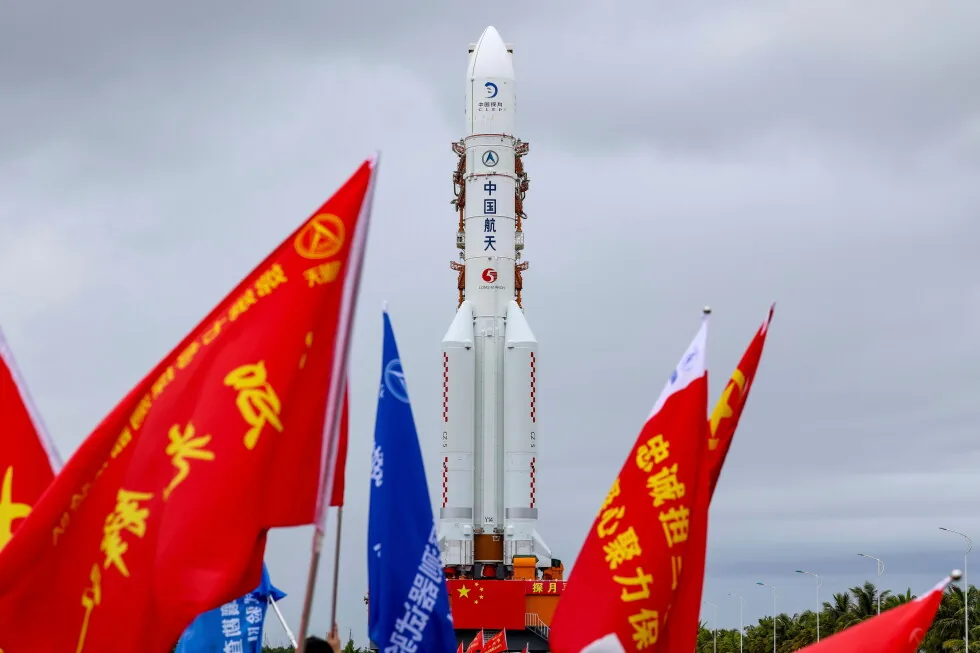
China announced Sunday it is indefinitely postponing the launch of its highly anticipated Chang'e-7 lunar mission, a complex undertaking aimed at exploring the moon's south pole for water ice. The mission, part of China's ongoing lunar exploration program, was scheduled to depart within days from the Wenchang Space Launch Site on Hainan island. The China Manned Space Agency cited that the mission "does not meet the launch conditions" and "cannot take place during the planned window this year," without providing further specifics.
The decision, described as stemming from a "comprehensive assessment," emphasizes the principles of "prudence, reliability and absolute mission success." This abrupt delay comes after weeks of final preparations at the Wenchang launch site for what was intended to be the seventh mission in the Chang'e program. Previous reports from the official Xinhua news agency indicated that Chang'e-7 was designed to achieve breakthroughs in critical technologies, including detailed environmental and resource surveys of the lunar south pole.
Lunar South Pole Exploration Halted
The primary objective of the Chang'e-7 mission was to investigate permanently shadowed regions near the moon's south pole, areas believed to potentially harbor significant reserves of water ice. Such discoveries are crucial for future long-term human presence on the moon, potentially providing resources for drinking water, oxygen, and rocket propellant. The mission also included plans to test key technologies necessary for future lunar missions and the establishment of a research station. The postponement means that a rival effort, NASA's Artemis program, also targeting the lunar south pole, may gain a temporary advantage in lunar exploration data.
This is not the first time a major space mission has faced delays. In 2021, the European Space Agency's ExoMars rover mission, a joint effort with Russia, was postponed due to technical and political challenges. Similarly, NASA has experienced setbacks in its own Artemis program, notably with delays to the uncrewed Artemis I mission. Such postponements, while disappointing, are often a necessary part of complex engineering and scientific endeavors, ensuring safety and mission integrity.
The specific reasons for the Chang'e-7 mission's postponement remain undisclosed by the China Manned Space Agency. Speculation within the space community ranges from technical glitches discovered during final checks to unfavorable space weather conditions. Whatever the cause, the agency's commitment to a successful outcome underscores the high stakes involved in lunar exploration. China National Space Administration (CNSA) has rapidly advanced its space capabilities in recent years, with successful missions including sample returns from the moon and the establishment of its own Tiangong space station. The Chang'e program, named after the Chinese moon goddess, has been instrumental in this progress.
The agency has committed to announcing a new launch window once all conditions are met. The global space community will be closely watching for updates, as the success of Chang'e-7 holds significant implications for understanding lunar resources and furthering international space cooperation, despite the current setback. The ambition behind the Chang'e 7 mission highlights China's persistent efforts to become a leading power in space exploration.