
Cold Lava Planet Discovery Offers Glimpse Into Early Earth
Astronomers have identified a unique exoplanet with a cold, lava-covered surface, potentially mirroring conditions on early Earth. The discovery, aided by TESS data, marks the first time an atmosphere has been detected on such a world.

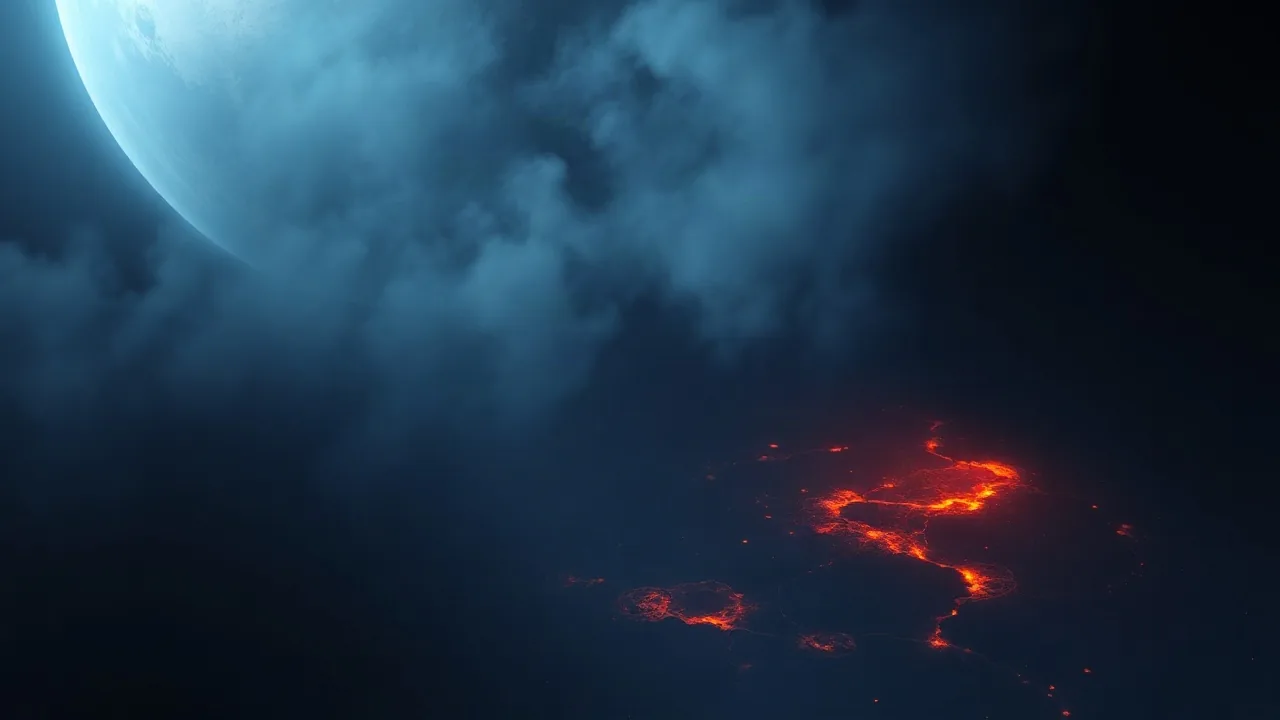
Astronomers have identified a distant exoplanet, designated TOI-2180 c, that presents a unique celestial puzzle: a cold, lava-covered world with a detectable atmosphere. This discovery, detailed in a study led by University of Chicago scientists, offers a rare glimpse into planetary conditions that may have been prevalent on Earth billions of years ago. The findings were made possible through observations by NASA's Transiting Exoplanet Survey Satellite (TESS).
TOI-2180 c orbits a star approximately 377 light-years away and was initially presumed to be a barren rock given its orbital characteristics. However, the presence of an atmosphere on a world with such extreme temperatures challenges existing planetary formation models. Researchers utilized TESS data to analyze the planet's phase curve – the change in brightness as the planet orbits its star – which revealed the signature of atmospheric gases interacting with the surface.
Atmospheric Insights From a Lava World
The planet's surface is thought to be covered in lava, yet it retains an atmosphere, a combination previously considered unlikely for worlds outside a specific temperature range. This cold lava world, unlike hotter lava planets where atmospheres are more expected, suggests that geological activity can sustain gaseous envelopes even under less extreme thermal conditions. The atmospheric composition is still under investigation, but its detection itself is a significant breakthrough.
Dr. Ian Crossfield, an astronomer at the University of Kansas and a co-author on the study, stated, "We were not expecting to find an atmosphere on this planet. It's surprising and exciting because it opens up new avenues for studying planetary atmospheres in extreme environments." The team's analysis indicates that the lava surface may be actively replenishing the atmosphere, possibly through volcanic outgassing, a process thought to have been crucial in Earth's own atmospheric development.
Understanding the conditions on TOI-2180 c could provide invaluable data for astrobiologists seeking to understand the origins of life. Early Earth is theorized to have been a similarly volatile environment, potentially covered in oceans of magma before cooling and developing its current atmosphere and oceans. Studying this exoplanet allows scientists to test hypotheses about the early stages of planetary evolution, including the processes that lead to the formation of habitable worlds.
The detection of an atmosphere on this seemingly inhospitable planet underscores the diversity of exoplanets discovered by missions like TESS. Each new find pushes the boundaries of our understanding and refines the search for potentially life-supporting planets beyond our solar system. The ongoing analysis of TOI-2180 c promises further revelations about the complex interplay between planetary geology and atmospheric dynamics.