
Cygnus Cargo Ship Leaves ISS After 6-Month Mission
Northrop Grumman's Cygnus cargo spacecraft has undocked from the International Space Station. It spent six months delivering supplies and will now burn up during reentry.

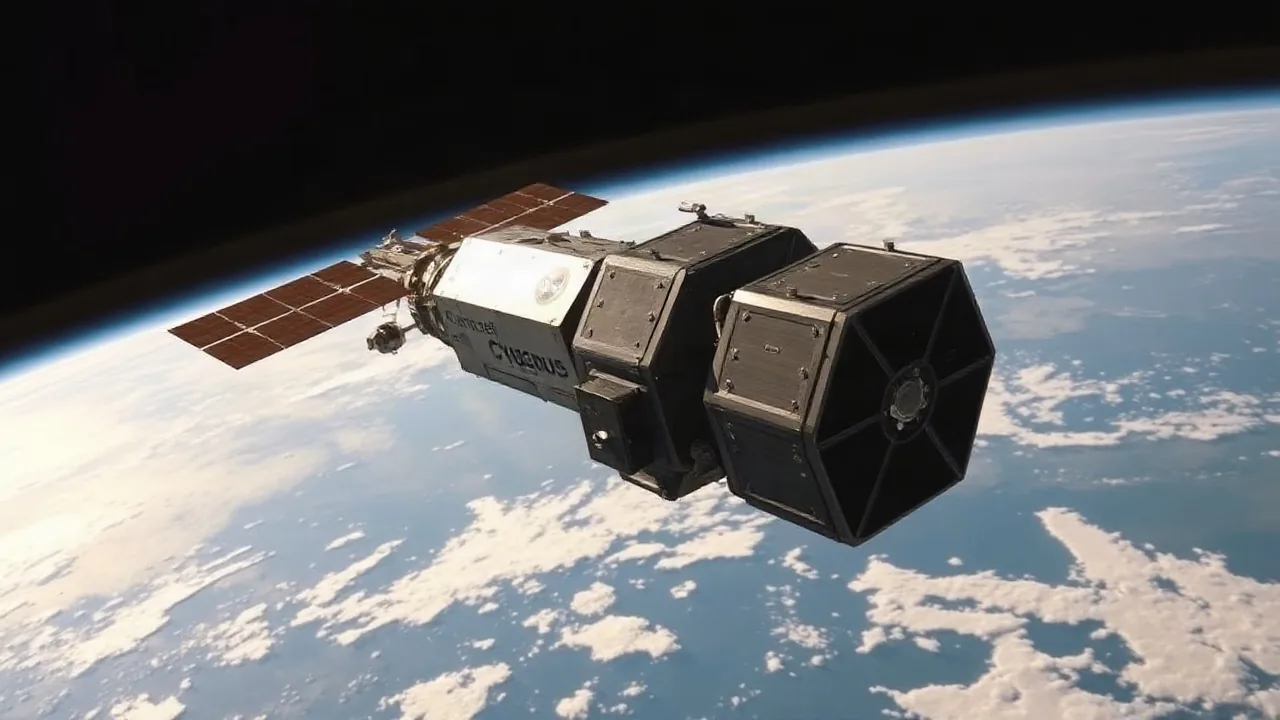
Northrop Grumman's Cygnus cargo spacecraft has departed the International Space Station (ISS) after completing a six-month resupply mission. The uncrewed vessel, named the S.S. Mississippi, was released from the station's Canadarm2 robotic arm on October 9, 2026, beginning its journey back to Earth. During its stay, the Cygnus spacecraft delivered critical supplies, scientific equipment, and experiments to the orbiting laboratory, supporting the ongoing work of the astronauts.
The departure marks the end of Northrop Grumman's 24th Commercial Resupply Services (CRS) mission to the ISS, a vital component of NASA's program to sustain a human presence in low Earth orbit. These missions are essential for providing the necessary resources that allow astronauts to conduct groundbreaking research and maintain the station's operational capabilities. The S.S. Mississippi carried more than 3,500 pounds (approximately 1,600 kilograms) of cargo to the station when it arrived in April 2026.
Atmospheric Reentry and Disposal
Following its undocking, the Cygnus spacecraft will conduct a series of deorbit burns to initiate its descent back into Earth's atmosphere. The spacecraft is not designed for reentry and is equipped with a system to safely burn up upon atmospheric re-entry. This controlled disposal prevents the creation of orbital debris and ensures a safe end to the mission. The burning up process will occur over a remote area of the Pacific Ocean, a standard procedure for most cargo spacecraft concluding their missions.
This mission highlights the successful collaboration between NASA and private industry partners like Northrop Grumman to ensure the continued success of the International Space Station. The Cygnus spacecraft, built by Northrop Grumman, is a key element in the logistics chain that keeps the ISS running. Its robust design and reliable delivery capabilities have been instrumental in supporting long-duration spaceflight and the expansion of scientific endeavors in space. The spacecraft's ability to carry large payloads and its efficient operational profile make it an invaluable asset for space exploration.
The ISS itself remains a crucial platform for scientific research, testing technologies for future deep space missions, and fostering international cooperation. Astronauts aboard the station are currently engaged in hundreds of experiments across various disciplines, including human physiology, biology, physical sciences, and Earth observation. The continuous resupply provided by missions like this one ensures that these investigations can proceed without interruption, paving the way for future advancements in science and technology.