
Deepest Partial Lunar Eclipse Until 2028 Visible Aug. 27-28
A deep partial lunar eclipse, the most significant until 2028, will occur on August 27-28. Skywatchers worldwide can witness 96.2% of the moon enter Earth's umbra.

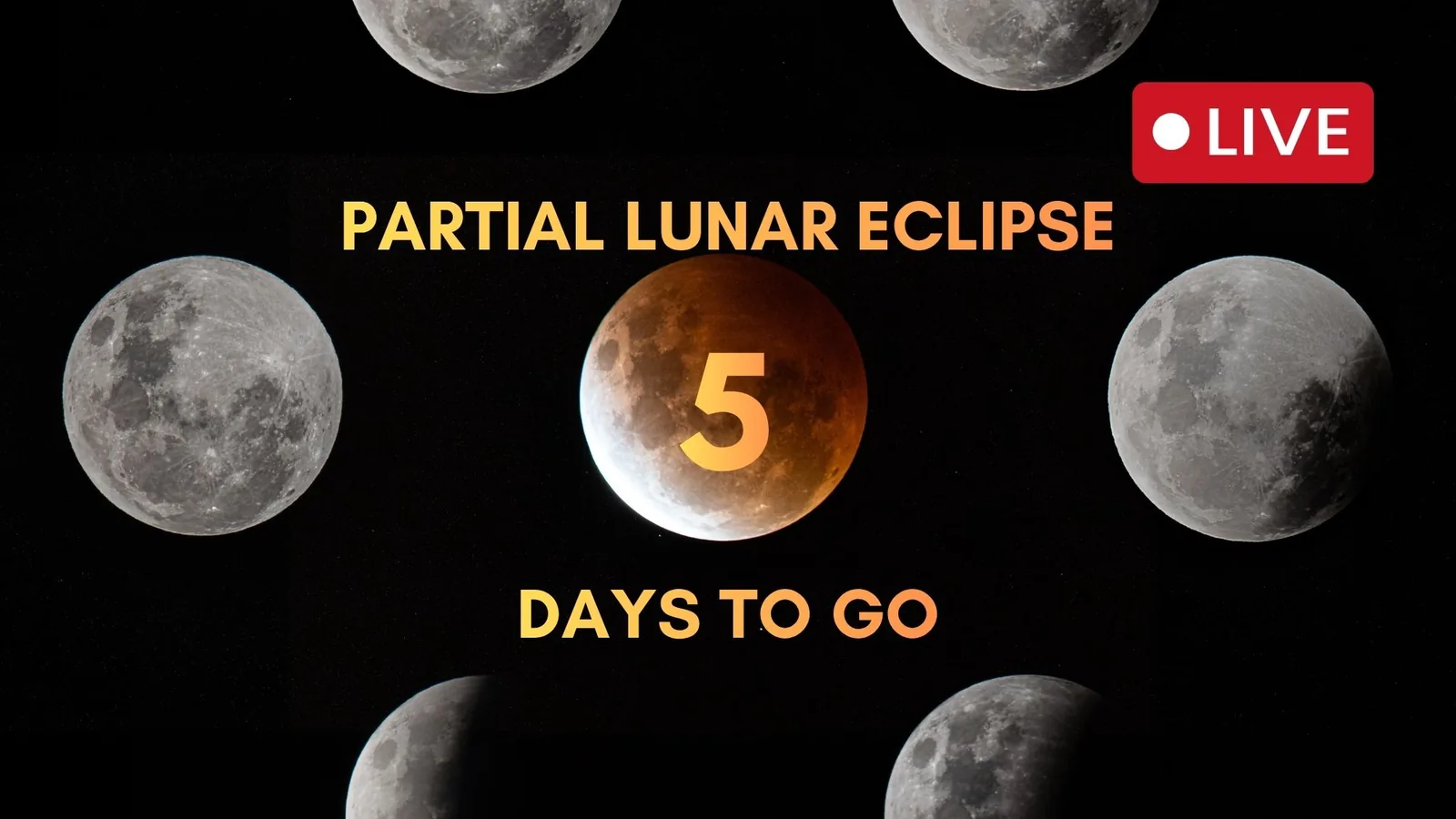
Skywatchers across the globe are gearing up for a spectacular celestial event: a deep partial lunar eclipse set to occur on the night of August 27 and into the early morning of August 28, 2026. This eclipse promises to be the most profound of its kind visible until December 31, 2028, with an estimated 96.2% of the moon predicted to pass through the darkest part of Earth's shadow, known as the umbra. While not a total eclipse, the deep immersion will likely cast a dramatic reddish-orange hue across much of the lunar surface, leaving only a small sliver brightly illuminated.
The visibility of this astronomical phenomenon is widespread. Unlike solar eclipses, lunar eclipses are observable from any location where the moon is above the horizon during the event. This broad accessibility means millions could potentially witness the eclipse, weather permitting. The Americas, both North and South, are ideally positioned for the most comprehensive views, as the entire eclipse sequence will be visible. In Europe and Africa, the eclipse will unfold in the pre-dawn hours of August 28, with the moon potentially setting during the eclipse's later stages.
Why This Eclipse Stands Out
Often, the term "partial lunar eclipse" might deter casual observers, conjuring images of a less dramatic event compared to a total lunar eclipse. However, the upcoming Aug. 27-28 event challenges that perception. The sheer depth of the moon's passage into Earth's umbra – 96.2% – ensures a visually stunning display. This deep immersion means that only a minimal portion of the moon will avoid the direct shadow, creating a striking contrast between the dim, ruddy-colored main body and the bright crescent. Experts note that this level of spectacle won't be replicated for another two years, making it a must-see for astronomy enthusiasts and the curious alike.
The timing of the eclipse offers varied viewing opportunities. For observers in North America, the event begins on the evening of August 27. Meanwhile, those in western Europe will need to be ready in the early hours of August 28, looking towards the western horizon before sunrise to catch the peak action. This global accessibility highlights the shared wonder of cosmic events that can unite people across different time zones and continents.
This event serves as a reminder of the dynamic interplay between Earth, its moon, and the sun. Understanding the mechanics of eclipses—caused by the alignment of these celestial bodies—provides valuable insights into orbital mechanics and planetary science. Such occurrences also foster a sense of connection to the cosmos, encouraging public interest in space science and observation. The preparation and anticipation surrounding events like this deep partial lunar eclipse underscore humanity's enduring fascination with the night sky and our place within the vast universe.