
Deep Partial Lunar Eclipse Visible August 27-28
A deep partial lunar eclipse, with 96.2% of the moon entering Earth's shadow, will be visible across the Americas, Europe, and Africa on August 27-28, 2026. This celestial event offers a stunning view of the moon with little need for special equipment.

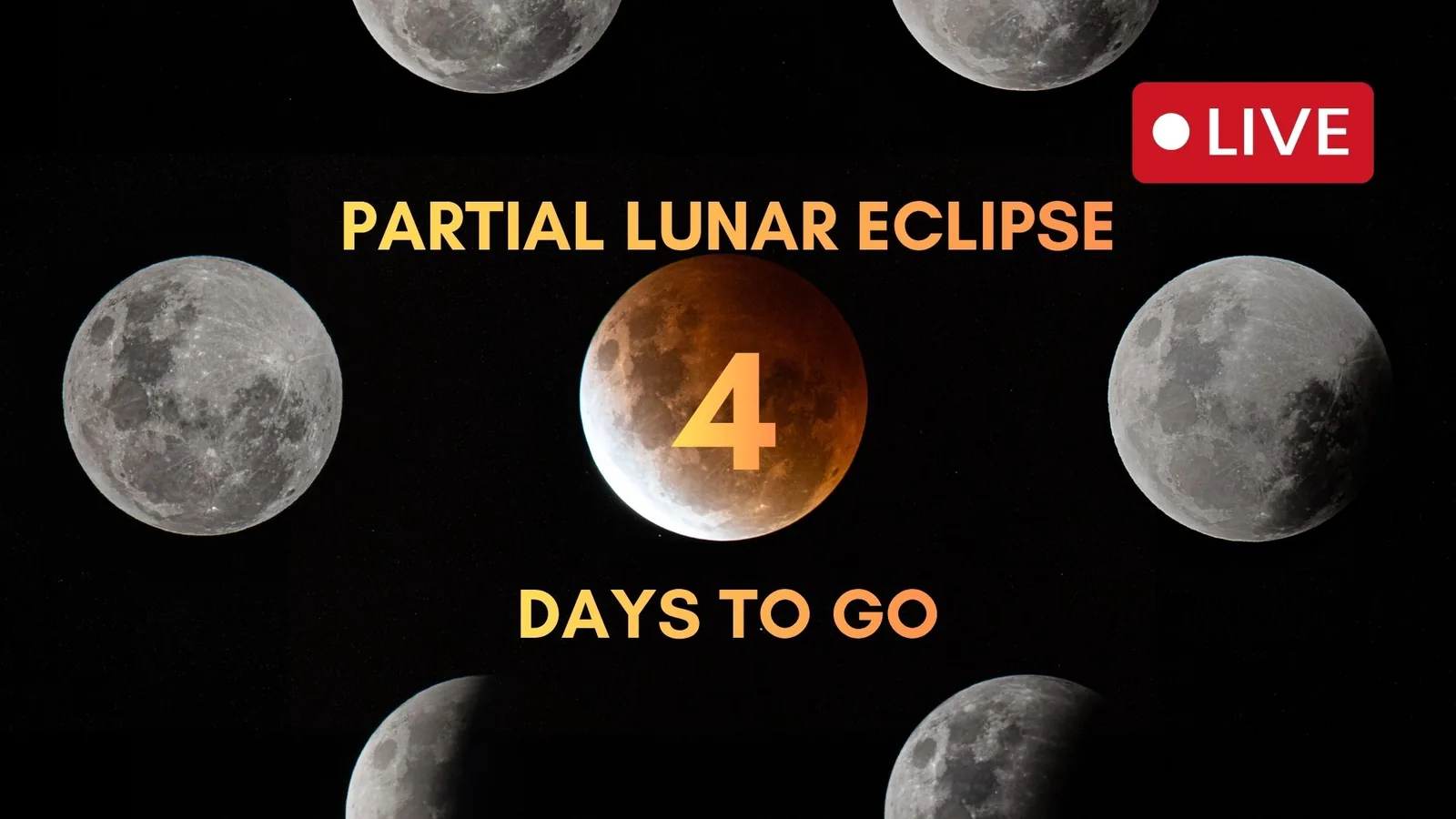
Skywatchers in North and South America, Europe, and Africa will have a prime opportunity to witness a spectacular celestial event on the night of August 27 and into the early morning of August 28, 2026. A deep partial lunar eclipse, where the moon will appear to turn a rusty red hue as it passes through Earth's darkest shadow, is set to occur. At its peak, an astounding 96.2% of the lunar surface will be obscured by the umbra, Earth's central shadow. This makes it the deepest partial lunar eclipse visible globally until December 31, 2028, presenting a significant event for astronomy enthusiasts.
Unlike solar eclipses, lunar eclipses are accessible to a wide audience without the need for specialized viewing equipment. "One of the wonderful things about a lunar eclipse is that it can be witnessed by everyone who happens to be on the night side of Earth as it occurs, weather permitting," according to Space.com. Observers can simply step outside and look up to observe the moon as Earth's shadow gradually encroaches upon it. For those seeking a more detailed view, binoculars or a telescope can enhance the experience, revealing the moon's craters and maria.
Visibility and Viewing Tips
The eclipse promises to be visible from anywhere on Earth where the moon is above the horizon during the event. However, the Americas will offer the most comprehensive view, with the entire eclipse visible. Viewers in Europe and Africa will catch the latter stages of the eclipse before sunrise on August 28, as the moon sets.
This particular lunar eclipse is noteworthy because of its depth. While often perceived as less dramatic than a total lunar eclipse, this event comes remarkably close. The immersion of 96.2% into the umbra means only a thin sliver of the moon will remain brightly lit, while the majority is expected to take on a reddish-orange coloration due to sunlight scattering through Earth's atmosphere. This phenomenon, often referred to as a "blood moon," is a breathtaking sight.
Those planning to observe the eclipse should check local weather forecasts. Clear skies are essential for optimal viewing. For those in North America, the eclipse will begin on the evening of August 27. In Western Europe, it will be visible in the early hours of August 28, coinciding with the moon's setting. It is advisable to plan viewing locations away from significant light pollution to best appreciate the celestial display.
The lunar eclipse is not only a captivating astronomical event but also a reminder of the dynamic interplay between celestial bodies. The alignment of the Sun, Earth, and Moon, which causes eclipses, is a fundamental aspect of our solar system's mechanics. Understanding these events helps us appreciate the vastness and order of the cosmos. This particular eclipse, happening in August 2026, provides a relatively accessible yet profound glimpse into these cosmic processes.
Many skywatchers will likely be anticipating this event, especially given its significance as the deepest partial eclipse until late 2028. It offers a rare chance to witness a substantial portion of the moon obscured by Earth's shadow, creating a visually striking and memorable spectacle. The advice for observers remains consistent: find a clear vantage point, look up, and enjoy the unfolding cosmic drama. Whether using the naked eye, binoculars, or a telescope, the partial lunar eclipse promises to be an unforgettable astronomical display for millions.