
FCC Approves Space Mirror Test to Light Up Night Sky
The FCC has greenlit a test satellite that will use a large mirror to reflect sunlight, potentially illuminating the night sky. The decision faces opposition from astronomers and wildlife experts concerned about environmental and scientific impacts.

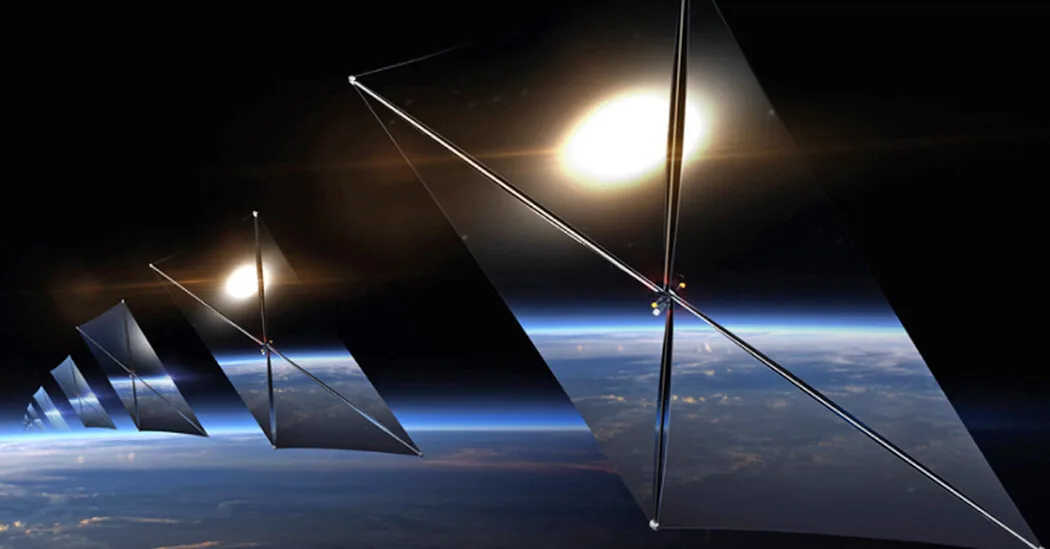
The Federal Communications Commission (FCC) has granted approval for a pioneering test of a space-based mirror designed to reflect sunlight back to Earth after dark. The license, issued on Thursday, allows Reflect Orbital, a California-based startup, to launch its Eärendil-1 satellite into low Earth orbit. The company envisions this technology powering solar farms, aiding rescue operations, and illuminating urban areas. Initially planning a test launch this year, Reflect Orbital aims to eventually deploy as many as 50,000 such mirrors into space.
However, the FCC's decision has ignited a firestorm of criticism from various sectors, including astronomers, wildlife advocates, and environmentalists. Critics voice grave concerns that the reflected light could pose significant risks, such as endangering airplane pilots with unexpected glare, severely disrupting astronomical observations, and interfering with the natural circadian rhythms of humans, animals, and plants. These rhythms dictate crucial biological processes like sleep-wake cycles, blooming periods, and migration patterns.
“It’s terrifying to me that one country can change the night sky for everybody in the world,” stated Samantha Lawler, an astronomer at the University of Regina in Saskatchewan, Canada. She emphasized the critical need for dark skies for her research, warning that giant mirrors could render such access impossible. The American Astronomical Society also submitted a letter to the FCC last month, arguing that the endeavor is not in the public interest. The society contended that the project would not only waste taxpayer funds by jeopardizing the work of federally supported astronomical facilities but also introduce unknown risks to both human and animal life.
Environmental and Scientific Concerns Mount
Roohi Dalal, director of public policy for the American Astronomical Society, elaborated on the potential ramifications. "It is clear that the activities that Reflect Orbital is proposing will have an impact on the Earth environment, including on human health, agriculture and wildlife, in addition to astronomy," Dalal wrote in her correspondence. The potential for widespread ecological disruption is a primary concern, particularly for nocturnal species and ecosystems that rely on natural light cycles. Agricultural impacts are also being considered, as plant growth and development can be sensitive to light cues.
The project raises complex questions about international cooperation and regulation in space. While Reflect Orbital is a U.S. company and its license was approved by a U.S. agency, the effects of its technology would not be confined to American territory. The potential to alter the night sky globally has sparked international debate about sovereign rights and shared environmental responsibilities in orbit. This situation underscores the growing need for robust international frameworks to govern new space-based technologies that could have far-reaching consequences.
The Eärendil-1 satellite's mission is to test the feasibility and impact of these reflective surfaces. If successful, the technology could offer novel solutions for energy generation and illumination. However, the debate highlights a classic tension between technological innovation and the preservation of natural environments and scientific endeavors. Balancing the potential benefits of such projects with their inherent risks will be a critical challenge as humanity increasingly expands its activities beyond Earth. The FCC's approval marks a significant step, but the controversy surrounding the space mirror technology ensures that this is just the beginning of a larger discussion.