
Four-Winged 'Dragon' Dinosaur Unearthed in Ancient China
Paleontologists have identified a new species of feathered dinosaur, Jian changmaensis, a relative of Velociraptor, with four wing-like limbs. This 'dragon' dinosaur likely hunted prey from trees in ancient China around 124 million years ago.

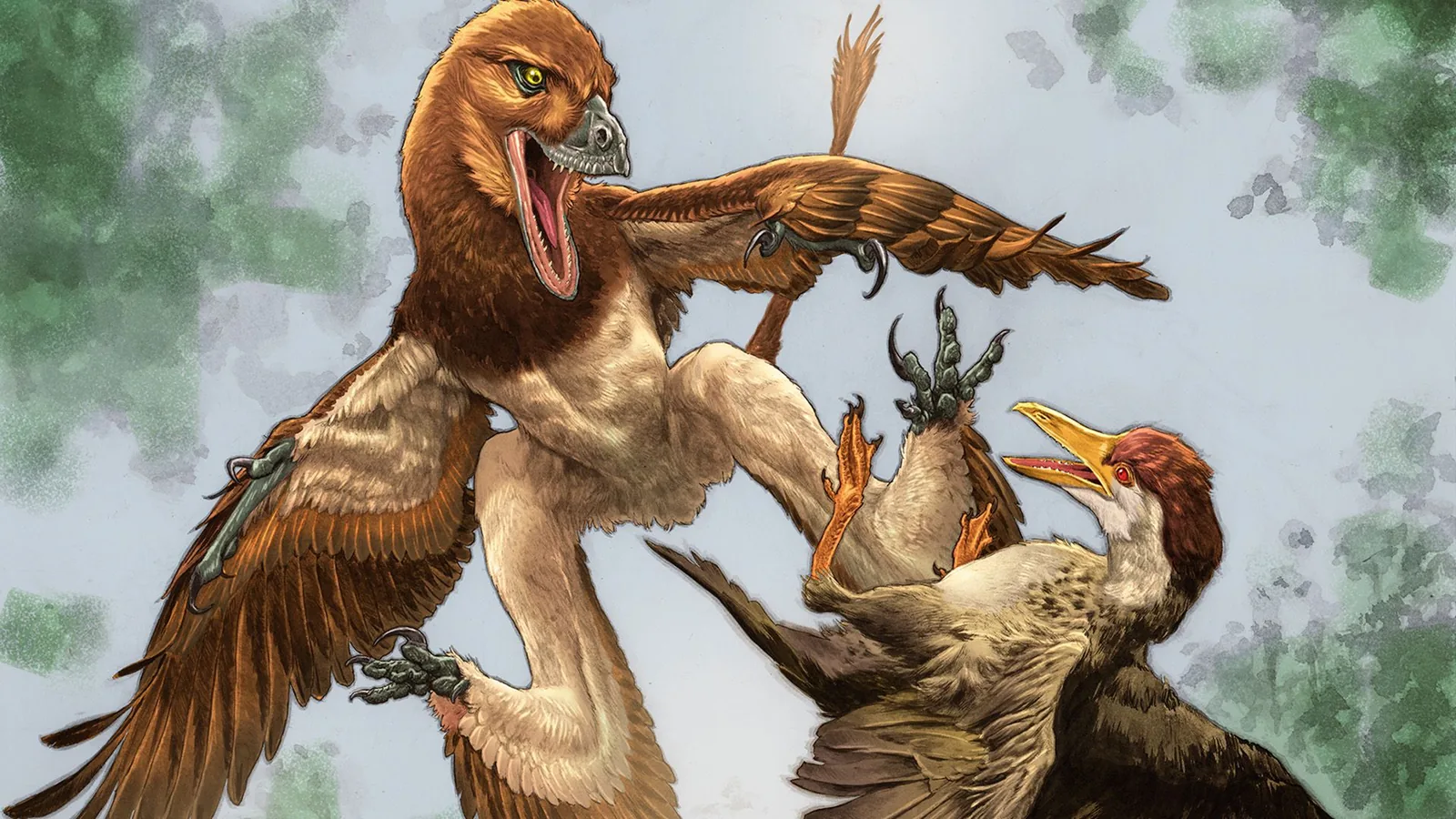
Paleontologists have identified a new species of feathered dinosaur with four wing-like limbs, a close relative of the iconic Velociraptor, that may have hunted prey from the trees of ancient China. Dubbed Jian changmaensis, this small, bird-like dinosaur belonged to a group known as microraptors, distinct from the large, scaly reptiles often depicted in popular culture. The discovery, based on a partial fossilized shoulder and forelimb, suggests these ancient creatures possessed long feathers on both their arms and legs, giving them a unique, four-winged appearance.
The fossil was unearthed in the Lower Cretaceous Xiagou formation near Changma village in China's Gansu province, an area dating back approximately 124 to 120 million years. This region was once a lakeside environment teeming with early birds, fish, and other wildlife. The Changma Basin is already renowned for yielding fossils of Gansus yumenensis, considered one of the earliest known birds discovered in China.
Matthew Lamanna, a senior dinosaur researcher at the Carnegie Museum of Natural History in Pittsburgh and co-author of the study published in the Annals of Carnegie Museum, highlighted the significance of the find. "Our team has recovered more than one hundred bird fossils at Changma, but only this single non-avian dinosaur specimen," Lamanna stated. "Microraptors provide a window into what the closest ancestors of the first birds were probably like," he added, explaining that their study offers clues about how birds evolved and developed flight.
This newly identified dinosaur, Jian changmaensis, is described as one of the largest microraptor specimens ever found. Jingmai O’Connor, associate curator of fossil reptiles at the Field Museum in Chicago and another co-author, noted that the preserved upper arm bone fragment is about 4 inches (10 centimeters) long, suggesting the entire dinosaur might have had a wingspan of around 4 feet (1.2 meters), comparable to a modern barn owl.
A Prehistoric Avian Buffet
The Changma Basin, with its abundance of early bird fossils, may have served as a prime hunting ground for a tree-climbing predator like J. changmaensis. Researchers have found numerous pellet-like fossilized remains at the site, reminiscent of the regurgitated prey remains of modern owls. While direct evidence linking these pellets to Jian is absent, it is the only non-avian dinosaur fossil recovered from the basin to date. As a carnivore considerably larger than the preserved birds, Jian would have been well-equipped to prey on them.
Previous discoveries of microraptor fossils have revealed a diverse diet, with stomach contents including fish, lizards, mammals, and birds. This suggests that microraptors were opportunistic hunters. For Jian changmaensis, with its potential arboreal lifestyle and gliding capabilities, early birds could have been particularly accessible targets, ambushed from branches or pursued through the forest canopy.
The limited fossil evidence, consisting only of shoulder and forelimb bones, means much about Jian changmaensis remains unknown. However, the discovery confirms the existence of this intriguing new microraptor species in what is now northwestern China 120 million years ago. Paleontologists are hopeful that future expeditions may uncover more complete remains, potentially shedding further light on these fascinating transitional dinosaurs that blurred the lines between reptiles and birds.