
Guatemala and El Salvador Partner on Space Exploration Goals
Guatemala and El Salvador are exploring joint astronomical research and space missions to advance their regional presence in space science. Both Central American nations see opportunity in shared celestial projects and international cooperation frameworks.

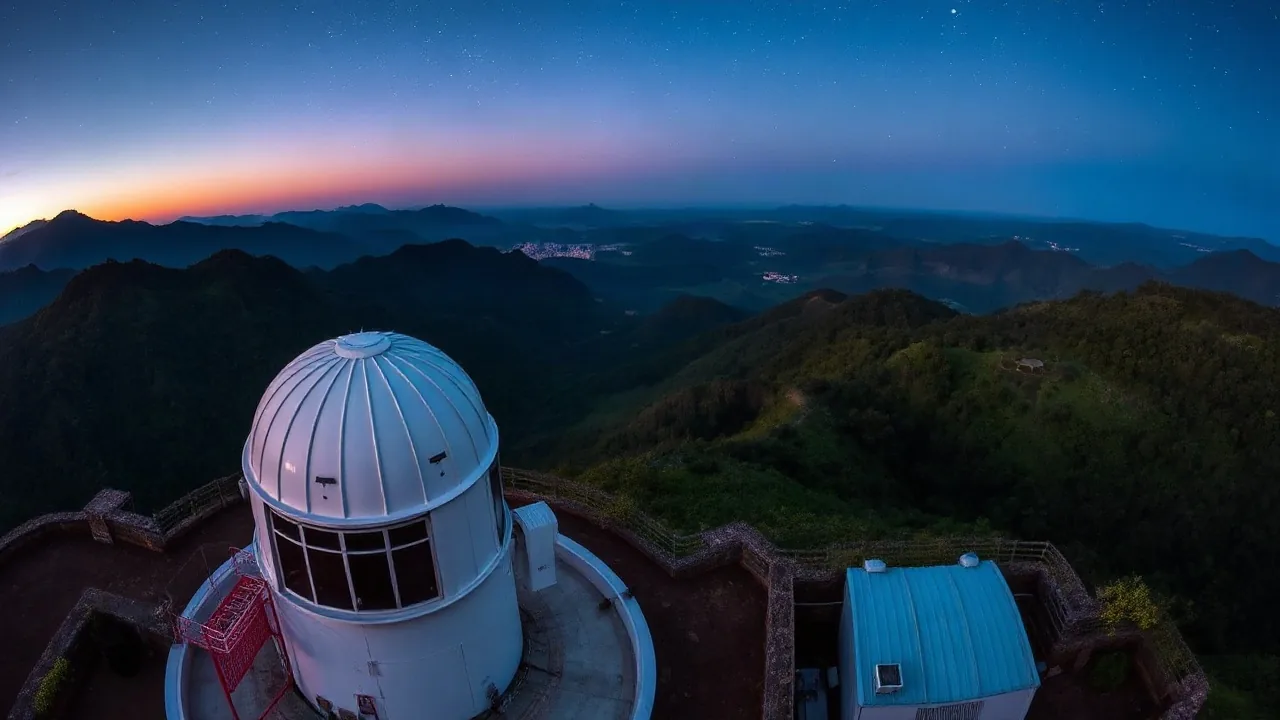
Officials from Guatemala and El Salvador met in early September 2026 to discuss coordinated efforts in space exploration and astronomical research, marking the first formal dialogue between the two nations on celestial science initiatives. The discussion centered on leveraging shared geographic advantages in tropical observation zones and pooling limited national resources for meaningful regional contributions to space science.
The meeting included representatives from Guatemala's National Institute of Seismology, Vulcanology and Meteorology (INSIVUMEH) and El Salvador's Ministry of Environment and Natural Resources, both agencies with growing interests in atmospheric monitoring and astronomical observation. "We recognize that space exploration requires collaboration, particularly for nations with emerging programs," said Dr. Carlos Méndez, lead scientist at INSIVUMEH, during remarks to regional media on September 12.
Both countries sit within the tropical belt at elevations ranging from sea level to over 4,000 meters, providing unique vantage points for certain types of astronomical observation. Guatemala's highland regions and El Salvador's equatorial position create complementary advantages for tracking celestial events and conducting atmospheric research without the infrastructure burden of building separate facilities.
Current Astronomical Interests and Shared Resources
Guatemala has invested modestly in astronomy infrastructure over the past decade, including the installation of portable telescope arrays in the highlands near Lake Atitlan. El Salvador has focused on meteor detection networks and atmospheric composition studies relevant to climate monitoring. Neither nation currently operates an independent space agency, but both participate in international agreements through the International Astronomical Union.
The two countries have identified three priority areas for potential collaboration:
- Meteor and meteorite tracking networks spanning the region to gather data on space debris and cosmic impacts
- Joint atmospheric studies using ground-based instruments to complement satellite data from international partners
- Educational outreach programs to build scientific capacity in both nations and train the next generation of astronomers
El Salvador's National Observatory, operated in partnership with the University of El Salvador, has conducted continuous solar observation since 2019. Guatemala's equivalent facilities remain less developed, but recent funding from multilateral development banks has enabled upgrades to existing meteorological stations that can be repurposed for astronomical work.
A formal memorandum of understanding (MOU) is expected to be signed by year-end 2026, pending approval from both governments' science ministries. The agreement would establish a joint research committee, standardize data collection protocols, and create a shared repository for celestial observations.
Why Regional Cooperation Matters for Central America
International cooperation in space science has become essential for developing nations seeking to participate in the global research ecosystem. Guatemala and El Salvador lack the GDP and institutional capacity of larger Latin American space programs, such as those in Mexico or Brazil, but their partnership offers a model for smaller economies.
"Central America has been largely absent from major space initiatives," noted Dr. Isabel Rodríguez, an astronomer at the Regional Institute for Space Studies in San José, Costa Rica, in an interview published September 18. "A Guatemala-El Salvador partnership sends a signal that the region is serious about building scientific infrastructure."
The initiative also aligns with broader United Nations Sustainable Development Goals, particularly SDG 13 on climate action and SDG 17 on partnerships. Atmospheric monitoring conducted through the joint program will feed into regional climate models used by Central American governments to plan adaptation strategies.
Beyond science, the partnership carries diplomatic weight. Guatemala and El Salvador have experienced border tensions historically, but cooperation on celestial events observation offers a neutral, collaborative framework. Both nations hold membership in the International Astronomical Union's Commission on Asteroids, Comets and Meteors, creating institutional overlap that strengthens the feasibility of joint work.
Preliminary budget discussions suggest each nation would contribute between 800,000 and 1.2 million U.S. dollars over a five-year implementation period, with additional support anticipated from UNESCO and the Inter-American Development Bank. Equipment purchases and facility upgrades would be shared, reducing individual capital expenditure.
The Guatemala-El Salvador model may serve as a template for other Central American nations. Honduras, Nicaragua, and Costa Rica have already expressed informal interest in observing the partnership's progress, with potential to expand into a broader regional network by 2028 or 2029.
Early indicators suggest that the first jointly operated telescope array could be operational in the Guatemala highlands by mid-2027, positioned to monitor asteroid trajectories and contribute data to the International Asteroid Warning Network. Both governments view this as a symbolic milestone demonstrating their commitment to serious space science participation at the regional level.