
ISS Leaks: NASA Astronauts Briefly Prepare for Emergency Evacuation Amid Russian Module Issues
NASA recently ordered astronauts on the International Space Station to prepare for a potential emergency evacuation due to ongoing leaks in a Russian module. The situation highlights the challenges facing the aging orbital laboratory.

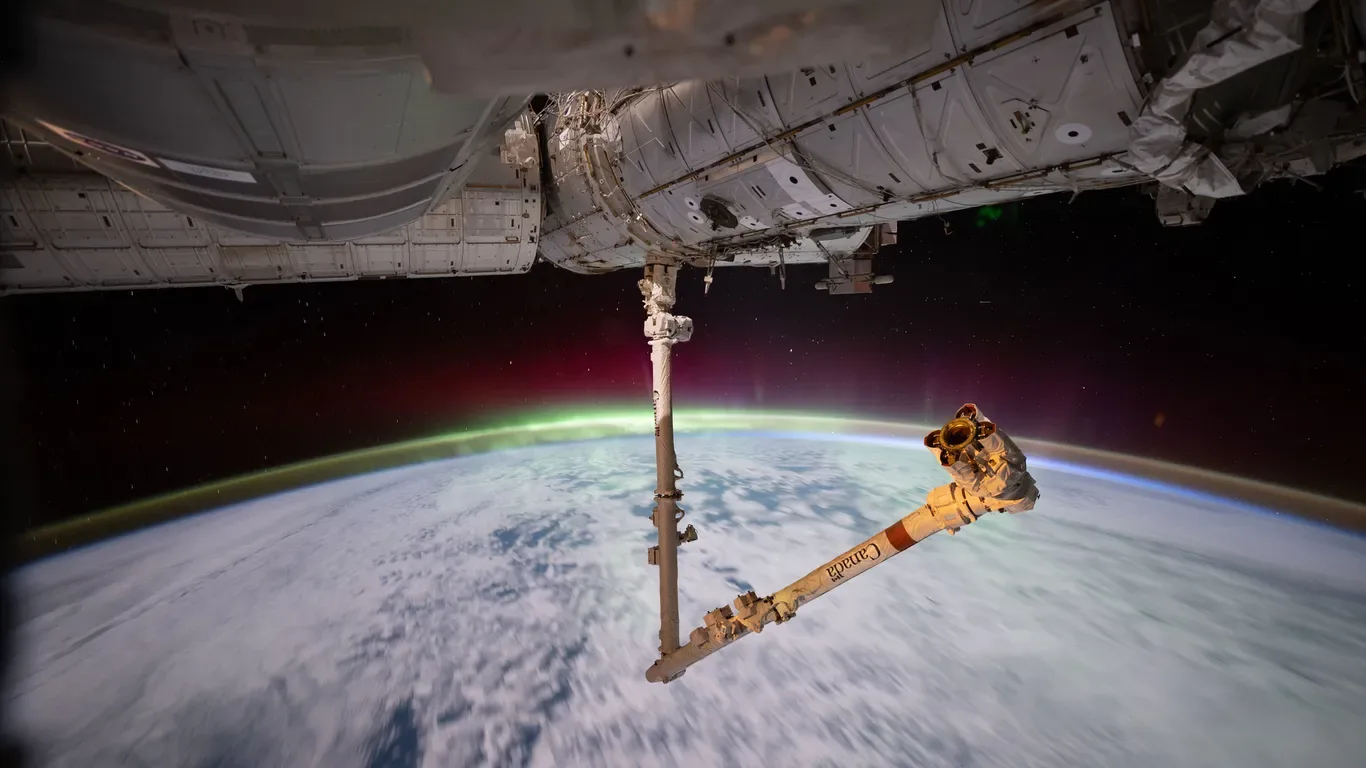
NASA astronauts aboard the International Space Station (ISS) were recently instructed to prepare for a potential emergency departure and take refuge in a SpaceX Crew Dragon spacecraft. The directive, issued Friday, was a precautionary measure stemming from ongoing concerns about mysterious leaks within the station's Russian-built Zvezda service module. While the astronauts ultimately returned to normal operations, the incident underscores the persistent challenges facing the aging orbital laboratory as it nears the end of its operational life.
The decision to alert astronauts to a "safe haven" configuration came after Russia's space agency, Roscosmos, announced it would investigate and attempt to repair the persistent leaks. However, Roscosmos later paused structural repair work to conduct additional measurements and data assessments. NASA confirmed it supported this revised approach, leading to the astronauts ending their safe haven preparations. The leaks in the Zvezda module have been an intermittent issue since September 2019, causing concern among space agencies.
Ongoing Concerns for the Aging Space Station
Engineers suspect that microscopic cracks within the Zvezda module's structure are the likely cause of the leaks. Despite repeated inspections and sealing attempts by Russian cosmonauts, a permanent solution has remained elusive. While Roscosmos maintains that there is no immediate threat to crew safety or onboard systems, the nature of a leak in a laboratory orbiting 250 miles above Earth at speeds of 17,500 miles per hour naturally raises alarms. Astrophysicist Jonathan McDowell cautioned that while unlikely, a small crack could potentially worsen catastrophically, posing a risk to both the station and its crew.
This latest episode also highlights the complex and often strained relationship between NASA and Roscosmos, key partners in the ISS program. Despite past cooperation, geopolitical tensions between the United States and Russia have impacted their collaboration in space. Disagreements over operational decisions affecting the ISS are not uncommon, reflecting broader terrestrial and celestial challenges.
The International Space Station, a testament to unprecedented international cooperation in space for over three decades, is slated for de-orbiting in 2031. Its planned fiery reentry into Earth's atmosphere will mark the end of an era. Until then, ensuring the safety and integrity of the orbiting laboratory, especially in the face of persistent technical issues like the Zvezda module leaks, remains a top priority for all involved agencies.