
SpaceX Launches Northrop Grumman's Robotic Satellite Repair Mission
SpaceX successfully launched Northrop Grumman's robotic servicing spacecraft from Florida on Tuesday. The satellite, designed for on-orbit servicing, will embark on a decade-long mission.

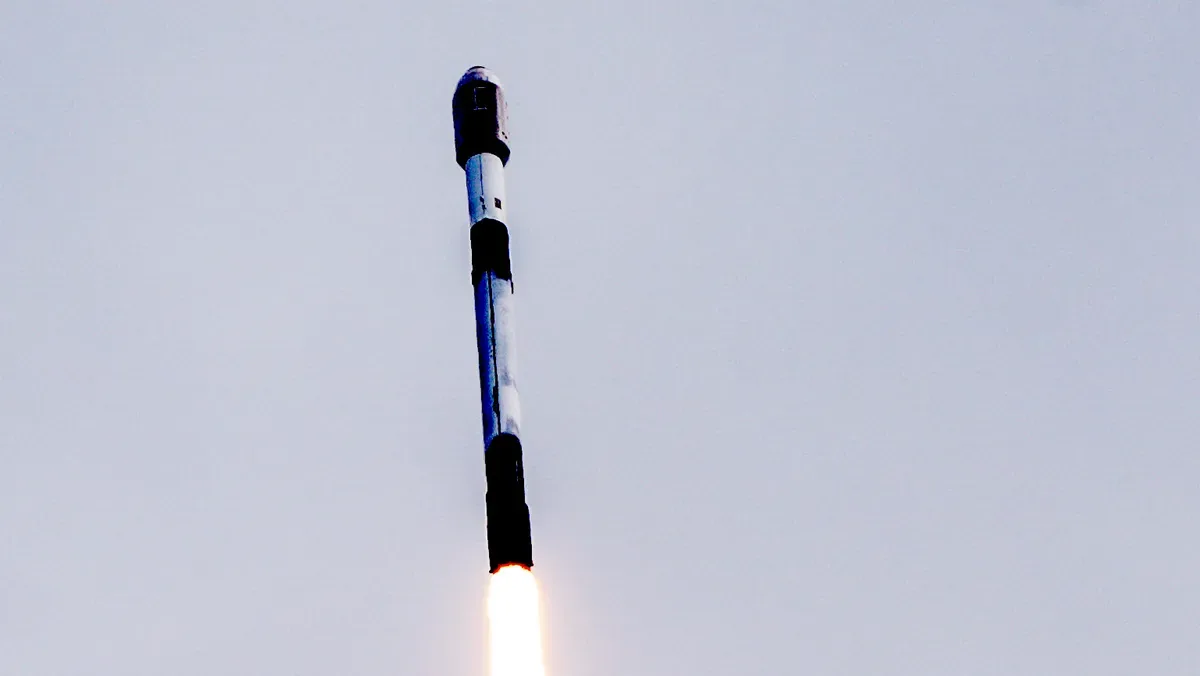
A SpaceX Falcon 9 rocket successfully lifted off from Cape Canaveral Space Force Station in Florida on Tuesday, July 21, 2026, carrying Northrop Grumman's groundbreaking Mission Robotic Vehicle (MRV) into orbit. The launch marked the beginning of a potentially decade-long mission for the innovative spacecraft, designed to perform maintenance and servicing on other satellites.
The MRV, developed by Northrop Grumman, is a sophisticated platform equipped with robotic arms and advanced sensors. Its primary function is to demonstrate and execute on-orbit servicing, assembly, and manufacturing capabilities. This includes tasks such as refueling, repairing, and upgrading satellites, extending their operational lifespan and reducing space debris.
The mission aims to prove the viability of robotic servicing as a sustainable solution for managing the growing number of satellites in Earth's orbit. As space becomes increasingly congested, the ability to maintain existing assets rather than launching new ones offers significant economic and environmental benefits. This technology could revolutionize space exploration and commercial activities.
Robotic Servicing in Orbit
The vehicle is designed to rendezvous with and capture other spacecraft, acting as a kind of "space tug" or repairman. Its robotic arms can perform delicate operations, and it carries a payload of tools and equipment necessary for various servicing tasks. Northrop Grumman envisions the MRV as a versatile platform that can adapt to different servicing needs.
"This launch represents a significant step forward in making space more sustainable and accessible," said a spokesperson for Northrop Grumman. "The ability to perform complex robotic operations in orbit opens up new possibilities for satellite longevity and mission success." The company has been a leader in developing advanced space technologies.
The successful deployment of the MRV is crucial for the future of space infrastructure. Analysts predict that the market for on-orbit servicing could reach billions of dollars in the coming years, driven by the need to manage aging satellites and the increasing number of commercial and governmental space missions. The SpaceX Falcon 9 rocket provided the reliable launch capabilities required for this advanced payload.
The mission is expected to conduct various demonstrations and operations over the next ten years, gathering crucial data and refining its capabilities. This development comes at a time when both governmental agencies and private companies are investing heavily in space technology, highlighting the growing strategic importance of orbital assets.