
Katalyst, NASA Halt Swift Reboost Mission Over Spacecraft Issues
Katalyst Space and NASA have canceled plans to use the Link spacecraft to boost the orbit of the Swift gamma-ray observatory due to ongoing attitude-control problems with Link. Swift is now expected to reenter Earth's atmosphere later this year.

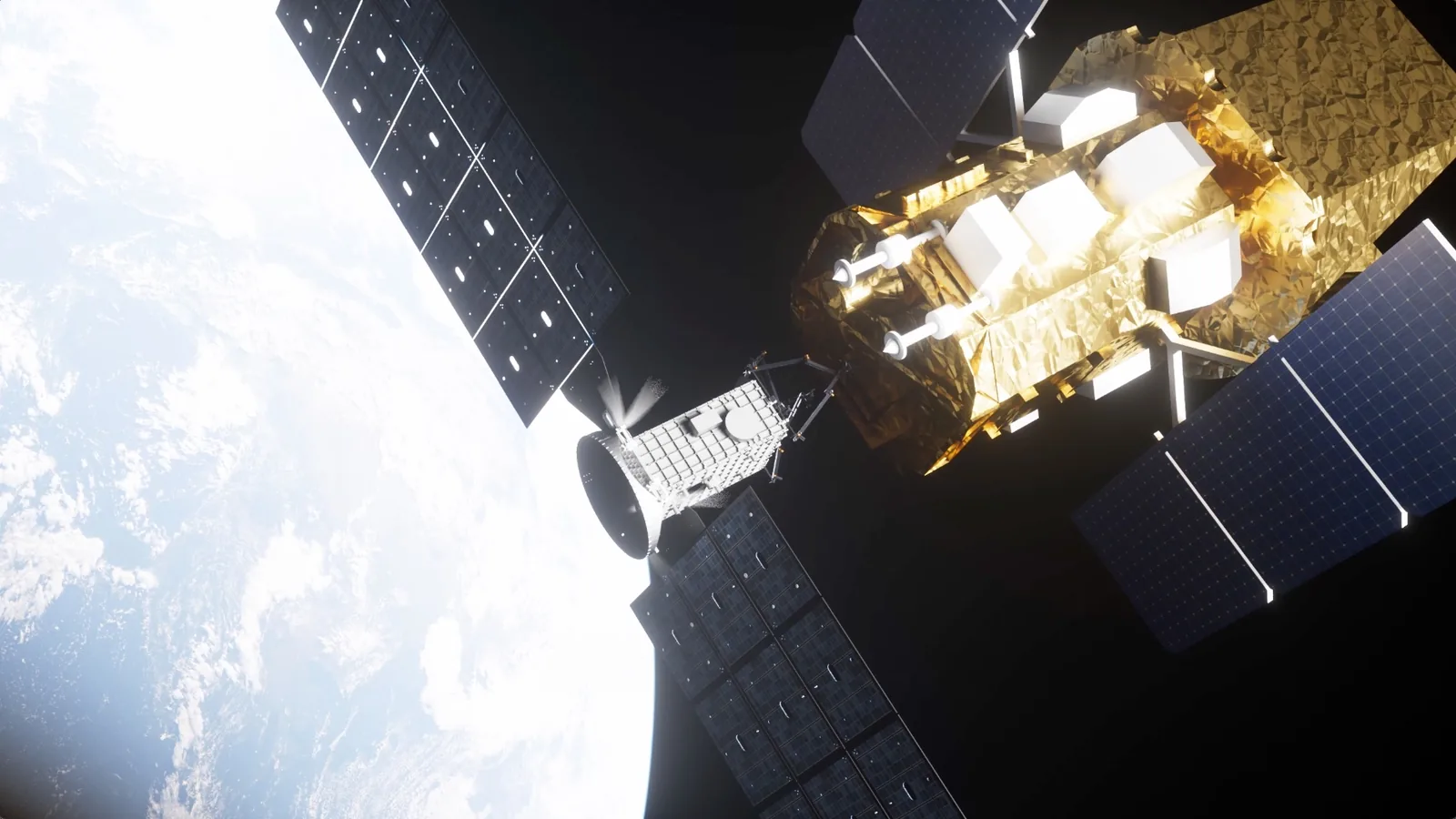
Katalyst Space Technologies and NASA have officially abandoned plans to extend the operational life of the Swift gamma-ray observatory through an orbital reboost. The decision, announced August 20, stems from persistent attitude-control issues affecting Katalyst's Link spacecraft, which was tasked with grappling and lifting Swift's orbit. Both organizations concluded that Link could not safely perform the critical capture maneuver.
The ambitious mission, intended to counteract the effects of increased atmospheric drag caused by heightened solar activity, faced significant technical hurdles. Katalyst launched the experimental Link spacecraft on July 3 aboard a Pegasus XL rocket. Initial reports indicated the spacecraft was healthy, but by July 28, the company disclosed that Link had entered a multi-axis spin. This was attributed to attitude-control problems, including the failure of two out of three reaction wheels and only partial functionality of its reaction control system thrusters.
Despite these challenges, Katalyst's engineers worked to stabilize Link. By early August, they had significantly reduced the spin rate by utilizing the electric thrusters meant for orbital maneuvering. New flight software was subsequently installed, and as recently as August 11, Katalyst expressed optimism that the updated system would support rendezvous operations and the subsequent capture and boost of NASA's Neil Gehrels Swift Observatory. The spacecraft was slated to reach Swift by late August.
Attitude Control Problems Lead to Mission Cancellation
However, the persistent attitude-control issues ultimately proved insurmountable for the reboost objective. Neither Katalyst nor NASA provided extensive details regarding the specific factors that led to the final determination. Instead, they confirmed that Link would proceed with rendezvous and proximity operations near Swift, foregoing the planned orbital ascent. Ghonhee Lee, CEO of Katalyst Space Technologies, acknowledged the high-risk, high-reward nature of the undertaking. "We took on this high-risk, high-reward challenge and are proud of the milestones we reached along the way," Lee stated, emphasizing the valuable experience gained.
This decision marks the end of the line for the Swift spacecraft, a vital instrument launched in 2004 to observe gamma-ray bursts and other energetic cosmic events. Swift, currently orbiting at an altitude between 343 and 347 kilometers, is now projected to reenter Earth's atmosphere later this year, in 2026. NASA had already curtailed most of Swift's science operations earlier in the year as a measure to reduce atmospheric drag and conserve power, hoping to buy enough time for the reboost mission to succeed.
The collaboration between Katalyst and NASA highlights the growing challenges and innovative approaches in maintaining critical space assets. NASA had awarded Katalyst a $30 million contract in September after initial feasibility studies. The agency has consistently acknowledged the mission's inherent risks, driven by the aggressive timeline dictated by solar cycle activity. "We knew this was a high-risk, high-reward mission: a first-of-its-kind attempt, developed on an unprecedented timeline driven by the sun’s activity," said Shawn Domagal-Goldman, director of NASA’s astrophysics division. "We were all hoping for more science from Swift. But we knew the takeaways from this mission would be worthwhile either way, and we have gained so much through the series of accomplishments up to this point."
NASA Administrator Jared Isaacman further commented on the agency's willingness to pursue ambitious, albeit risky, projects when the potential benefits are substantial. "NASA should be willing to move quickly and take smart risks when the potential return is worth it, and that is exactly what we did with this mission," Isaacman said. "The team moved with extraordinary speed to give Swift a chance to carry out more science while advancing capabilities America will need for satellite servicing in the future." Katalyst intends to leverage the operational data from Link to refine its future satellite servicing endeavors, including recent deorbiting services study contracts from the Space Development Agency and the Defense Innovation Unit.
While the Swift reboost mission has been called off, NASA affirmed its commitment to exploring alternative methods for rapid response to cosmic events. The agency plans to utilize its existing fleet of missions to bridge any observational gaps in the interim. The outcome underscores the complex technical and financial considerations involved in extending the life of aging but scientifically valuable spacecraft in an increasingly crowded and dynamic orbital environment.