
LSST Camera Captures Over 500,000 Galaxies in Stunning New Image
The Vera C. Rubin Observatory's massive 3.2-gigapixel LSST camera has captured an unprecedented image showing over half a million galaxies. This new view of the COSMOS field promises to revolutionize our understanding of galactic evolution.

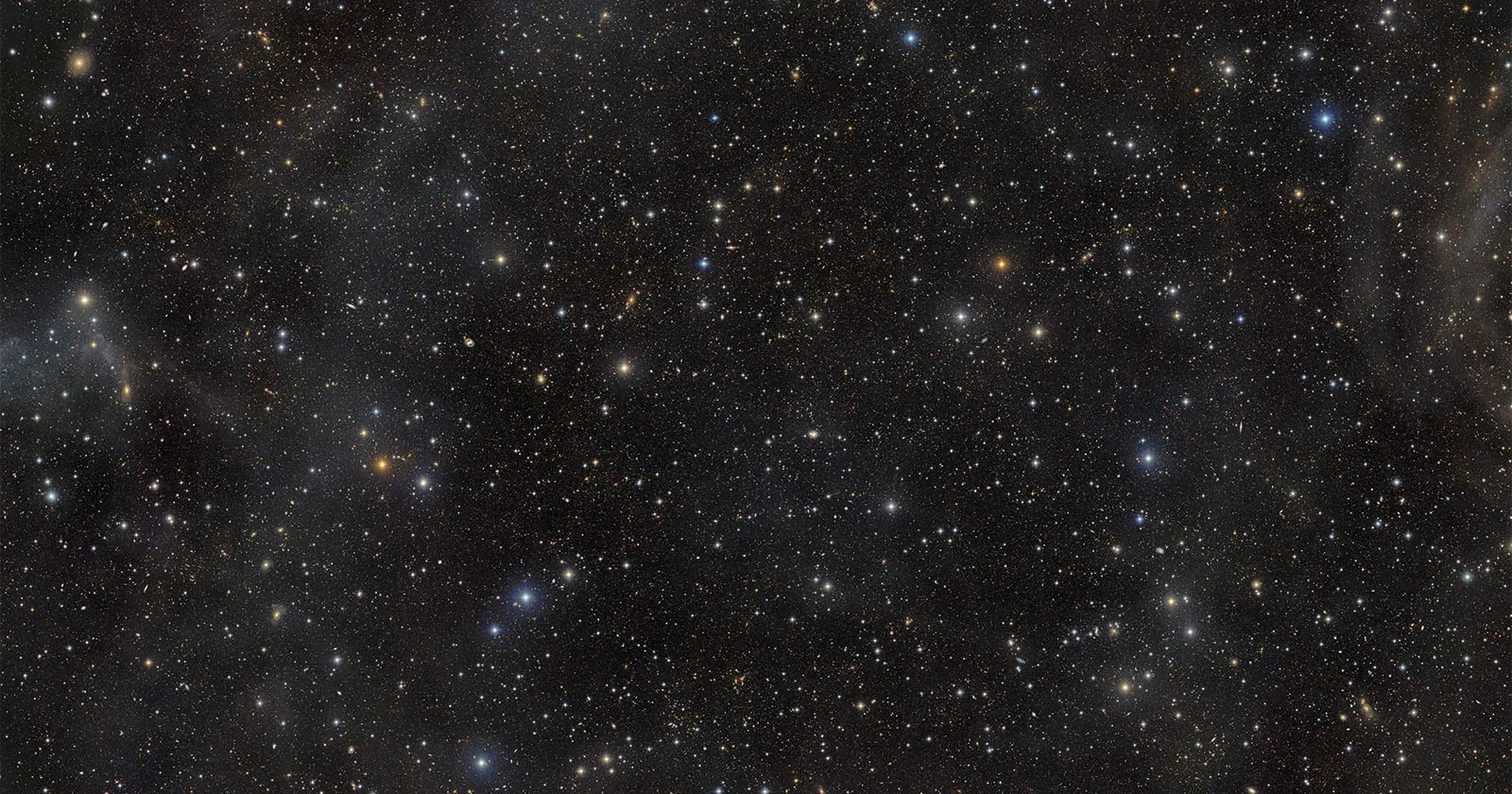
The Vera C. Rubin Observatory's powerful 3.2-gigapixel Legacy Survey of Space and Time (LSST) Camera has delivered a breathtaking new image showcasing more than half a million galaxies. This spectacular vista, taken of a patch of the universe known as the COSMOS field, represents a significant leap forward in astronomical observation and was recently released by the National Science Foundation (NSF) and the Department of Energy (DOE).
The LSST Camera, the largest digital camera globally, weighs approximately 6,600 pounds and is roughly the size of a small car. It features an immense image sensor composed of 189 individual charge-coupled devices (CCDs). Mounted on the 8.4-meter Simonyi Survey Telescope, the camera has just begun its decade-long mission. During this period, it is slated to capture 700 super high-resolution photos every night, meticulously cataloging the cosmos.
The newly revealed image is a composite, built from hundreds of individual exposures. It reveals an astonishing array of over half a million galaxies, offering a profound perspective on the sheer scale of the universe. For context, our own Milky Way galaxy spans up to 120,000 light-years across its visible edge. While impressive, it pales in comparison to the cosmic distances and eons captured in this single LSST photograph, highlighting the vastness of space and time.
A Deep Dive into the COSMOS Field
This particular region of the night sky, the COSMOS field (Cosmic Evolution Survey Deep Field), has been a focal point for astronomers for years. It was famously studied by the Hubble Space Telescope between 2003 and 2005 and has since served as a crucial reference point for astronomical research. Scientists chose COSMOS because it is observable from both ground-based telescopes, like the LSST, and space-based observatories. The field is already known to contain over two million identified galaxies of varying types and ages, making it an ideal cosmic laboratory for studying galactic evolution.
The Rubin Observatory's LSST Camera, with its unparalleled resolution and sensitivity, is now adding crucial new data to this rich historical dataset. Its ability to observe the COSMOS field repeatedly over the next few years is expected to provide invaluable insights into how galaxies form, change, and interact over cosmic timescales. This temporal dimension is a key objective for the LSST mission.
"The COSMOS deep image is just the beginning for Rubin in this region," stated Bob Blum, Director of Rubin Observatory at NSF NOIRLab. "Repeated visits to the field over the next few years will demonstrate the power of our survey design for discovery by providing our science community with a huge number of transient and variable objects like supernovae and other explosive transients for follow-up and detailed study." This approach will enable astronomers to track changes and identify transient phenomena that were previously undetectable.
Phil Marshall, Deputy Director of Rubin Observatory at SLAC, emphasized the field's significance. "The COSMOS field is a very important one for LSST science," Marshall said. "Its wealth of prior observations, and its repeated targeting both during commissioning and as one of the LSST’s deep fields, will make it very valuable as a testing ground for scientists as they get ready to take on the survey data." The ongoing observations by the LSST Camera will further enhance our understanding of the universe's evolution, offering a dynamic view of cosmic history that complements static images.