
Lunar Rock Discovery Unlocks Secrets of Moon's Ancient Magnetism
Rocks brought back from the far side of the Moon by China's Chang'e-6 mission are providing unprecedented insights into the Moon's ancient magnetic field, potentially rewriting its geological history.

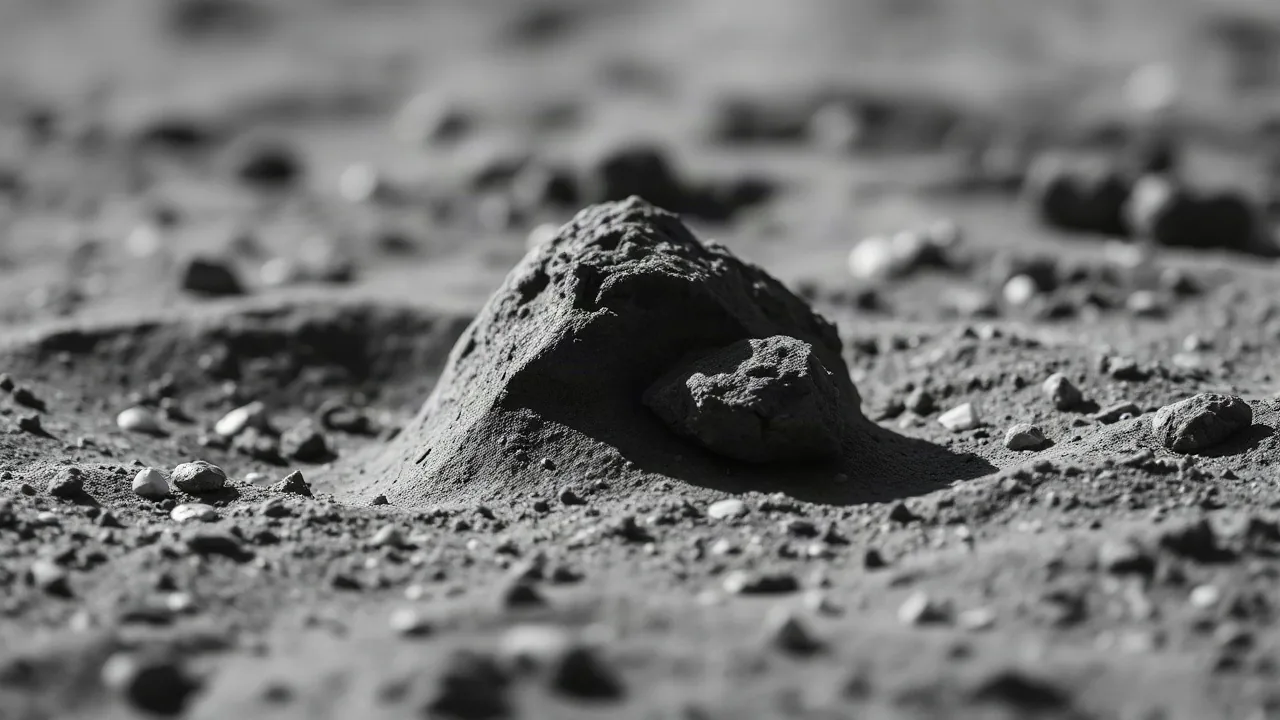
Scientists analyzing samples retrieved from the far side of the Moon by China's Chang'e-6 mission have uncovered critical evidence that could finally explain the origin of the Moon's ancient magnetic field. This discovery, centered around a seemingly ordinary lunar rock, promises to shed new light on a long-standing enigma that has baffled researchers for decades and may necessitate a revision of our understanding of the Moon's early evolution.
The Chang'e-6 mission, which successfully landed on the South Pole-Aitken Basin on June 2, 2026, collected approximately 2 kilograms (4.4 pounds) of lunar material. Among these samples is a dark, dense rock that has yielded crucial magnetic data. The presence of a strong magnetic field billions of years ago, which has since vanished, has been inferred from orbital data and meteorite analysis but a definitive source has remained elusive. This newly examined rock appears to contain a preserved 'magnetic fossil' from that era, offering a tangible link to the Moon's magnetized past.
Dr. Li Wei, lead geophysicist at the Institute of Geology and Geophysics, Chinese Academy of Sciences, stated, "This sample provides the first direct ground truth for the lunar dynamo. The magnetic signatures we're detecting are remarkably strong and consistent with a powerful, internal magnetic field generator early in the Moon's history." He added that further analysis is underway to determine the precise age and intensity of the field recorded in the rock.
Unraveling the Lunar Dynamo Mystery
For years, the prevailing theory suggested that the Moon, much like Earth, once possessed a molten core that generated a magnetic field through a process known as a dynamo. However, the Moon's small size and rapid cooling were thought to make sustaining such a dynamo for an extended period unlikely. The data from the Chang'e-6 sample challenges these assumptions. The rock's magnetic properties indicate a field strength comparable to Earth's early magnetic field, suggesting a more robust and long-lived dynamo than previously theorized.
The implications of this discovery extend beyond lunar science. Understanding the magnetic history of the Moon can provide valuable insights into the early solar system's conditions and the formation of terrestrial planets. A strong magnetic field is crucial for shielding a planet or moon from harmful solar radiation, playing a vital role in the potential development of life. The lunar dynamo's existence and longevity could influence models of planetary habitability.
Previous missions, including NASA's Lunar Prospector and China's Lunar Reconnaissance Orbiter, had detected remnant magnetism in the lunar crust, particularly in the Procellarum KREEP Terrane region. However, these were surface measurements and did not provide the detailed, direct evidence that a returned sample can offer. The Chang'e-6 mission's success in retrieving samples from the geologically diverse South Pole-Aitken Basin, an area believed to hold some of the oldest lunar crust, was key to this breakthrough. The specific location from which the magnetic rock was collected is also significant, potentially offering clues about regional magnetic anomalies.
The international scientific community is eagerly awaiting the full results of the analysis, which are expected to be published in leading peer-reviewed journals later in 2026. Researchers worldwide are also hoping for access to further lunar samples from future missions to corroborate these findings and build a more complete picture of the Moon's magnetic evolution. This buried rock, unearthed from the Moon's far side, may indeed hold the key to unlocking one of planetary science's most enduring mysteries.