
Meteor Explodes Over Northeast US, Creating Sonic Boom
A meteor, approximately 3 feet wide, exploded over northeastern Massachusetts and southeastern New Hampshire on Saturday afternoon, creating a powerful sonic boom heard and felt across the region. NASA confirmed the event was a natural object.

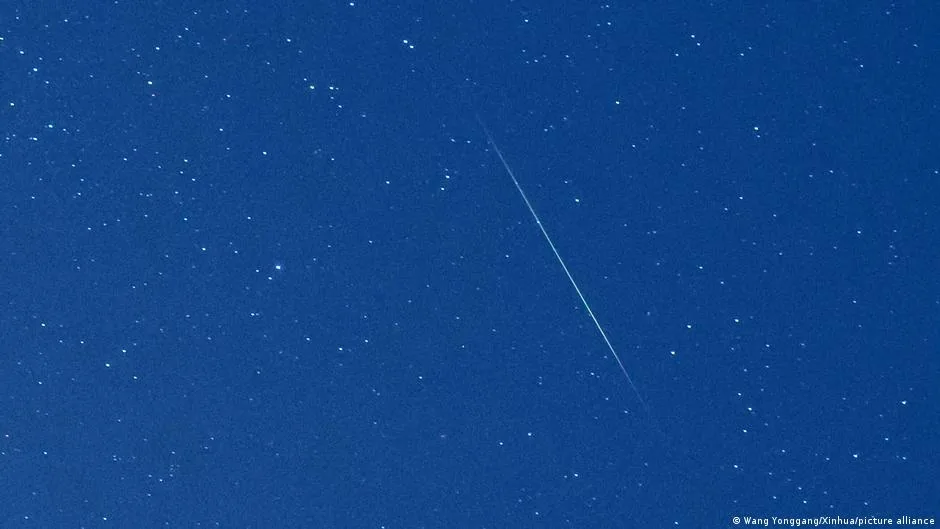
A spectacular meteor brightened the skies over the northeastern United States on Saturday afternoon before exploding and unleashing a powerful sonic boom that rattled homes and startled residents from Massachusetts to Rhode Island. The celestial event, observed around 2:06 pm Eastern Time, released an estimated energy equivalent to 300 tons of TNT, according to NASA.
The object, estimated to be about 3 feet wide, entered the atmosphere near the New Hampshire border with Massachusetts, north of Boston. It fragmented at an altitude of approximately 40 miles above northeastern Massachusetts and southeastern New Hampshire. The fireball was traveling at a remarkable speed of over 75,000 miles per hour when it disintegrated, NASA deputy news chief Jennifer Dooren stated in a release.
"This fireball was not associated with any currently active meteor shower, but it was a natural object and not a re-entry of space debris or a satellite," Dooren clarified. The event, while startling, was confirmed as a naturally occurring phenomenon. Such occurrences, though often unnoticed due to altitude or location, are common.
A Rare Spectacle for Ground Observers
The explosion created a distinct double boom that resonated through the region, prompting numerous reports from baffled residents. Social media platforms were quickly flooded with accounts of windows rattling and houses shaking from the powerful sound waves. Videos shared online captured the audible booms, though no visible signs of fire or smoke were reported from the ground. The American Meteor Society also noted the event.
The American Meteor Society, a volunteer organization that tracks meteors, reported the fireball's trajectory and fragmentation. While the precise location of the fragmentation was over northeastern Massachusetts and southeastern New Hampshire, the sound wave propagated widely, affecting a larger geographical area. This particular event was not tied to any known meteor shower, distinguishing it from more predictable celestial displays.
Understanding these events provides valuable data for scientists. By analyzing the trajectory, speed, and energy release of meteors like this one, researchers can better model potential impacts and understand the composition of objects within our solar system. Each observed fireball offers a unique glimpse into the materials that populate the space around Earth, contributing to ongoing astronomical research and planetary defense initiatives. The energy released is comparable to small conventional explosives, highlighting the significant force such natural events can generate.
While the loud noise and shaking were concerning for some, experts assure that meteors of this size typically burn up completely in the atmosphere, posing no threat to the ground. The United States, with its vast landmass and numerous observation networks, frequently detects such atmospheric phenomena. Further analysis of the data collected will help scientists refine their understanding of Earth's atmospheric interactions with incoming cosmic material.