
Meteor Explodes Over New England, Causing Loud Boom
A large meteor estimated to be 3 feet wide entered Earth's atmosphere Saturday afternoon, exploding and causing a loud boom heard across Southern New England. Residents reported their houses shaking.

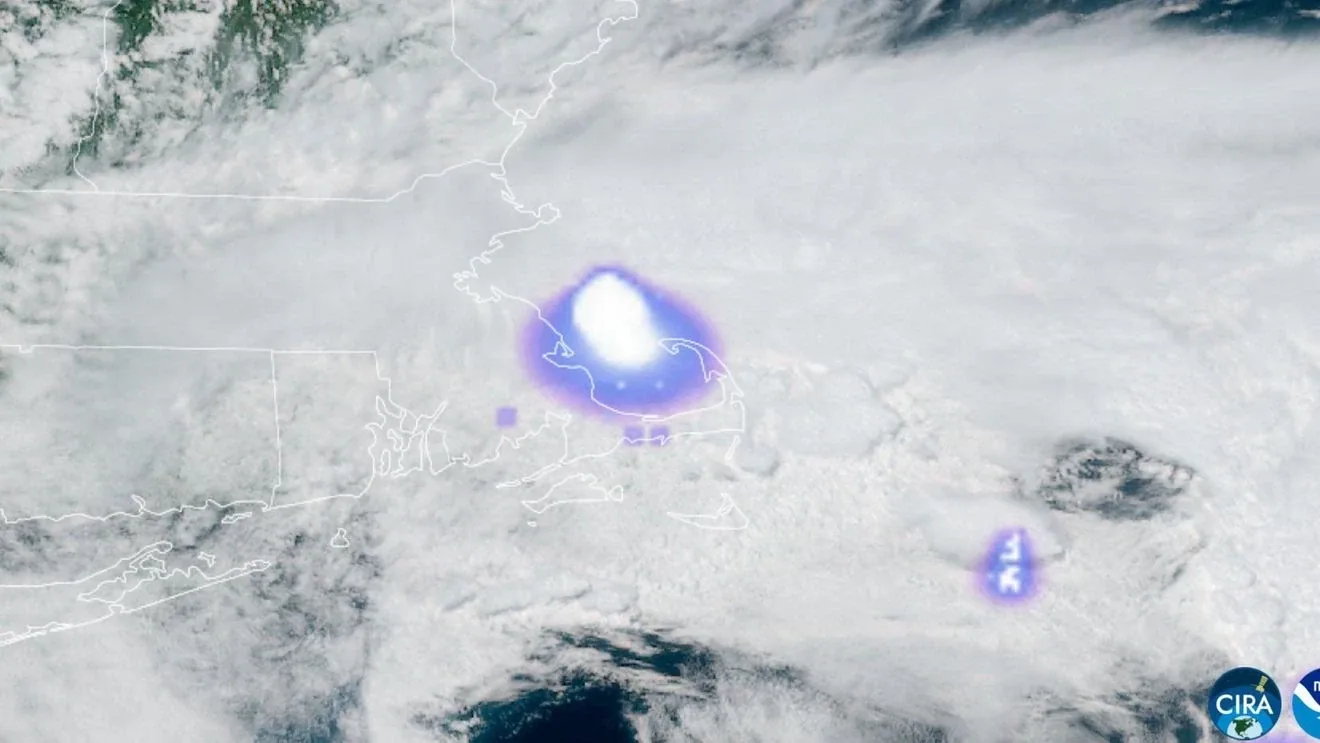
A sizable meteor, estimated to be approximately 3 feet in diameter, entered Earth's atmosphere on Saturday afternoon, creating a loud sonic boom that reverberated across Southern New England. The event, which occurred around 2:11 p.m., prompted numerous reports from residents in Rhode Island and Massachusetts who described their homes shaking.
The American Meteor Society confirmed the phenomenon, suggesting the meteor likely disintegrated upon atmospheric entry near the Massachusetts/New Hampshire border and is improbable to have reached the ground. "Most meteors are tiny, about the size of a grain of sand," a spokesperson for the society noted, explaining why such events typically go unheard. This particular celestial visitor, however, was significantly larger than average.
Atmospheric Entry and Detection
Meteorologists and weather agencies corroborated the reports. Nick Russo, a meteorologist with Storm Team 10, stated that all indicators pointed towards a large meteor exploding as the cause of the widespread noise. Supporting this assessment, NOAA's GOES satellite captured a significant flash over Massachusetts Bay at approximately 2:11 p.m., coinciding with the reported boom and likely marking the meteor's explosive demise. While a meteor becomes a meteorite only if it impacts the surface, it remains undetermined if this object survived its fiery descent.
The incident caused considerable alarm and curiosity among residents. Social media platforms were quickly flooded with accounts of the loud noise and ground tremors. Many shared videos and messages describing the startling event, with some speculating about earthquakes or military exercises. The quick response and explanation from scientific bodies helped to demystify the occurrence.
Objects entering Earth's atmosphere are common, but most are small enough to burn up without notice. Larger meteors, however, can produce spectacular visual displays and audible phenomena like sonic booms. The trajectory and composition of the meteor determine its fate, with atmospheric friction generating intense heat and light. The energy released during the explosion of a meteor of this estimated size can be significant, accounting for the widespread reports of noise and shaking.
This event serves as a vivid reminder of the dynamic nature of our solar system and the constant, though often unseen, bombardment of Earth by cosmic debris. Scientists continuously monitor near-Earth objects to assess potential risks, but most events, like the one on Saturday, are harmless natural spectacles. Further analysis of satellite data and any potential ground observations will help refine the understanding of this specific meteor's characteristics and its atmospheric journey.