
Milky Way's Ancient Meal: Scientists Identify 'Loki' Galaxy Remnants
Astronomers may have identified the "bones" of a long-lost galaxy, nicknamed Loki, that was consumed by the Milky Way approximately 10 billion years ago. The discovery offers clues to the early universe.

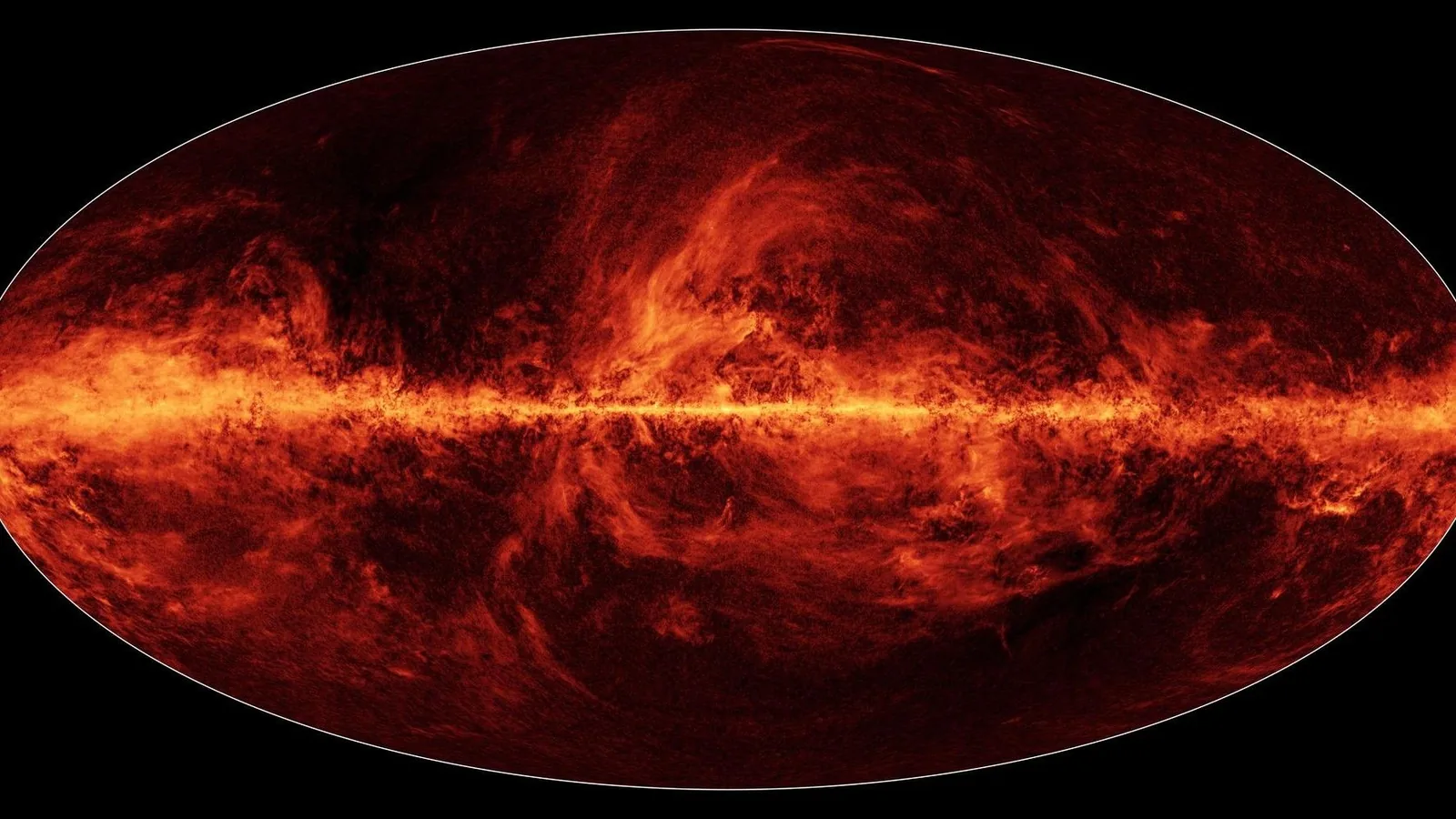
Astronomers have identified a distinct group of ancient stars within the Milky Way that they believe are the remnants of a smaller galaxy, nicknamed "Loki," that was absorbed by our own galaxy about 10 billion years ago. The findings, published in the Monthly Notices of the Royal Astronomical Society, could provide crucial insights into the Milky Way's formation and the early universe.
Lead author Federico Sestito, an astrophysicist at the University of Hertfordshire in the U.K., explained that these stars exhibit a unique chemical composition and orbital patterns that set them apart from typical Milky Way inhabitants. "A mixture of information from the chemistry and the orbits of these stars" led the research team to suspect they originated from an extragalactic source, Sestito said in an email. These stars are found orbiting unusually close to the galactic disk, a region usually populated by younger, more metal-rich stars.
A Chaotic Early History
The conventional understanding of galactic evolution suggests that massive galaxies like the Milky Way grow by merging with smaller galaxies over billions of years. The very first stars in the universe were composed solely of hydrogen and helium, with heavier elements, termed "metals" by astronomers, only being forged inside stars. As these early stars died, they seeded the cosmos with these heavier elements, influencing the composition of subsequent stellar generations. Galaxies that merged early in the universe's history are theorized to have their stars embedded deeper within the galactic core, while later mergers would scatter stars further out into the galactic halo.
However, the discovery of these 20 metal-poor stars orbiting near the Milky Way's disk presented a puzzle. "Usually, stars in the disk are metal-rich and younger, like the sun, while our stars [in the study] are old and very metal-poor (like in dwarf galaxies)," Sestito noted. Furthermore, some of these stars move in the same direction as the Milky Way's rotation, while others move in the opposite direction, a phenomenon challenging to explain by a single merger event unless it occurred very early.
Computer simulations provided a potential explanation. If the merger happened when the nascent Milky Way was still lightweight and hadn't yet formed its distinct spinning disk, the infalling galaxy, Loki, would have had the freedom to scatter its stars in various directions. "The early merging history of a large galaxy might be very chaotic, with various smaller systems merging together and dispersing their stars with many different orbits," Sestito elaborated. This chaotic scattering could account for both prograde and retrograde orbits observed in the stars. The models suggest this significant galactic merger occurred around 3 billion years after the Big Bang, with Loki estimated to have a mass of approximately 1.4 billion solar masses.
The name "Loki" was chosen for its mythological association with trickery, mirroring the difficulty astronomers had in deciphering the stars' origins. "Loki, in the Norse mythology, is the God of mischief, and, as a trickster, his intents are hard to decipher. Similarly, our accreted stars gave us some hard time in understanding their origin," Sestito remarked.
Anirudh Chiti, an astrophysicist at Stanford University not involved in the study, commented that the findings are promising, particularly the clustering of chemical abundances in these stars compared to those in the Milky Way halo. "This is a nice example of the kind of discovery that those samples could turn up or verify," Chiti wrote. However, he cautioned that more observations are necessary for definitive confirmation. The current sample size is small due to the intensive observation time required for each star, with current estimates demanding about four hours of telescope time per star for high-resolution spectroscopy.
Future advancements in spectroscopic facilities are expected to enable astronomers to analyze hundreds of stars, providing more comprehensive data on their trajectories and chemical makeup. Sestito believes that the search for ancient galaxies should extend beyond the halo and into the crowded disk regions of the Milky Way, where clues to the universe's earliest structures may be hidden, despite the challenges of detection. Studying these stellar remnants is key to understanding the assembly history of our Milky Way and, by extension, the broader cosmic evolution.