
Moon's Far Side Will Host Telescope to Study Early Universe
A new mission aims to use the moon's far side as a shielded location to detect faint radio signals from the early universe, potentially revealing secrets about the cosmic dawn.

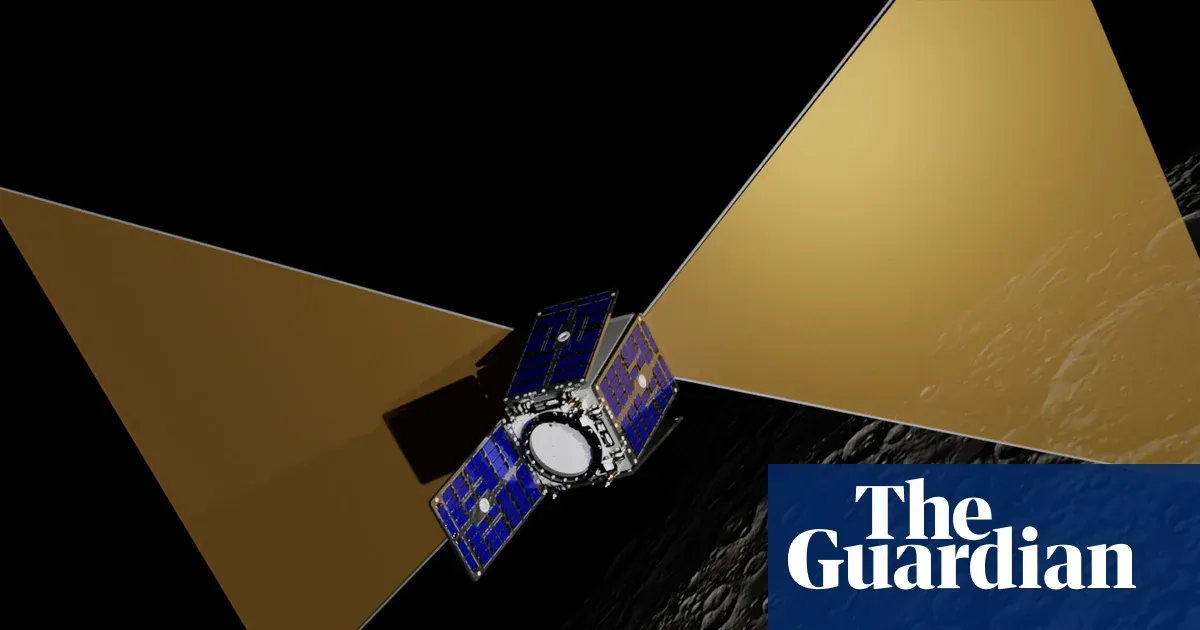
Researchers are embarking on an ambitious mission to deploy a compact satellite on the far side of the moon, aiming to capture elusive radio signals from the universe's infancy. The suitcase-sized spacecraft, dubbed CosmoCube, will orbit the moon and collect data as it passes over the lunar far side, a region shielded from Earth's radio interference. Scientists hope this vantage point will allow them to detect the faint signature of neutral hydrogen atoms, a key indicator of conditions shortly after the Big Bang.
Specifically, CosmoCube will hunt for the "21cm line," a radio frequency emitted by neutral hydrogen. This ancient signal has been stretched, or redshifted, over billions of years, allowing its strength to be tracked relative to the cosmic microwave background radiation. "The main thing we track by looking at this signal is what’s the physical temperature of the gas during the early universe," explained Professor Eloy de Lera Acedo, lead author of the study from the University of Cambridge’s Cavendish Laboratory.
The 21cm signal acts as a cosmic thermometer, potentially offering insights into pivotal eras such as the "dark ages"— a period beginning around 380,000 years after the Big Bang, the cosmic dawn when the first stars and galaxies ignited, and the epoch of reionization, which concluded about one billion years after the Big Bang. "The temperature of the gas is affected by the things happening in the universe at the time," Professor de Lera Acedo noted. He added that the signal's amplitude and shape are also thought to be influenced by dark matter, presenting an opportunity to probe the nature of this mysterious cosmic constituent.
Unlocking Cosmic Mysteries from a Quiet Lunar Vantage Point
Previous attempts to detect the 21cm line from Earth have been fraught with difficulty. The signal itself is exceptionally weak, and its detection is further complicated by pervasive human-generated radio noise from sources like FM radios and aircraft communications. Disturbances from Earth's ionosphere also pose a significant challenge. While the Experiment to Detect the Global EoR Signature (Edges) radio telescope in Australia has claimed detection of the 21cm line, its findings have faced scrutiny from the scientific community.
The CosmoCube mission, designed to operate for approximately two years, is expected to launch in about five years. The team estimates the total cost to be just under £50 million, with the UK Space Agency already providing more than £2 million in funding. By observing from the far side of the moon, researchers aim to circumvent the interference issues that have plagued Earth-based observatories.
Cosmology Professor Phil Bull of the Jodrell Bank Centre for Astrophysics, who is not involved in the project, welcomed the initiative. "The CosmoCube measurements will help us understand the major ingredients of our cosmic origins – the processes that led to the formation of the first stars and galaxies, and lit up the Universe after a period called the cosmic dark ages," he commented. However, Bull cautioned that CosmoCube faces competition from other missions aiming for similar observations, and a timely execution is crucial. "More ominously, other planned lunar missions might bring with them exactly the type of human-generated radio noise that the mission is trying to escape," he warned, framing the endeavor as a potential "race against time."