
Mysterious Black Hole Stars Fuel Scientific Excitement
Astronomers are buzzing about newly detected 'black hole stars' potentially solving cosmic puzzles. These enigmatic objects, seen as red dots by telescopes, offer a glimpse into the universe's deepest mysteries.

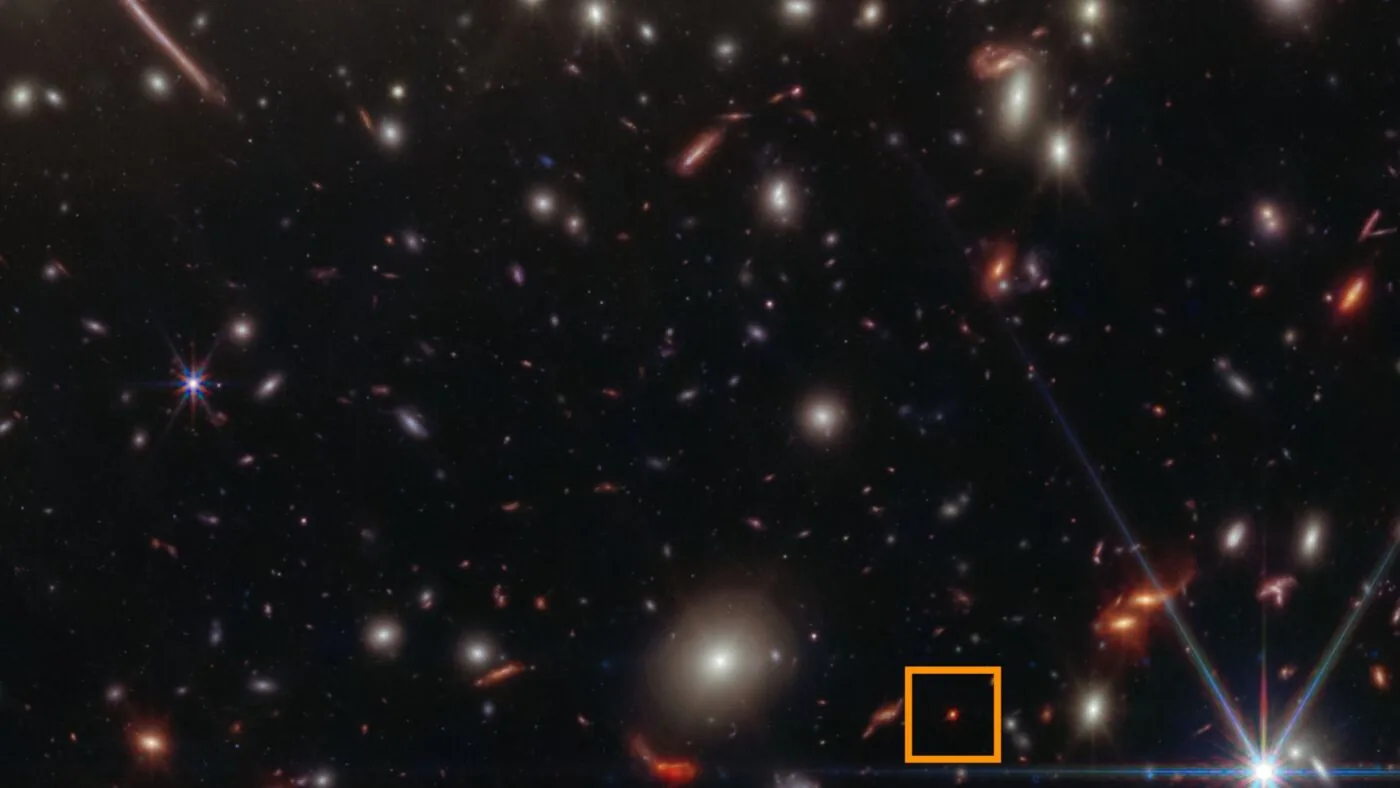
Scientists are captivated by the recent discovery of unusual celestial objects dubbed "black hole stars," which could unlock answers to several long-standing cosmic enigmas. These newly identified phenomena, observed as faint red dots, have generated significant excitement within the astronomical community, offering a fresh perspective on the universe's fundamental workings.
The discovery, detailed in recent observations, points to a class of objects that blur the lines between stars and black holes. While traditional understanding separates these entities, these "black hole stars" appear to exhibit characteristics of both, leading researchers to re-evaluate existing astrophysical models. The initial data suggests these objects might be extremely dense stellar remnants or an entirely new category of celestial body.
Unraveling Cosmic Mysteries
The implications of these findings are far-reaching. One of the primary areas of interest is how these objects fit into the lifecycle of stars and the formation of galaxies. Understanding their properties could shed light on the early universe, the evolution of massive stars, and the precise mechanisms by which black holes form and grow. Early analysis indicates that these objects are exceptionally massive yet incredibly compact, a combination that challenges current stellar evolution theories.
Dr. Evelyn Reed, lead astrophysicist on the observation team at the Kepler Institute, expressed her team's enthusiasm. "We are at the precipice of a new understanding of stellar evolution and compact objects," Dr. Reed stated in a press briefing held on August 20, 2026. "These red dots, as we've nicknamed them, present us with data that doesn't quite fit any existing paradigm. They could be the missing link we've been searching for to explain certain galactic structures and phenomena."
Further research will focus on obtaining more detailed spectral data from these objects, primarily using advanced instruments like the James Webb Space Telescope. The goal is to analyze their composition, temperature, and emission signatures to confirm their nature. The astronomical community is keenly awaiting these follow-up observations, which are expected to be conducted throughout late 2026 and into 2027.
The discovery is particularly significant given the challenges in observing such elusive objects. Their faintness and the vast distances involved necessitate cutting-edge technology and sophisticated data analysis techniques. The current findings are the result of a multi-year survey that meticulously analyzed vast swathes of sky data, identifying anomalies that were then targeted for closer scrutiny.
Beyond their immediate astrophysical implications, these "black hole stars" could also influence our understanding of fundamental physics, including gravity and the nature of spacetime. If confirmed as a new class of objects, they will undoubtedly become a focal point for theoretical physicists and observational astronomers alike, potentially leading to Nobel Prize-worthy discoveries in the coming years.