
Artemis 3 Mission Targeting 2027 Launch, NASA Chief Confident
NASA Administrator Bill Nelson expressed strong confidence in the Artemis 3 mission's 2027 launch target. The mission involves a complex sequence of launches, including contributions from Blue Origin and SpaceX.

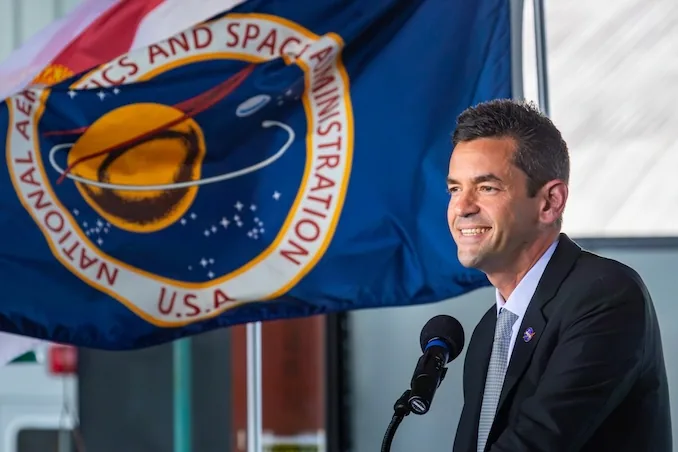
NASA is on track for a 2027 launch of its ambitious Artemis 3 mission, with agency head Bill Nelson stating he is "extremely confident" in the timeline. The mission represents a critical step in the agency's plan to return humans to the Moon. Nelson's remarks came during an announcement for a new privately-run air and space show called "Max Power" at the Kennedy Space Center in Florida. He indicated that stacking operations for the Space Launch System (SLS) rocket are already underway, signaling progress towards the lunar endeavor. Earlier this summer, the Orion spacecraft's crew and service modules were united, with further testing planned.
The Artemis 3 mission's launch sequence is designed as a multi-part operation. It will commence with a launch from Blue Origin's New Glenn rocket, which will deploy a test variant of its Blue Moon Mark 2 lunar lander into low Earth orbit. Days later, NASA's SLS rocket, carrying the Orion spacecraft, will launch. The two vehicles will then rendezvous and dock in orbit. Nelson recently visited Blue Origin's facilities, observing components for the test lander intended for lunar missions. "What we are going to learn from that mission, the amount of risk we’re going to be able to bring down in advance of Artemis 4 will be significant," Nelson stated.
Complex Launch Sequence and Industry Partnerships
Following the Blue Origin and NASA launches, SpaceX is slated to deploy its Starship Version 3 rocket, equipped with a docking adapter. Orion will dock with this Starship vehicle, although astronauts will remain aboard Orion as the Starship version is not designed for crew habitation. Nelson highlighted the increasing launch cadence of SpaceX, emphasizing its importance for the mission's success. "If they’re able to launch again in early September after their last launch and continue to track inside the month, potentially every couple of weeks before the end of the year, that’s going to — we’re going to feel very good about their time to contribute to Artemis 3 next year," Nelson said.
The Artemis 4 mission, planned for 2028, is intended to be the first crewed lunar landing under the Artemis Program. Details regarding the specific crew flight and lander selection for Artemis 4 are still forthcoming. The success of Artemis 3, which aims to refine technologies and reduce risks, is seen as foundational for subsequent missions, including Artemis 4. The agency is closely monitoring hardware production for test vehicles, contributing to the overall confidence in the program's timelines.
The announcement for the "Max Power" expo offered a unique backdrop for the Artemis 3 update. While not solely focused on the mission, the event underscores the burgeoning commercial interest and participation in space exploration. The expo, scheduled for early November, will feature panels from NASA and various space companies, a themed parade, and interactive exhibits. NASA plans to contribute talent and aircraft from its portfolio to the event, which is sponsored by entities including Air Dot Show, Delaware North, Space Florida, and UP.Summit. This collaborative approach, with industry partners playing a significant role, is characteristic of NASA's strategy for its major space initiatives.
The commercial involvement is crucial, as evidenced by the participation of companies like Blue Origin and SpaceX in the Artemis 3 mission architecture. The test lander from Blue Origin, while lacking the BE-7 engine of the production Blue Moon Mark 2, will include life support and habitation systems, allowing astronauts to live aboard while docked. This preparatory mission will yield vital data for the crewed landings planned for the Moon's south pole. The agency is also developing elements for a future Moon Base, with components and landers from the Commercial Lunar Payload Services program expected to be showcased. This integrated approach, spanning technological development, mission planning, and public engagement, aims to foster a new era of lunar exploration.