
NASA Chief Defends All-Male Artemis III Crew Selection
NASA Administrator Jared Isaacman defended the all-male crew for the upcoming Artemis III mission, stating astronauts were chosen based purely on experience and skills. The decision has drawn criticism from some who feel it overlooks female astronauts.

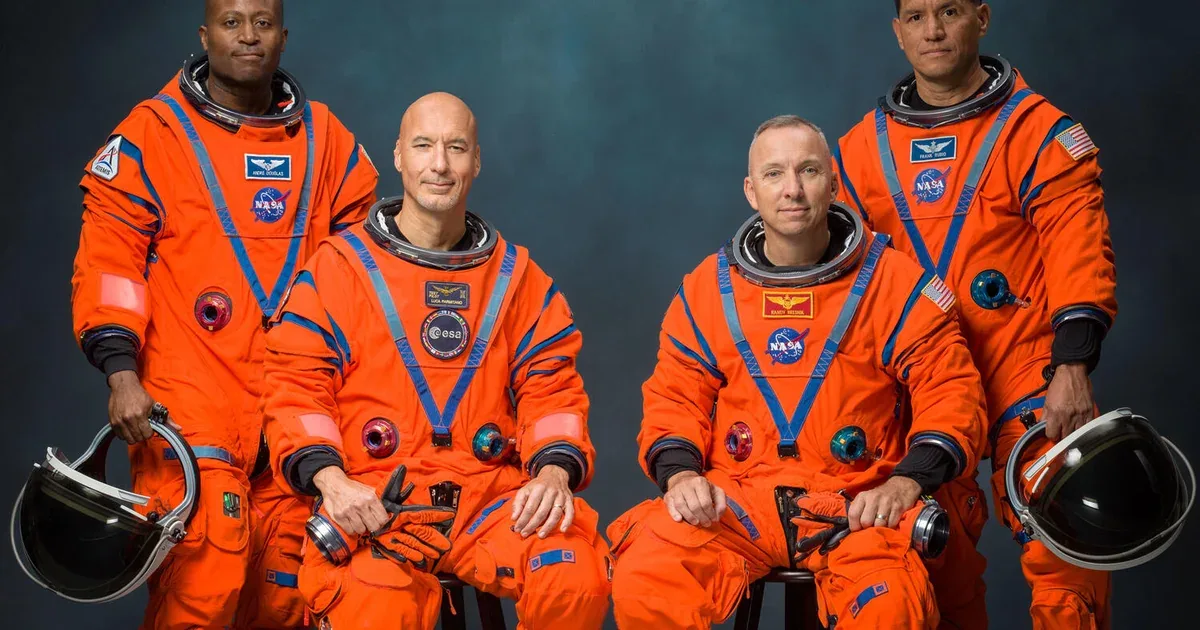
NASA Administrator Jared Isaacman has defended the agency's decision to select an all-male crew for the upcoming Artemis III mission, asserting that the astronauts were chosen strictly based on their experience, skill sets, and availability. The announcement has ignited a debate online, with reactions ranging from disappointment to outrage, particularly among those advocating for greater gender diversity in space exploration.
The mission, slated for next year, will involve testing rendezvous and docking procedures in low-Earth orbit with lunar landers being developed by SpaceX and Blue Origin. The crew includes Commander Randy Bresnik, 58, a veteran of 149 days in space; Pilot Luca Parmitano, 49, from the European Space Agency with two long-duration ISS stays; mission specialists Andre Douglas, 40, a rookie with extensive engineering experience, and Frank Rubio, 49, who holds the U.S. record for the longest single spaceflight at 371 days.
Responding to the criticism, Isaacman acknowledged the public reaction on social media platforms like X and Reddit. "I have seen reactions ranging from disappointment to outrage," he wrote, noting that some posts highlighted the imbalance, with one stating, "Women represent 50 percent of the population. They deserve at least one seat on every mission from a government run agency."
Isaacman pushed back against the notion that the selection process was biased, emphasizing NASA's commitment to diversity and inclusion. "I have personally been to space twice with 50 percent female crews," he stated. "My closest advisors and some of the smartest engineers I know are women. In our latest NASA leadership organization, nearly 50 percent of the center directors and mission directorate leadership are women." He pointed to the most recent astronaut candidate class selected under the current administration, which was majority female, with six women and four men, including astronauts who were deemed "the best of the best."
Context of Astronaut Selection
During an event Tuesday at the Johnson Space Center, where NASA unveiled the Artemis III crew, Bresnik also addressed the selection. "You can look at our astronaut office and see the wide diversity within the office, whether that's gender or background or nationality or heritage," he said in a CNN interview. "And certainly, the boss had to pick the crew for this flight that he had available that had the skill sets that he needed." NASA currently has approximately 35 active-duty astronauts, including 15 women, with six more currently in training. The Artemis II crew, a precursor mission, notably included Christina Koch, the first woman to fly around the moon. Other prominent female astronauts like Jessica Meir and Jasmin Moghbeli are actively involved in current space station missions or training for future flights.
Bresnik also mentioned that two more women, whose identities are yet to be announced, are in training for a subsequent mission. "The office gets what it needs when it needs it, and we'll certainly have all these other people that you mentioned, you know, female military test pilots or just other female astronauts, that'll be picking up on the follow-on Artemis missions," he explained.
The selection highlights the complex factors involved in assigning crews for specific missions. Each crew member selected for Artemis III brings a unique and valuable set of skills. Bresnik is a former U.S. Navy fighter pilot, Parmitano flew high-performance jets for the Italian air force, Rubio is a medical doctor and former helicopter pilot, and Douglas holds a Ph.D. in engineering. Isaacman reiterated that the astronaut office assigns crews to maximize mission success, considering a wide range of factors including test pilot experience, program development work, and individual availability. He suggested that critics might not be fully aware of the extensive pipeline of astronauts undergoing lunar-specific training for future surface missions.
Isaacman concluded by emphasizing that Bresnik and his crewmates are highly qualified and deserve recognition for their assigned mission, just as future crews will when their turns come. The Artemis program aims to return humans to the Moon and establish a long-term presence, with future missions expected to feature a more diverse range of astronauts as training and selection pipelines evolve.