
SpaceX Deploys 24 Starlink Satellites from California Coast
SpaceX successfully launched 24 Starlink V2 Mini satellites from Vandenberg Space Force Base on Saturday, July 25, 2026. The Falcon 9 rocket's first stage landed safely on a droneship in the Pacific Ocean.

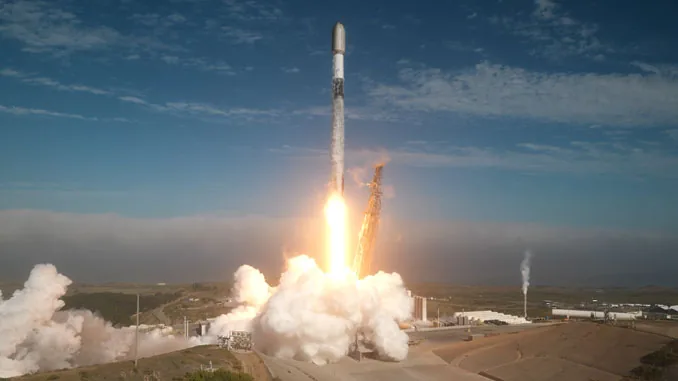
A SpaceX Falcon 9 rocket lifted off from Vandenberg Space Force Base in California on Saturday, July 25, 2026, at 8:51 a.m. PDT, carrying 24 Starlink internet satellites into orbit. The launch marked the seventh of eight planned Falcon 9 missions from the West Coast facility this month, highlighting its increasing importance for the company.
The reusable Falcon 9 first stage booster, identified as B1100 and making its eighth flight, successfully separated from the second stage and executed a pinpoint landing on the droneship 'Of Course I Still Love You.' This vessel was positioned approximately 380 miles downrange in the Pacific Ocean. Booster B1100 has a notable history, having previously supported the NROL-105 mission for a U.S. government intelligence agency and six prior Starlink deployments.
Approximately one hour after liftoff, SpaceX confirmed that the 24 Starlink V2 Mini satellites were successfully deployed into a low Earth orbit ranging from 160 to 168 miles in altitude. This deployment is part of SpaceX's ongoing effort to expand its global satellite internet constellation.
West Coast Operations Intensify
The West Coast launch site at Vandenberg has become a critical operational hub for SpaceX in recent months. This increased activity is partly due to the company's focus on the development and testing of its next-generation Starship system at its Florida facilities. In July 2026, SpaceX has scheduled eight launches from Vandenberg, a significant tempo. In contrast, the company has conducted four launches from Cape Canaveral Space Force Station in Florida in July, with one more expected.
The Starlink constellation aims to provide high-speed, low-latency internet access to underserved and remote areas globally. Each new launch adds capacity and coverage to the network, bringing the total number of satellites in orbit closer to SpaceX's ambitious deployment goals. The success of these regular launches is crucial for the continued expansion and profitability of the Starlink service, which also helps fund the company's more ambitious projects, like the development of Starship.
SpaceX's strategy of utilizing reusable rocket technology, embodied by the Falcon 9, significantly reduces launch costs. The ability to rapidly refurbish and redeploy boosters is a cornerstone of the company's mission to make space access more affordable and frequent. The consistent performance from Vandenberg underscores the reliability and efficiency SpaceX has achieved with its launch operations.
This latest mission, designated Starlink 17-51, underscores the rapid pace of satellite deployment in the modern space industry. As more satellites are launched for various constellations, the challenges of managing space traffic and ensuring the long-term sustainability of the orbital environment become increasingly important considerations for regulatory bodies and industry stakeholders alike.