
Yellowstone Supervolcano Showing Signs of Magma Replenishment
New research indicates that the Yellowstone supervolcano, one of the most powerful on Earth, is actively refilling with fresh magma. This geological activity is being closely monitored by scientists.

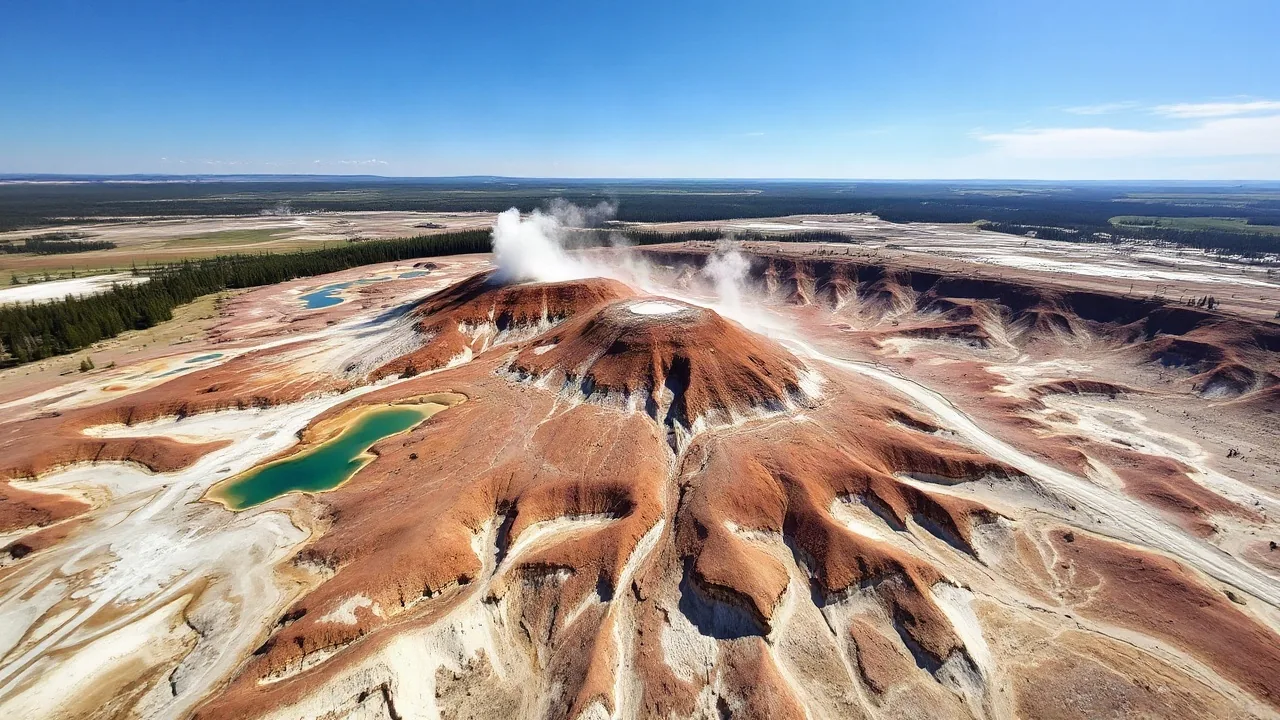
Scientists have detected fresh magma surging into the reservoir beneath the Yellowstone supervolcano, a geological powerhouse located primarily in Wyoming. The discovery, published in the journal 'Geology', suggests that the massive magma chamber, which last erupted approximately 631,000 years ago, is not cooling down but is instead being replenished by new molten rock from deep within the Earth's mantle. This ongoing process indicates a dynamic system that continues to evolve.
The Yellowstone caldera, spanning an immense 72 by 45 kilometers (45 by 28 miles), is a caldera formed by a super-eruption. Previous studies have suggested that the magma chamber beneath the supervolcano has been slowly cooling and solidifying over millennia. However, the latest findings, utilizing advanced seismic imaging techniques, reveal a different picture, showing a substantial influx of hotter, less dense magma. This new material is thought to originate from a mantle plume that has been feeding the region's volcanic activity for millions of years.
Monitoring Geological Activity
Dr. Hannah Davies, a volcanologist at the Yellowstone Volcano Observatory (YVO), stated, "This is a significant finding that changes our understanding of the Yellowstone magmatic system. We've long believed it was slowly cooling, but the data clearly shows new magma entering the system. It doesn't mean an eruption is imminent, but it does confirm the reservoir is very much alive and active." The YVO continuously monitors seismic activity, ground deformation, and gas emissions at Yellowstone to assess potential hazards.
The refilling process is believed to be occurring at a rate of approximately 0.2 to 0.7 cubic kilometers per decade. While this might seem small compared to the immense size of the magma chamber, it signifies a sustained influx. The heat from this new magma is also contributing to the geothermal features that characterize Yellowstone National Park, including geysers like Old Faithful and hot springs. Understanding the rate and composition of this magma is crucial for refining hazard assessments and geological models.
Supervolcanoes, by definition, are capable of producing eruptions that are 1,000 times larger than typical volcanic eruptions. The last time the Yellowstone supervolcano erupted on such a scale, it blanketed much of North America in ash. While the current activity does not suggest an impending catastrophic event, the ongoing geological processes underscore the immense power contained within the Earth's crust and the importance of continuous scientific observation. The implications extend beyond Yellowstone, offering insights into the behavior of other large igneous provinces and mantle plumes worldwide.
Researchers emphasize that the timescale for such a massive eruption is typically measured in hundreds of thousands of years, and the current magma replenishment is a natural part of the supervolcano's long-term geological cycle. However, the confirmation of fresh magma entering the system provides valuable data for refining predictive models and understanding the long-term evolution of Earth's most formidable volcanic systems. The findings are expected to spur further research into the dynamics of mantle plumes and their impact on continental crust.